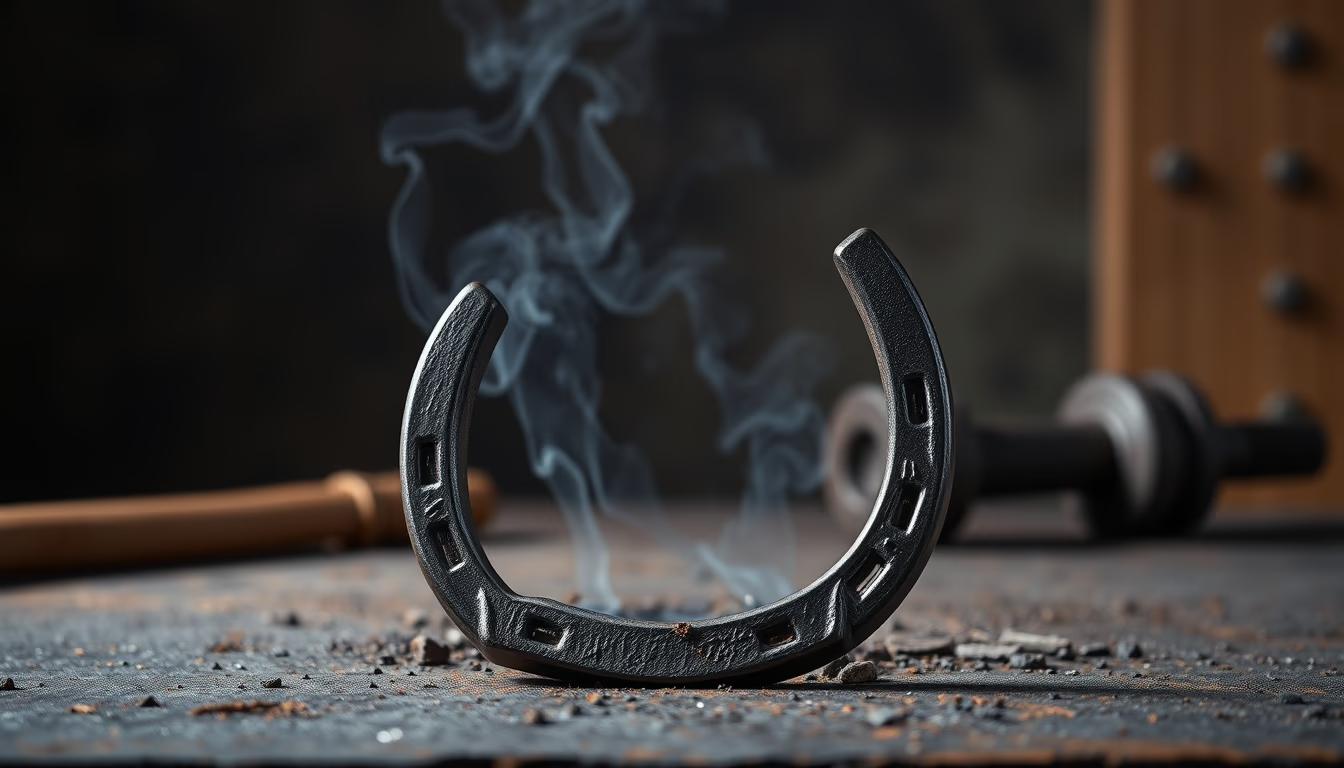
Horseshoe iron forge
1344×768 · AVIF · CC BY 4.0

The horseshoe forge is an essential tool in the farrier's workshop, used to heat iron to the ideal malleability before shaping horseshoes.
About this subject
The horseshoe forge, also known as a farrier's forge, plays a central role in the ancient craft of horseshoeing. Traditionally made of a metal hearth lined with refractory material, it uses coal or charcoal as fuel, reaching temperatures between 900°C and 1200°C. The farrier, with the help of a bellows or electric blower, controls the oxygen intake to regulate heat, heating iron or steel bars until they become incandescent and malleable. This process allows the metal to be shaped into the horse's hoof contour, with wings and nail holes.
In Brazil, horseshoeing is particularly important in livestock regions like the Pantanal and the Northeast, where working horses, such as the Mangalarga Marchador breed, require proper shoes for long journeys over rough terrain. Modern forges can be portable, allowing farriers to serve remote rural properties. Although industrialization has popularized prefabricated shoes, many professionals still prefer the traditional forge to create custom pieces that respect the hoof's angle and balance.
Historically, the act of shoeing horses dates back to the Roman Empire, and the forge became a symbol of rural craftsmanship. The technique involves not only heating and hammering but also rapid cooling in water or oil to harden the metal. Experienced farriers recognize the color of heated iron, orange or light yellow, as an indicator of the right point. Besides horseshoes, the same forge can be used to make tools, grills, and other farm implements, demonstrating its versatility.
Interestingly, the horseshoe forge also appears in cultural contexts, such as rodeo festivals and farrier competitions, where the ability to forge a horseshoe in minutes is judged. The equipment is simple but requires deep knowledge of materials and metal behavior under extreme heat. For equine welfare, a well-forged shoe can prevent injuries and improve performance, and proper fitting depends both on the farrier's skill and the quality of the forge used.
Frequently Asked Questions
What is the ideal temperature for forging a horseshoe?
The ideal temperature is between 900°C and 1200°C, when the iron turns orange or light yellow, making it malleable without burning.
What types of fuel are used in horseshoe forges?
The most common are mineral coal and charcoal. Charcoal burns cleaner and is preferred indoors, while mineral coal provides more intense heat.
Why is hand-forged horseshoes still valued despite industrial options?
Because each horse has a unique hoof, and hand-forged shoes allow precise adjustments in angle and size, reducing injury risk and improving animal comfort.
Direct URL
https://pub-c7d6a6ea828543ac903a74a341ccb2e1.r2.dev/imagens/horseshoe-iron-forge-fish-eye-wide-angle-fresh1.avifHow to credit
Include a visible link back to UtilizAí. Copy one of the snippets below:
<a href="https://xn--utiliza-eza.com/en/midia/imagens/horseshoe-iron-forge-fish-eye-wide-angle-fresh1">Horseshoe iron forge</a> by <a href="https://xn--utiliza-eza.com">UtilizAí</a>, licensed under <a href="https://creativecommons.org/licenses/by/4.0/">CC BY 4.0</a>.
[Horseshoe iron forge](https://xn--utiliza-eza.com/en/midia/imagens/horseshoe-iron-forge-fish-eye-wide-angle-fresh1) by [UtilizAí](https://xn--utiliza-eza.com), CC BY 4.0
License: CC-BY-4.0