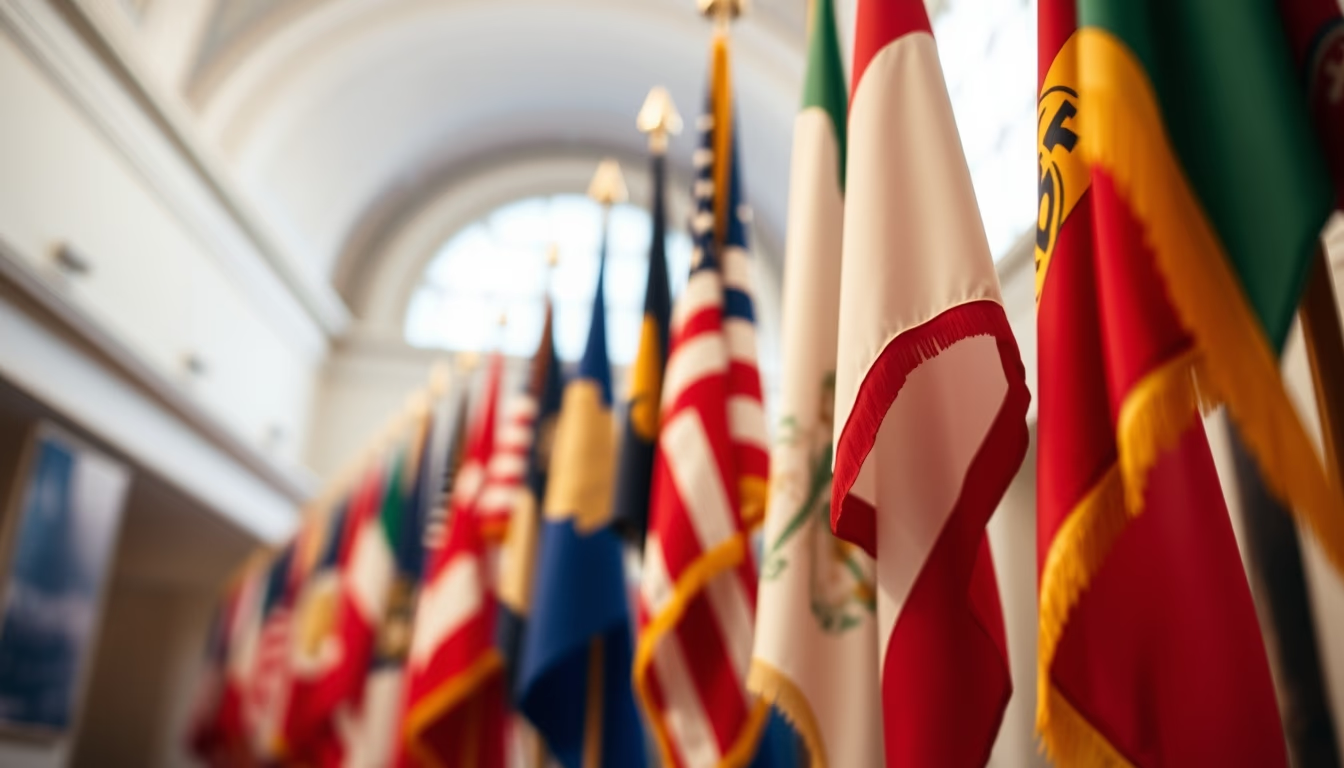
Historical flags museum
1344×768 · AVIF · CC BY 4.0
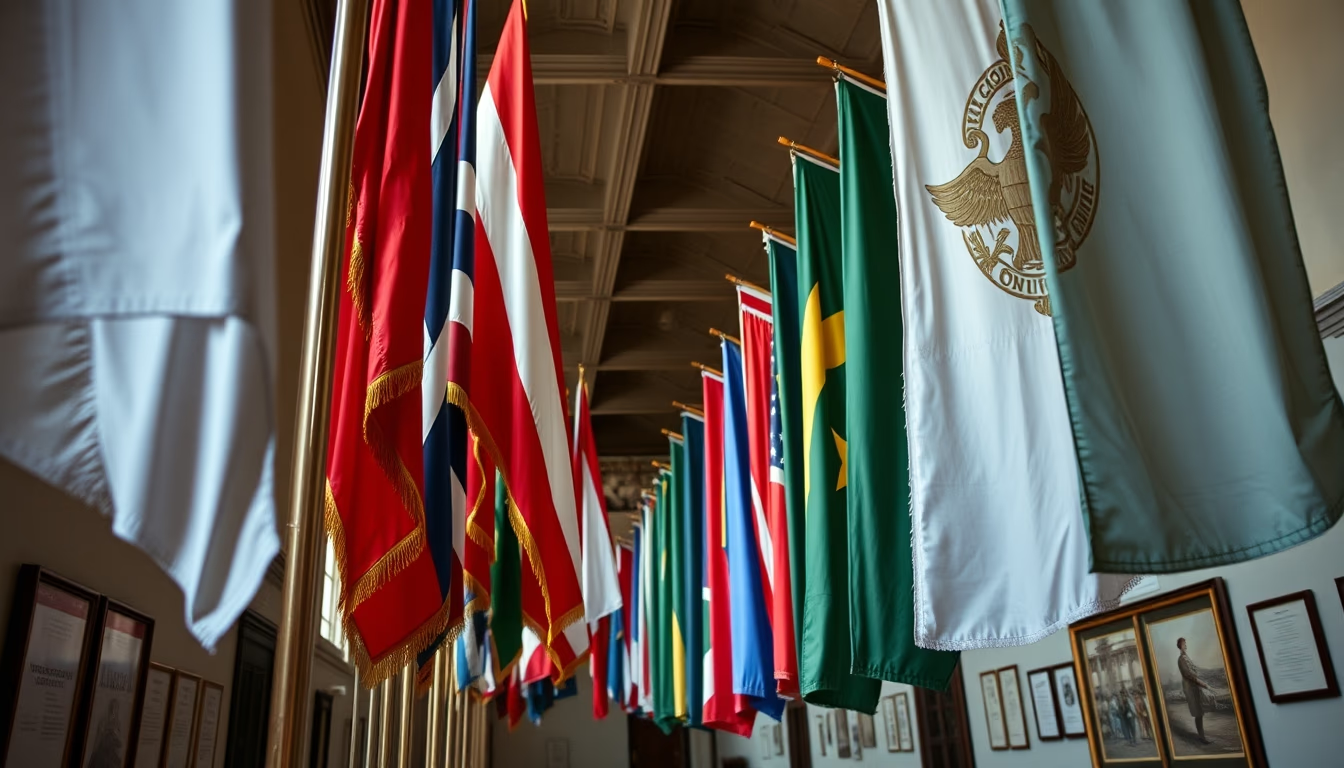
A historical flags museum displays banners that marked eras and nations, revealing political and cultural changes over centuries.
About this subject
A historical flags museum brings together examples of banners that represented empires, republics, social movements, and institutions throughout history. These collections often include obsolete national flags, such as those of the Brazilian Empire or the Soviet Union, as well as military, naval, and organizational flags like those of the former League of Nations. Each piece carries information about the context in which it was created: colors, symbols, and proportions reflect ideologies, alliances, and identities of a particular era.
Conservation of these items requires specialized techniques, as many are made of fragile fabrics like silk or cotton, subject to deterioration over time. Museums such as the Flag Museum in Belgrade (Serbia) and the National Flag Museum in Beijing (China) have collections with hundreds of items, some dating back to the 18th century. In Brazil, the Museu da Bandeira in Curitiba (Paraná) houses historical replicas and documents about the evolution of the Brazilian flag since the colonial period.
Beyond historical value, these museums offer an overview of international relations and conflicts. For instance, flags from disputed territories or extinct states, such as Prussia or the Austro-Hungarian Empire, help understand the geopolitics of the past. Temporary exhibitions often highlight the influence of flags in independence movements or events like Expo 67 in Montreal.
Curatorship aims not only to preserve the objects but also to contextualize their ceremonial, military, or civil use. Visitors can learn about hoisting protocols, origins of symbols like the eagle or the lone star, and how vexillology (the study of flags) contributes to the visual history of humanity.
Frequently Asked Questions
What is a historical flags museum?
It is an institution that preserves and displays flags from different eras and places, including national, military, and social movement banners, aiming to educate about history and vexillological symbolism.
What are some famous museums of this type?
Examples include the Flag Museum in Belgrade (Serbia), the National Flag Museum in Beijing (China), and the Museu da Bandeira in Curitiba (Brazil). Each has collections with hundreds to thousands of historical specimens.
How are flags preserved in a museum?
Controlled conditions of light, temperature, and humidity are used, along with textile restoration techniques. Flags are often stored horizontally in drawers or displayed in cases with UV-protective glass to prevent damage.
Direct URL
https://pub-c7d6a6ea828543ac903a74a341ccb2e1.r2.dev/imagens/historical-flags-museum-documentary-nature-style-fresh3.avifHow to credit
Include a visible link back to UtilizAí. Copy one of the snippets below:
<a href="https://xn--utiliza-eza.com/en/midia/imagens/historical-flags-museum-documentary-nature-style-fresh3">Historical flags museum</a> by <a href="https://xn--utiliza-eza.com">UtilizAí</a>, licensed under <a href="https://creativecommons.org/licenses/by/4.0/">CC BY 4.0</a>.
[Historical flags museum](https://xn--utiliza-eza.com/en/midia/imagens/historical-flags-museum-documentary-nature-style-fresh3) by [UtilizAí](https://xn--utiliza-eza.com), CC BY 4.0
License: CC-BY-4.0