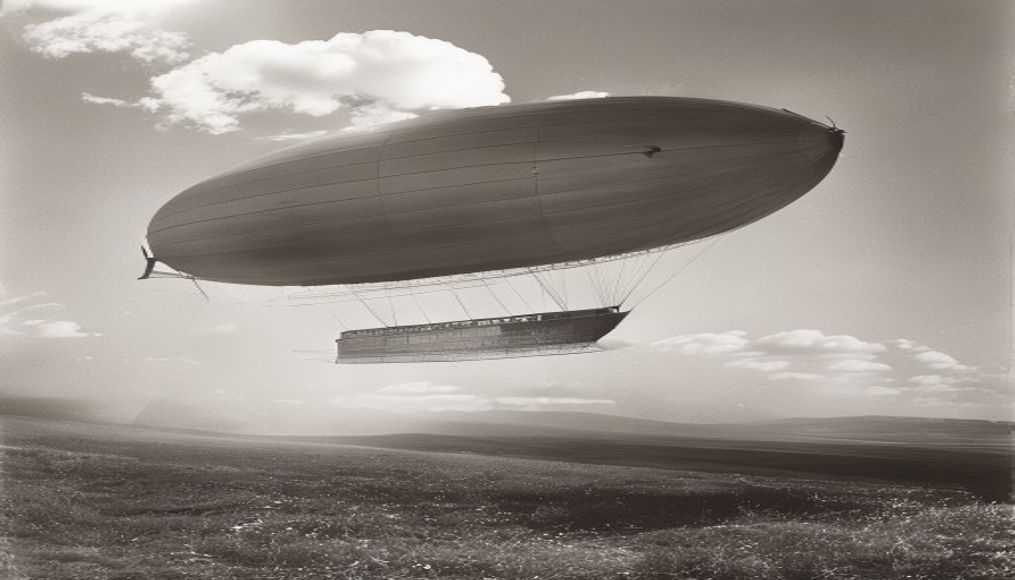
Hindenburg airship
1344×768 · AVIF · CC BY 4.0

The Hindenburg airship, the largest zeppelin ever built, symbolized the golden age of commercial aviation before its tragic end in 1937.
About this subject
The Hindenburg, officially LZ 129 Hindenburg, was a German airship built by Luftschiffbau Zeppelin. At 245 meters in length, it was the largest aircraft ever constructed, surpassing earlier models like the Graf Zeppelin. Inaugurated in 1936, it operated regular transatlantic flights between Frankfurt and the United States, offering luxurious accommodations with private cabins, a dining room, and even a music lounge. Its cruising speed of 122 km/h allowed it to cross the Atlantic in about two and a half days, a remarkable feat for the time.
The passenger cabin was designed for comfort and elegance, featuring large panoramic windows that provided stunning views. The Hindenburg used flammable hydrogen for lift, chosen for its high lifting capacity despite the risks. On May 6, 1937, while attempting to land at Lakehurst Naval Air Station in New Jersey, the airship caught fire and exploded in seconds, killing 36 people. The event was broadcast live on radio and filmed, shocking the world.
The disaster marked the end of the commercial airship era. Investigations suggested that a combination of hydrogen leakage, electrostatic discharge, and atmospheric conditions may have ignited the fire. This tragedy led to the abandonment of hydrogen use in aircraft and the decline of zeppelins as a mode of transportation. Today, the Hindenburg remains a cultural icon, remembered in documentaries and books as a cautionary tale about the risks of technological hubris.
Frequently Asked Questions
What caused the Hindenburg disaster?
The exact causes remain uncertain, but a combination of hydrogen leakage, electrostatic discharge, and atmospheric conditions likely ignited the fire. A static spark on the airship's envelope may have triggered the explosion.
How many people died in the Hindenburg disaster?
Of the 97 people on board, 36 died, including 13 passengers and 23 crew members. One ground crew member also perished, bringing the total to 37 deaths.
Was the Hindenburg safe before the disaster?
It was considered safe and reliable, with a successful flight record. However, the use of hydrogen posed an inherent risk. The disaster ended commercial airship travel and led to the replacement of hydrogen with helium.
Direct URL
https://pub-c7d6a6ea828543ac903a74a341ccb2e1.r2.dev/imagens/hindenburg-airship-studio-still-life-p0.avifHow to credit
Include a visible link back to UtilizAí. Copy one of the snippets below:
<a href="https://xn--utiliza-eza.com/en/midia/imagens/hindenburg-airship-studio-still-life-p0">Hindenburg airship</a> by <a href="https://xn--utiliza-eza.com">UtilizAí</a>, licensed under <a href="https://creativecommons.org/licenses/by/4.0/">CC BY 4.0</a>.
[Hindenburg airship](https://xn--utiliza-eza.com/en/midia/imagens/hindenburg-airship-studio-still-life-p0) by [UtilizAí](https://xn--utiliza-eza.com), CC BY 4.0
License: CC-BY-4.0