High speed train station
1344×768 · AVIF · CC BY 4.0
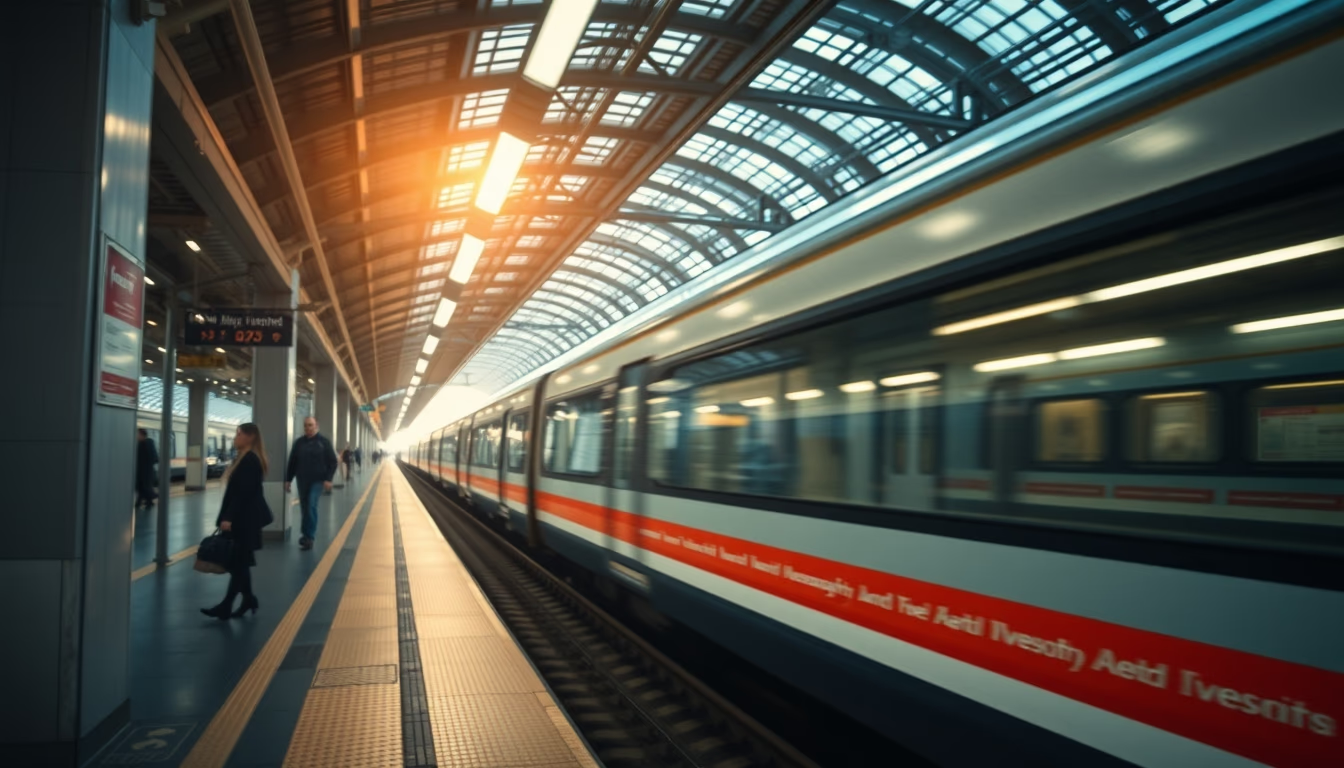
High-speed train stations are portals of modern mobility, connecting cities in minutes with cutting-edge technology and innovative architecture.
About this subject
High-speed train stations represent the pinnacle of railway engineering and contemporary urban design. Unlike conventional stations, these terminals are built to handle intense passenger flows and trains traveling at speeds exceeding 250 km/h. Notable examples include Tokyo Station (Japan) serving the Shinkansen, Paris Gare de Lyon for the TGV, and Shanghai Hongqiao Station (China), one of the largest in the world. These structures often integrate multiple transport modes: subway, bus, and even airports, functioning as intermodal hubs.
The cultural and economic importance of these stations is immense. They boost tourism, reduce travel time between urban centers, and promote regional development. In Japan, the Shinkansen is a symbol of punctuality and efficiency; in France, the TGV revolutionized European transport. Architecture also shines: Liège-Guillemins Station (Belgium), designed by Santiago Calatrava, combines glass and steel in a futuristic structure. Nagoya Station (Japan) houses a commercial and business complex, exemplifying the 'vertical city' concept.
Technical curiosities: high-speed tracks require wide curve radii and specific signaling systems. The fastest commercial train, the Shanghai Maglev, reaches 431 km/h, and its station is equally innovative. Looking ahead, countries like Brazil are studying high-speed trains connecting Rio-São Paulo, but cost and terrain challenges remain. The trend is for stations to become even more sustainable, with solar panels, rainwater harvesting, and recycled materials.
Frequently Asked Questions
What is the busiest high-speed train station in the world?
Tokyo Station (Japan) is among the busiest, serving the Shinkansen with over 400,000 passengers daily. However, Shanghai Hongqiao Station (China) also handles similar volumes, integrating high-speed rail, subway, and airport.
How are high-speed stations designed for safety?
They feature platforms with automatic doors preventing track access, emergency braking systems, and CCTV monitoring. Design avoids pedestrian-track crossings and includes large evacuation areas.
Are there plans for high-speed trains in Brazil?
Yes, the Rio-São Paulo High-Speed Rail (TAV) project was discussed but faces cost challenges (estimated R$ 50 billion) and geographic complexity. Construction has not yet started.
Direct URL
https://pub-c7d6a6ea828543ac903a74a341ccb2e1.r2.dev/imagens/high-speed-train-station-documentary-photography-p1.avifHow to credit
Include a visible link back to UtilizAí. Copy one of the snippets below:
<a href="https://xn--utiliza-eza.com/en/midia/imagens/high-speed-train-station-documentary-photography-p1">High speed train station</a> by <a href="https://xn--utiliza-eza.com">UtilizAí</a>, licensed under <a href="https://creativecommons.org/licenses/by/4.0/">CC BY 4.0</a>.
[High speed train station](https://xn--utiliza-eza.com/en/midia/imagens/high-speed-train-station-documentary-photography-p1) by [UtilizAí](https://xn--utiliza-eza.com), CC BY 4.0
License: CC-BY-4.0