Hdmi cable golden
1344×768 · AVIF · CC BY 4.0
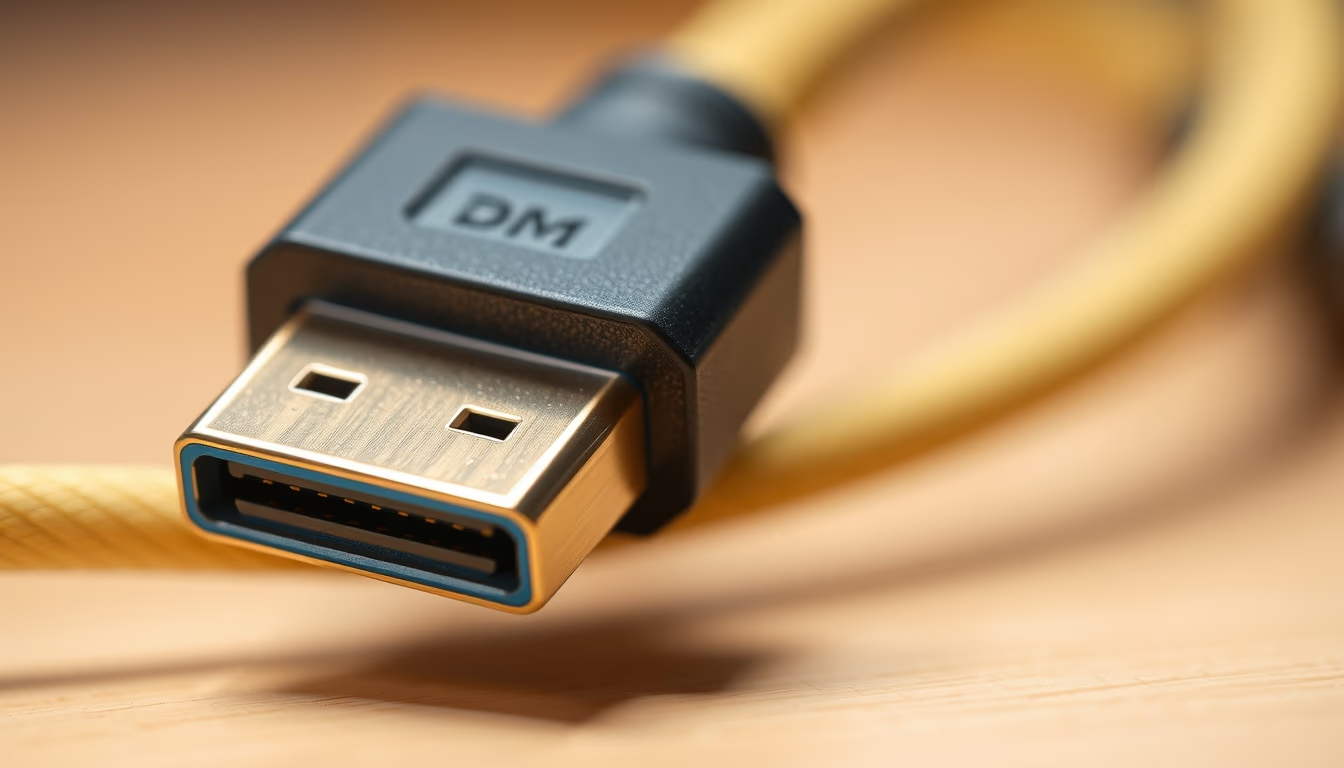
HDMI cable with gold-plated connectors: understanding the role of gold plating in digital audio and video signal transmission.
About this subject
The HDMI (High-Definition Multimedia Interface) cable is the global standard for transmitting uncompressed digital audio and video. Introduced in 2002, it replaced analog connections like VGA and RCA, supporting resolutions from 1080p to 8K and refresh rates up to 120 Hz or more. The latest version, HDMI 2.1, provides a bandwidth of up to 48 Gbps, enabling features such as eARC (Enhanced Audio Return Channel) and VRR (Variable Refresh Rate).
Gold-plated connectors, as depicted, are not merely decorative. Gold is chosen for its high electrical conductivity and corrosion resistance. Unlike metals such as nickel, gold does not oxidize over time, ensuring stable electrical contact and preventing signal degradation. The gold layer is typically very thin (0.5 to 2 microns) and applied over a copper or alloy base, balancing durability and performance.
In practice, the benefits of gold are most noticeable in humid environments or with frequent plug/unplug cycles, such as in home theater systems or professional AV setups. For everyday users, gold-plated connectors add reliability, but overall cable quality (shielding, wire gauge) is equally critical. Cables certified by HDMI Licensing Administrator guarantee compliance with specific standards, regardless of connector material.
Interestingly, the gold in connectors represents a negligible fraction of the cable's cost. The myth of "pure gold" connectors is false: the plating is a hard gold alloy (with nickel or cobalt) to withstand mechanical wear. In professional applications (broadcasting, digital cinema), gold-plated connectors are standard, but well-shielded tin-plated copper cables also perform without signal loss.
Frequently Asked Questions
Why do HDMI cables have gold-plated connectors?
Gold plating prevents oxidation and ensures reliable electrical contact over time. Gold does not corrode and conducts electricity well, making it ideal for high-quality audio and video connections.
What is the difference between HDMI 2.0 and 2.1?
HDMI 2.1 offers much higher bandwidth (48 Gbps vs. 18 Gbps in 2.0), supporting resolutions like 8K at 60 Hz and 4K at 120 Hz, plus features like VRR, ALLM, and eARC. 2.1 cables are required for modern consoles and high-end TVs.
Are expensive HDMI cables with gold connectors worth it?
For most home use, certified standard cables (High Speed or Ultra High Speed) suffice. Gold plating may help in humid environments or with frequent plugging, but it does not improve picture quality beyond the cable's specifications.
Direct URL
https://pub-c7d6a6ea828543ac903a74a341ccb2e1.r2.dev/imagens/hdmi-cable-golden-macro-closeup-p1.avifHow to credit
Include a visible link back to UtilizAí. Copy one of the snippets below:
<a href="https://xn--utiliza-eza.com/en/midia/imagens/hdmi-cable-golden-macro-closeup-p1">Hdmi cable golden</a> by <a href="https://xn--utiliza-eza.com">UtilizAí</a>, licensed under <a href="https://creativecommons.org/licenses/by/4.0/">CC BY 4.0</a>.
[Hdmi cable golden](https://xn--utiliza-eza.com/en/midia/imagens/hdmi-cable-golden-macro-closeup-p1) by [UtilizAí](https://xn--utiliza-eza.com), CC BY 4.0
License: CC-BY-4.0