Hdd platter exposed
1344×768 · AVIF · CC BY 4.0
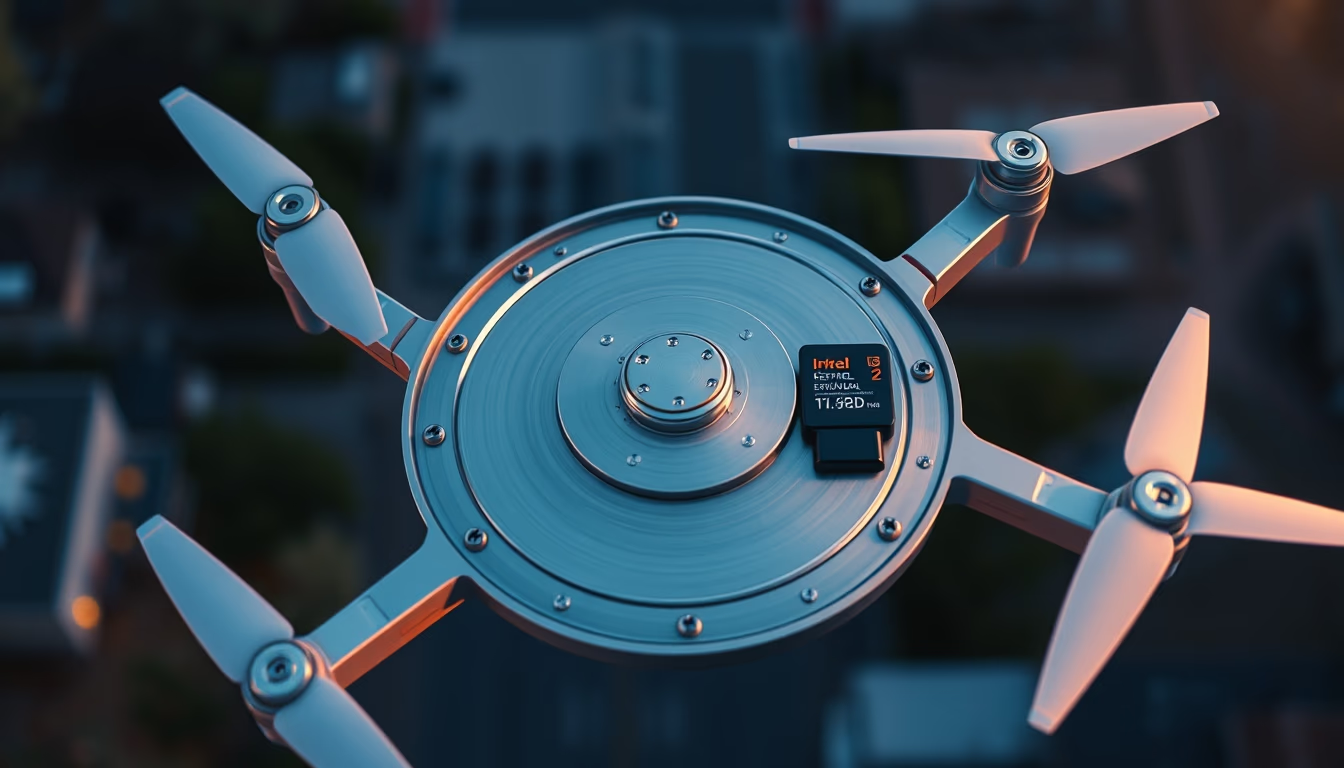
An exposed hard disk drive (HDD) platter reveals the magnetic surface that stores data, a key component in computing history.
About this subject
Hard disk drive (HDD) platters are circular disks made of aluminum, glass, or ceramic, coated with a thin magnetic layer typically composed of a cobalt-chromium-platinum alloy. This layer is where data is written and read by a read/write head that floats nanometers above the surface, supported by an air bearing created by the platter's rotation. Rotation speeds range from 5,400 RPM in consumer models to 15,000 RPM in enterprise drives, directly affecting data transfer rates and access times.
HDD technology dates back to 1956, when IBM introduced the RAMAC (Random Access Method of Accounting and Control), a room-sized system that stored only 5 MB on fifty 24-inch platters. Since then, areal density has increased exponentially, modern 3.5-inch platters can hold over 2 TB each, thanks to techniques like perpendicular recording and heat-assisted magnetic recording (HAMR). Platter manufacturing takes place in Class 10 cleanrooms, as the smallest dust particle can cause a head crash, damaging the surface and resulting in data loss.
Platters are mounted on a central spindle inside the HDD, stacked in quantities varying from 1 to 5 depending on capacity and drive height. To minimize vibration and maintain aerodynamic stability, platters are polished to optical precision and dynamically balanced. Modern data center drives often use helium inside the enclosure, reducing drag and allowing thinner platters with better energy efficiency. Although SSDs are replacing HDDs in many applications, magnetic platters still dominate low-cost mass storage, holding over 80% of the world's data in servers and backup systems.
Frequently Asked Questions
What material are HDD platters made of?
Platters are made of aluminum, glass, or ceramic. Aluminum is common in consumer drives, while glass and ceramic offer higher rigidity and thermal stability, used mainly in enterprise and data center drives.
How many platters can an HDD have?
The number of platters varies by capacity and form factor. 3.5-inch drives typically have 1 to 5 platters; 2.5-inch drives usually have 1 to 3. The quantity affects the overall thickness of the device.
Why do platters need to be polished with such precision?
Optical polishing ensures a perfectly smooth surface so the read/write head can fly just nanometers away. Any irregularity can cause head crashes or read errors, compromising data integrity.
Direct URL
https://pub-c7d6a6ea828543ac903a74a341ccb2e1.r2.dev/imagens/hdd-platter-exposed-aerial-drone-shot-p10.avifHow to credit
Include a visible link back to UtilizAí. Copy one of the snippets below:
<a href="https://xn--utiliza-eza.com/en/midia/imagens/hdd-platter-exposed-aerial-drone-shot-p10">Hdd platter exposed</a> by <a href="https://xn--utiliza-eza.com">UtilizAí</a>, licensed under <a href="https://creativecommons.org/licenses/by/4.0/">CC BY 4.0</a>.
[Hdd platter exposed](https://xn--utiliza-eza.com/en/midia/imagens/hdd-platter-exposed-aerial-drone-shot-p10) by [UtilizAí](https://xn--utiliza-eza.com), CC BY 4.0
License: CC-BY-4.0