Hand counting Brazilian Real on a wooden desk with calculator
1344×768 · AVIF · CC BY 4.0
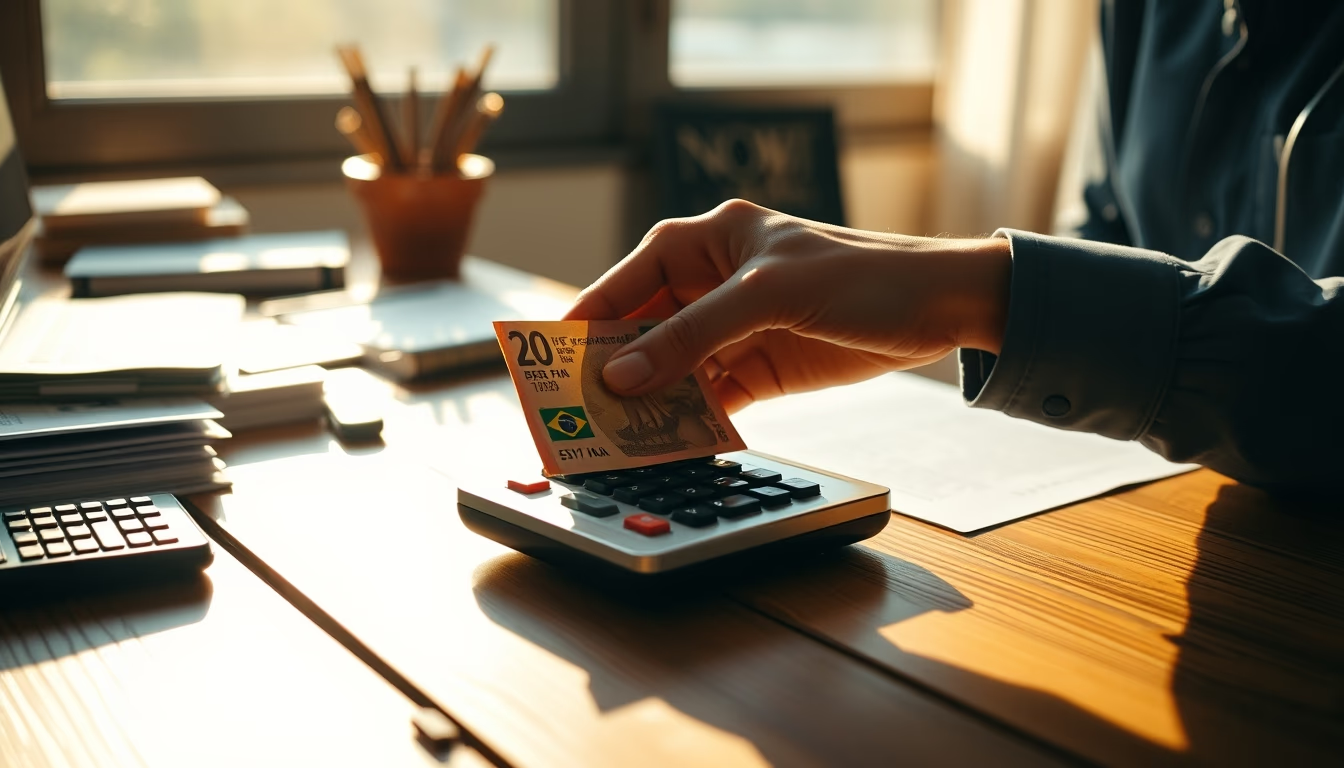
Hand counting Brazilian Real banknotes on a wooden desk with a calculator, a common scene in personal finance and retail.
About this subject
The Brazilian Real, officially adopted on July 1, 1994 during the government of Itamar Franco, is the currency of Brazil. Its implementation marked the end of decades of hyperinflation, stabilizing the economy and enabling long-term financial planning. The current banknotes, from the second family of the Real, were launched starting in 2010 and feature Brazilian fauna, such as the jaguar (R$ 50) and the heron (R$ 5). The act of manually counting money, although increasingly replaced by digital transactions, is still common in small businesses, open-air markets, and among self-employed professionals. A 2022 survey by the Central Bank indicated that about 70% of Brazilians still regularly use cash, mainly for low-value transactions. The calculator beside the hand reinforces the need for accuracy in household budgets or cash register closing. The wooden desk evokes informal settings like home offices or market stalls, where physical contact with money remains routine. Handling banknotes requires attention to counterfeit signs: watermarks, tactile relief, and fluorescent elements are checked by many merchants. The Real is one of the world's most secure currencies, featuring 14 security items on current notes.
Frequently Asked Questions
What are the main ways to identify counterfeit Real banknotes?
Check the tactile relief on the figure's face, the watermark against light, and the holographic strip on R$ 50 and R$ 100 notes. Also use UV light to see fluorescent elements.
Why is cash still widely used in Brazil?
About 70% of Brazilians use cash regularly, according to the Central Bank, mainly for low-value transactions, in areas without bank access, or due to cultural preference in markets and informal commerce.
When was the Real created and why?
The Real was created in 1994 to fight hyperinflation in Brazil. The Plano Real stabilized the economy and brought confidence to the currency, replacing the Cruzeiro Real.
Direct URL
https://pub-c7d6a6ea828543ac903a74a341ccb2e1.r2.dev/imagens/hand-counting-brazilian-real-on-a-wooden-desk-with-calculator-wide-late-afternoon-6.avifHow to credit
Include a visible link back to UtilizAí. Copy one of the snippets below:
<a href="https://xn--utiliza-eza.com/en/midia/imagens/hand-counting-brazilian-real-on-a-wooden-desk-with-calculator-wide-late-afternoon-6">Hand counting Brazilian Real on a wooden desk with calculator</a> by <a href="https://xn--utiliza-eza.com">UtilizAí</a>, licensed under <a href="https://creativecommons.org/licenses/by/4.0/">CC BY 4.0</a>.
[Hand counting Brazilian Real on a wooden desk with calculator](https://xn--utiliza-eza.com/en/midia/imagens/hand-counting-brazilian-real-on-a-wooden-desk-with-calculator-wide-late-afternoon-6) by [UtilizAí](https://xn--utiliza-eza.com), CC BY 4.0
License: CC-BY-4.0
Tags
Related images
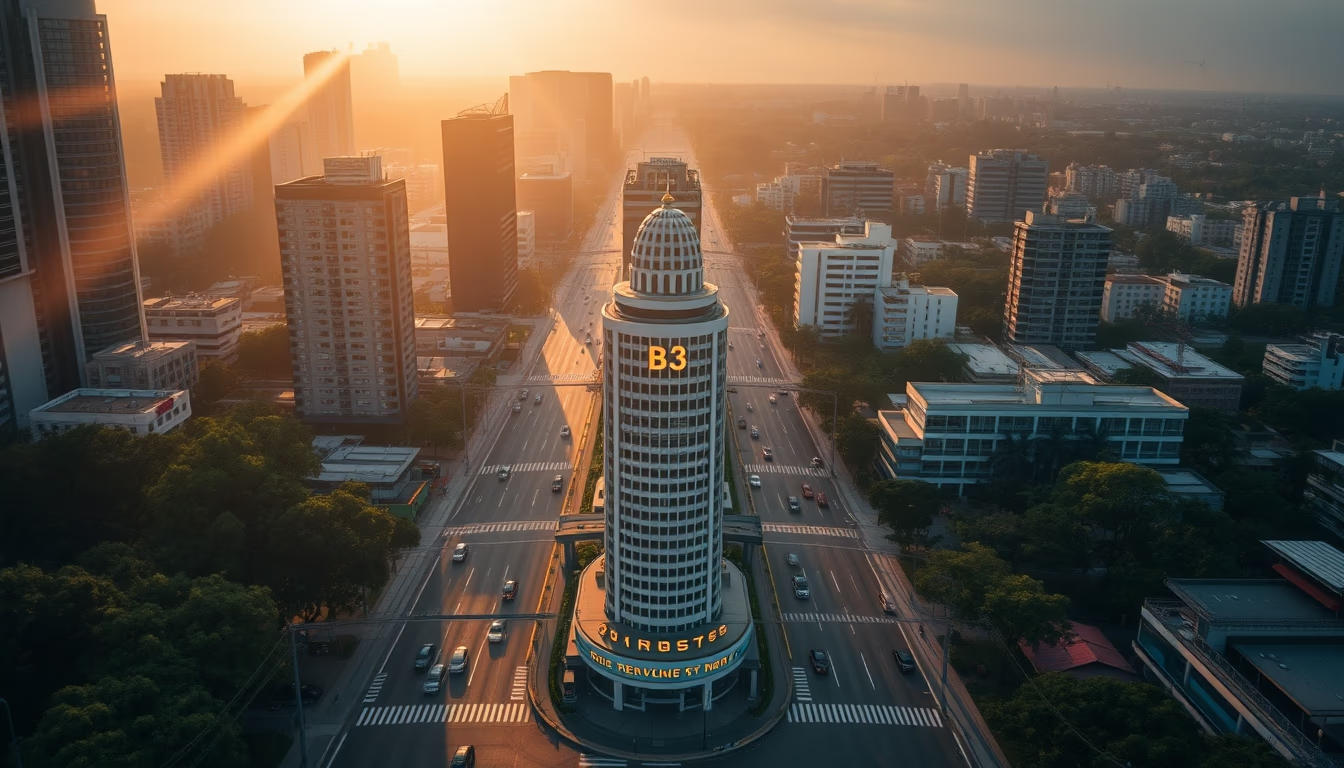 Aerial view of São Paulo financial district at golden hour with B3 building
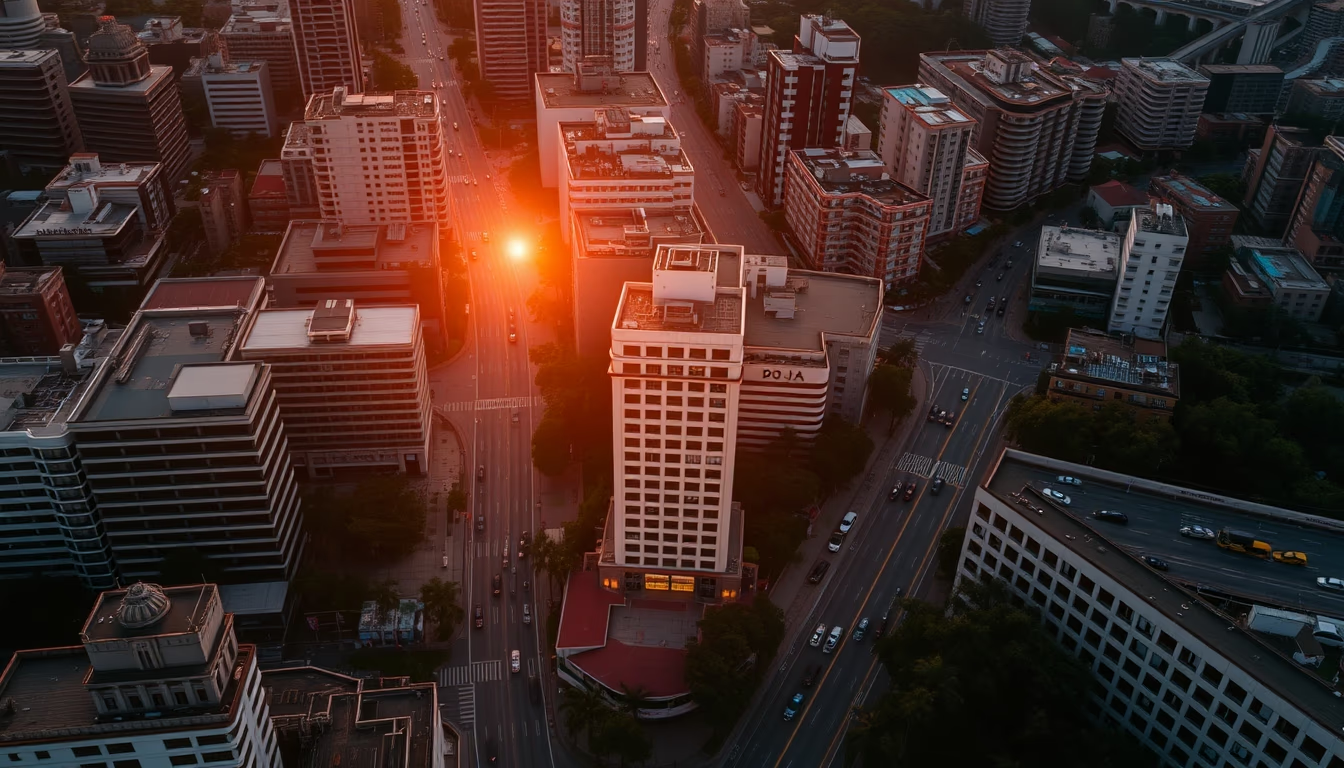 Aerial view of São Paulo financial district at golden hour with B3 building
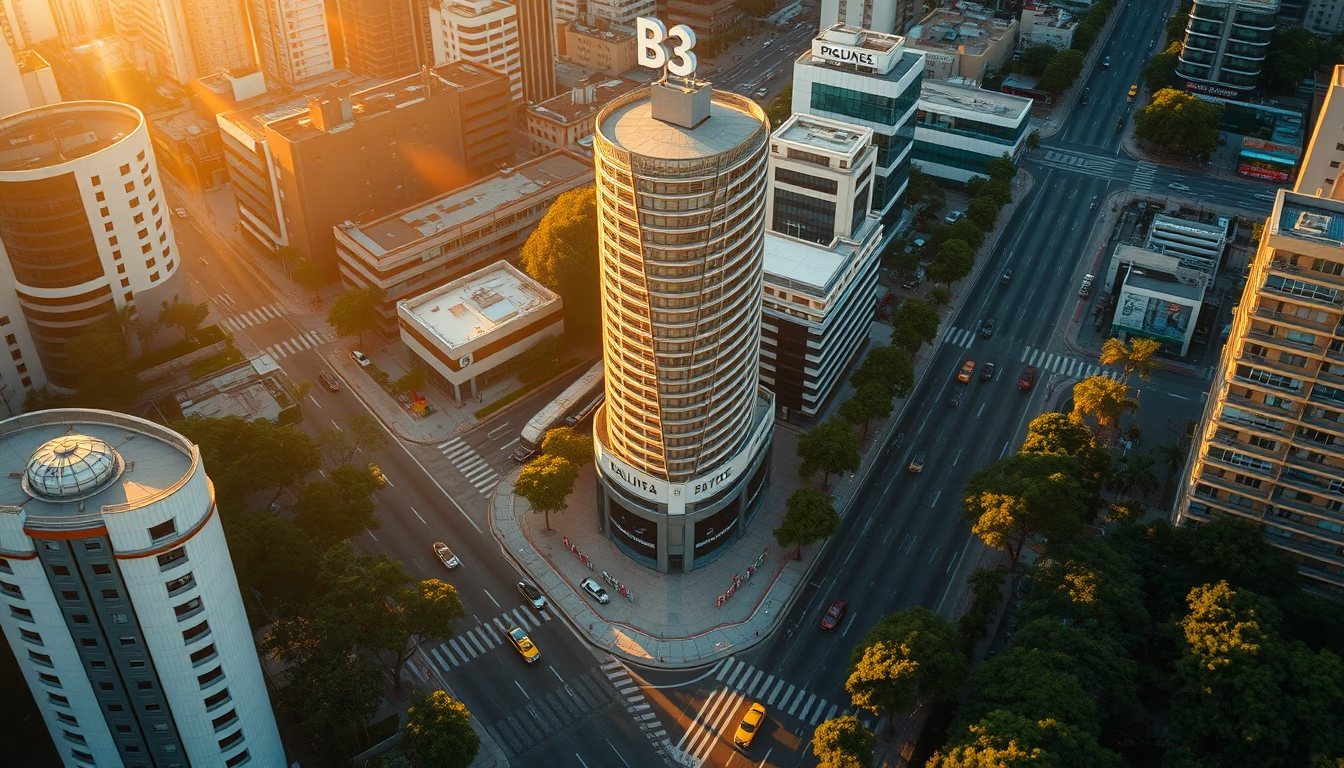 Aerial view of São Paulo financial district at golden hour with B3 building
 Aerial view of São Paulo financial district at golden hour with B3 building
 Aerial view of São Paulo financial district at golden hour with B3 building
 Aerial view of São Paulo financial district at golden hour with B3 building