Hand counting Brazilian Real on a wooden desk with calculator
1344×768 · AVIF · CC BY 4.0
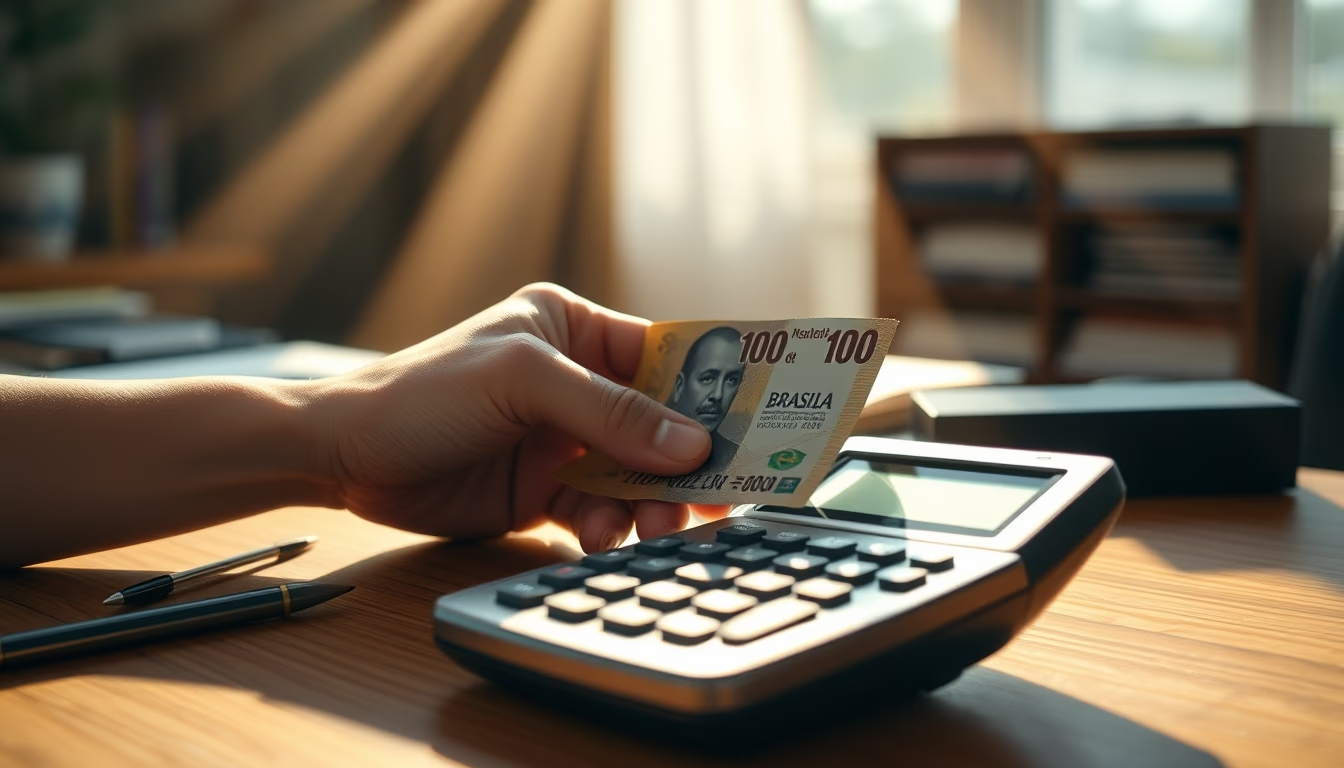
Hand counting Brazilian Real banknotes on a wooden desk with a calculator, evoking personal and business financial planning in Brazil.
About this subject
The Brazilian Real, official currency of Brazil since 1994, is one of the main economic references in Latin America. The scene of counting banknotes with a calculator is common in small businesses, street markets, and even households where financial control is done manually. Cash usage remains significant in the country: according to the Central Bank, about 20% of retail transactions are in cash, especially among informal workers and in regions without full access to banks.
The wooden desk evokes a home or simple office environment, typical of individual microentrepreneurs (MEIs) who manage their cash flow with traditional methods. The calculator, in turn, symbolizes the need for precision in a context where errors can compromise the budget. Historically, the Real has undergone several transformations, including the replacement of notes and coins over the years, such as the series launched in 2010 and 2020, which introduced security features like watermarks and tactile relief.
Interestingly, Brazil has one of the highest tax burdens in the world, making financial planning even more crucial. The practice of manually counting money persists despite the advance of Pix, an instant payment system created by the Central Bank in 2020. While Pix dominates digital transactions, physical cash remains essential for the unbanked population, which represents about 34 million Brazilian adults according to 2023 data.
Frequently Asked Questions
Why is physical cash still used in Brazil?
Despite the rise of Pix, physical cash is widely used by informal workers and the unbanked population, which represents about 34 million Brazilians. Additionally, small businesses and street markets prefer cash to avoid card machine fees.
What are the main security features of Brazilian Real banknotes?
Real banknotes feature watermarks, tactile relief, hidden numbers, and holographic strips (on higher denominations). The 2010 series introduced elements like the Republic figure and Brazilian fauna animals, while the 2020 series added more features for the visually impaired.
How does manual financial control impact small businesses?
Manual control with calculators and spreadsheets allows microentrepreneurs to track cash flow without software costs. However, it requires discipline and can lead to errors, gradually being replaced by free apps offered by banks and fintechs.
Direct URL
https://pub-c7d6a6ea828543ac903a74a341ccb2e1.r2.dev/imagens/hand-counting-brazilian-real-on-a-wooden-desk-with-calculator-editorial-overcast-daytime-3.avifHow to credit
Include a visible link back to UtilizAí. Copy one of the snippets below:
<a href="https://xn--utiliza-eza.com/en/midia/imagens/hand-counting-brazilian-real-on-a-wooden-desk-with-calculator-editorial-overcast-daytime-3">Hand counting Brazilian Real on a wooden desk with calculator</a> by <a href="https://xn--utiliza-eza.com">UtilizAí</a>, licensed under <a href="https://creativecommons.org/licenses/by/4.0/">CC BY 4.0</a>.
[Hand counting Brazilian Real on a wooden desk with calculator](https://xn--utiliza-eza.com/en/midia/imagens/hand-counting-brazilian-real-on-a-wooden-desk-with-calculator-editorial-overcast-daytime-3) by [UtilizAí](https://xn--utiliza-eza.com), CC BY 4.0
License: CC-BY-4.0
Tags
Related images
 Aerial view of São Paulo financial district at golden hour with B3 building
 Aerial view of São Paulo financial district at golden hour with B3 building
 Aerial view of São Paulo financial district at golden hour with B3 building
 Aerial view of São Paulo financial district at golden hour with B3 building
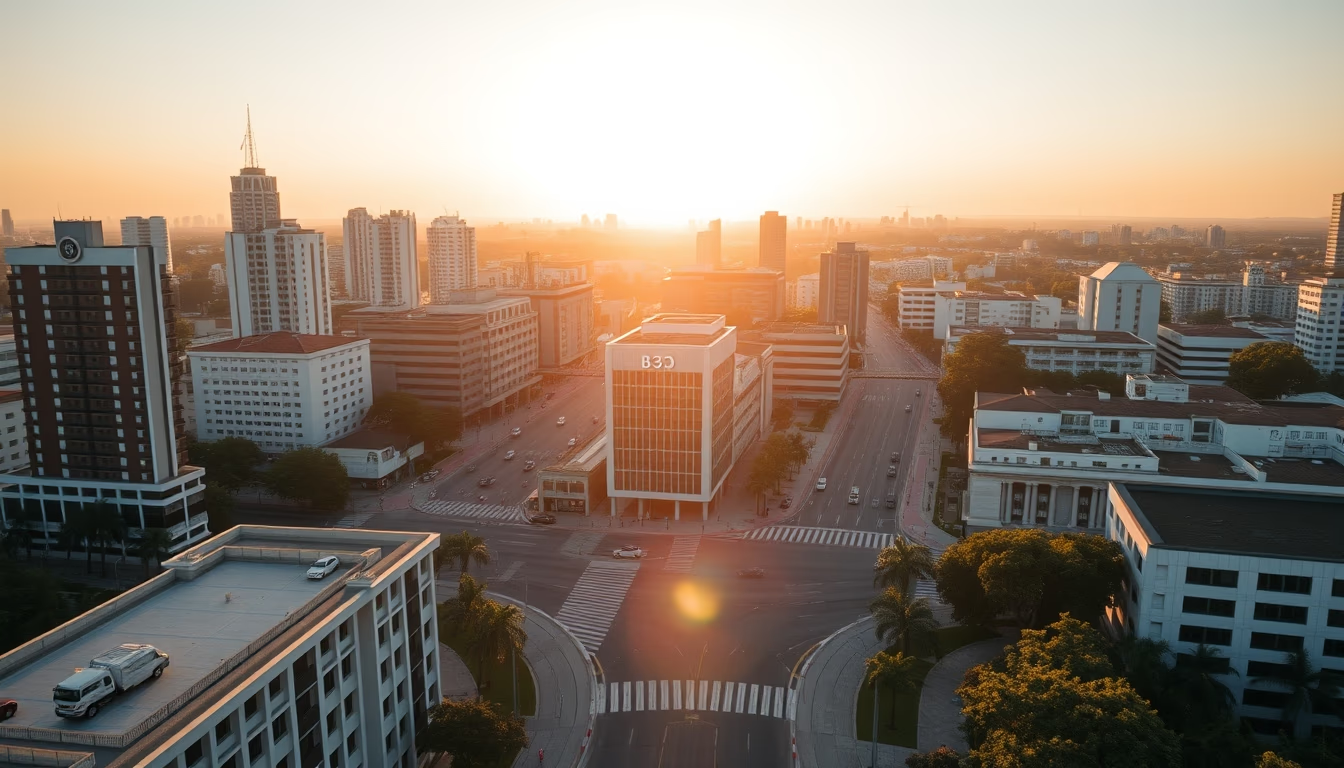 Aerial view of São Paulo financial district at golden hour with B3 building
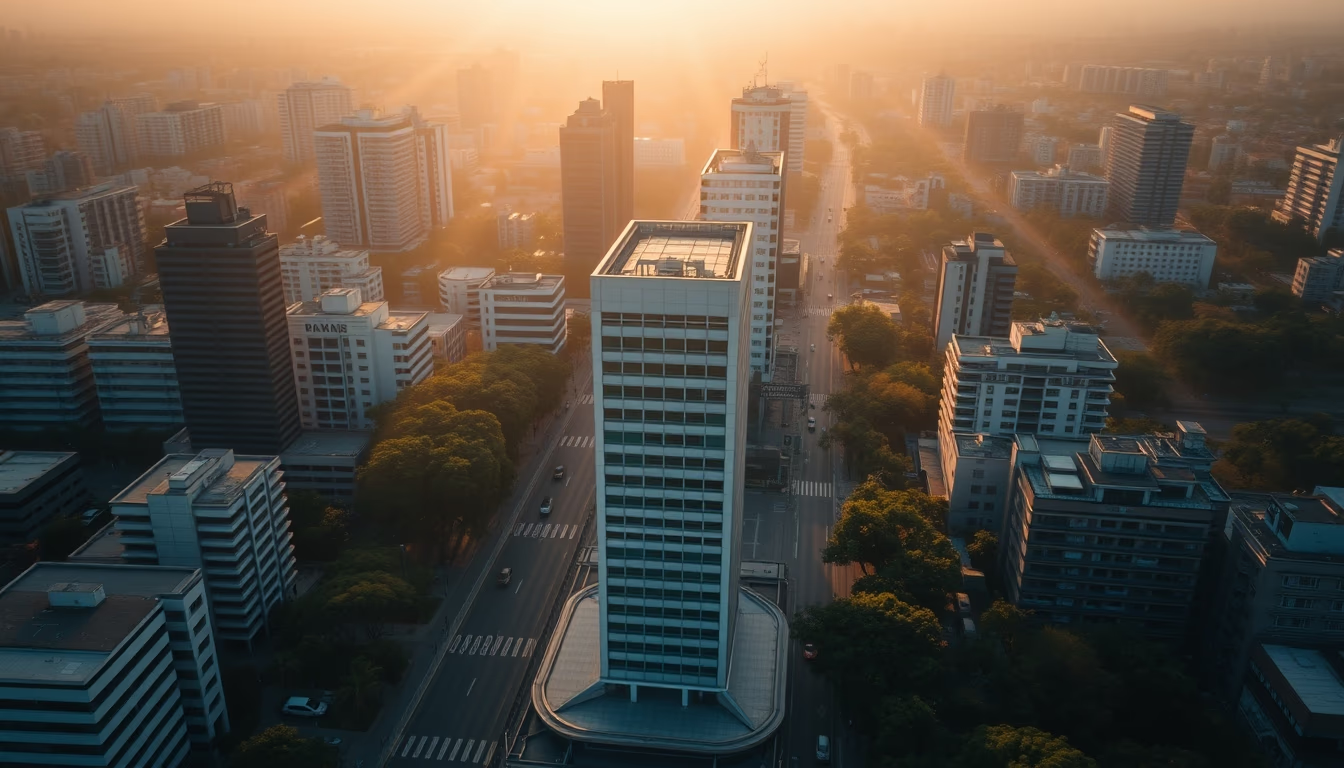 Aerial view of São Paulo financial district at golden hour with B3 building