Hacker keyboard dark
1344×768 · AVIF · CC BY 4.0
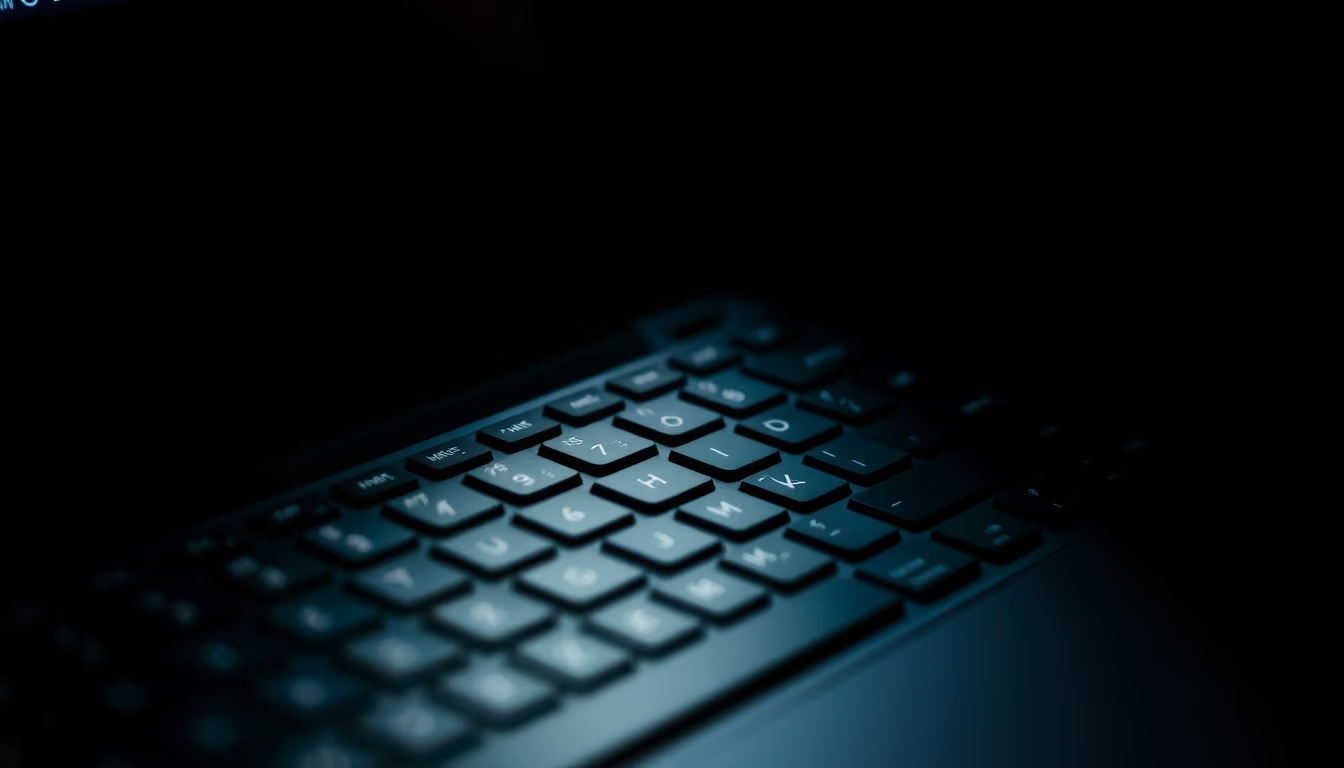
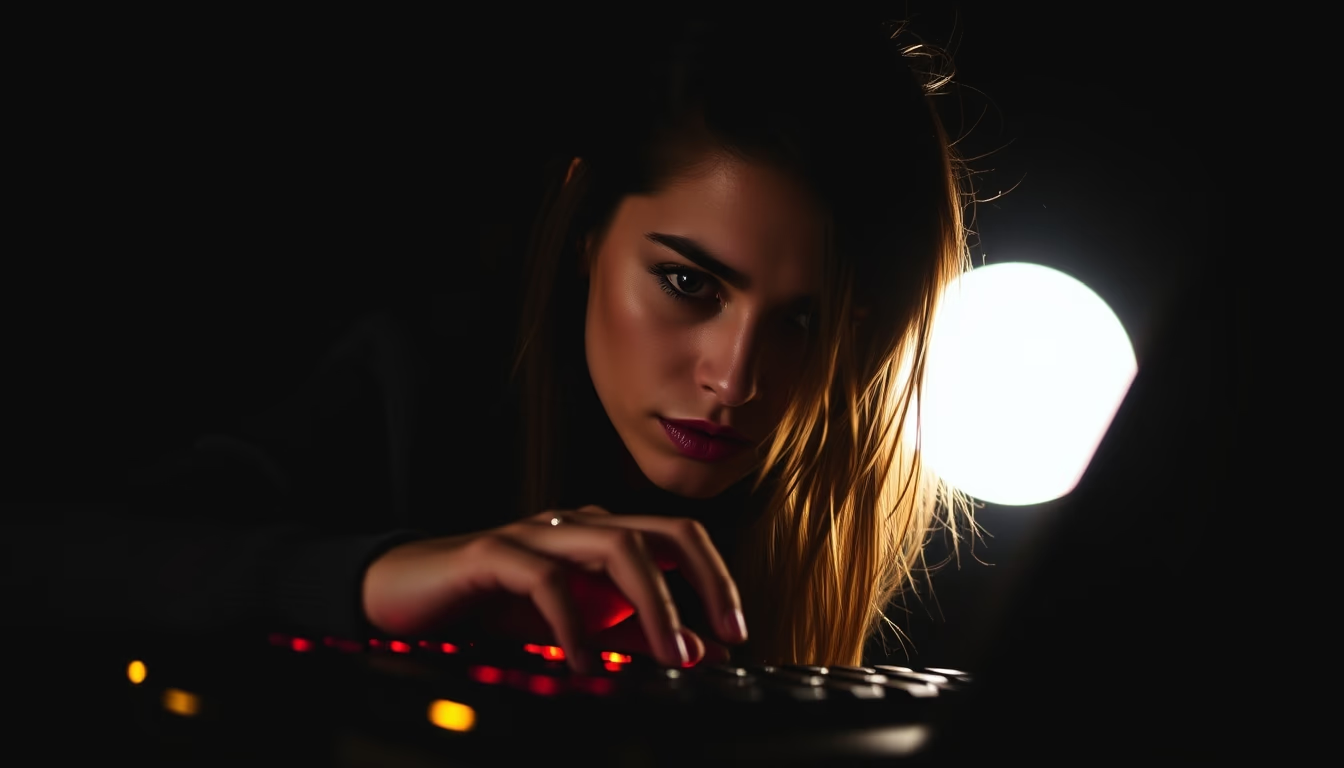
Dark mechanical keyboards are essential tools for cybersecurity professionals, offering precision and discretion in low-light environments.
About this subject
Mechanical keyboards, especially those with dark finishes and customizable backlighting, are widely adopted by ethical hackers and information security specialists. Unlike membrane keyboards, mechanical models use individual switches under each key, offering tactile response and superior durability, features valued during prolonged code analysis or penetration testing sessions. The dark coloration is not just aesthetic: it reduces screen reflections, aids immersion in low-light environments, and in some cases, conceals signs of heavy use.
In cybersecurity contexts, keyboard choice can impact productivity. Linear switches, such as Cherry MX Red, are favored for fast typing, while tactile switches (MX Brown) provide feedback without the excessive noise of clicky models. Many keyboards aimed at the security market come with programmable keys and lighting profiles that can sync with monitoring system alerts, for instance, flashing red when a critical log is detected. Additionally, cable-free Bluetooth models minimize risks of physical keylogging, though experienced hackers also use keyboards with signal sniffing protection.
The term "hacker keyboard" evokes not just hardware but an ecosystem of customization. Open-source firmware like QMK allows reconfiguring every key, creating complex macros, and even emulating USB devices for security testing. This flexibility is crucial in red team operations, where every shortcut can save precious seconds. Although popular media associates illuminated keyboards with movie stereotypes, the reality is that serious professionals use them as precision tools, combining robust hardware with advanced software to protect systems and data.
Frequently Asked Questions
What is the difference between mechanical and membrane keyboards for cybersecurity?
Mechanical keyboards feature individual switches, higher durability (50 million clicks or more), and precise tactile feedback, ideal for intensive typing. Membrane keyboards are cheaper but less reliable long-term and lack the same firmware customization capabilities.
Do dark keyboards help with physical security?
Yes. The lack of flashy lights and low profile reduce visibility of which keys are being pressed, hindering shoulder surfing. Some models also have privacy filters for restricted viewing angles.
What is keylogging and how can a keyboard prevent it?
Keylogging is unauthorized capture of keystrokes. Keyboards with built-in encryption (e.g., AES-256) or secure Bluetooth connections make interception difficult. Open-source firmware models allow code auditing for backdoors.
Direct URL
https://pub-c7d6a6ea828543ac903a74a341ccb2e1.r2.dev/imagens/hacker-keyboard-dark-magazine-editorial-p2.avifHow to credit
Include a visible link back to UtilizAí. Copy one of the snippets below:
<a href="https://xn--utiliza-eza.com/en/midia/imagens/hacker-keyboard-dark-magazine-editorial-p2">Hacker keyboard dark</a> by <a href="https://xn--utiliza-eza.com">UtilizAí</a>, licensed under <a href="https://creativecommons.org/licenses/by/4.0/">CC BY 4.0</a>.
[Hacker keyboard dark](https://xn--utiliza-eza.com/en/midia/imagens/hacker-keyboard-dark-magazine-editorial-p2) by [UtilizAí](https://xn--utiliza-eza.com), CC BY 4.0
License: CC-BY-4.0