Gutenberg bible page
1344×768 · AVIF · CC BY 4.0
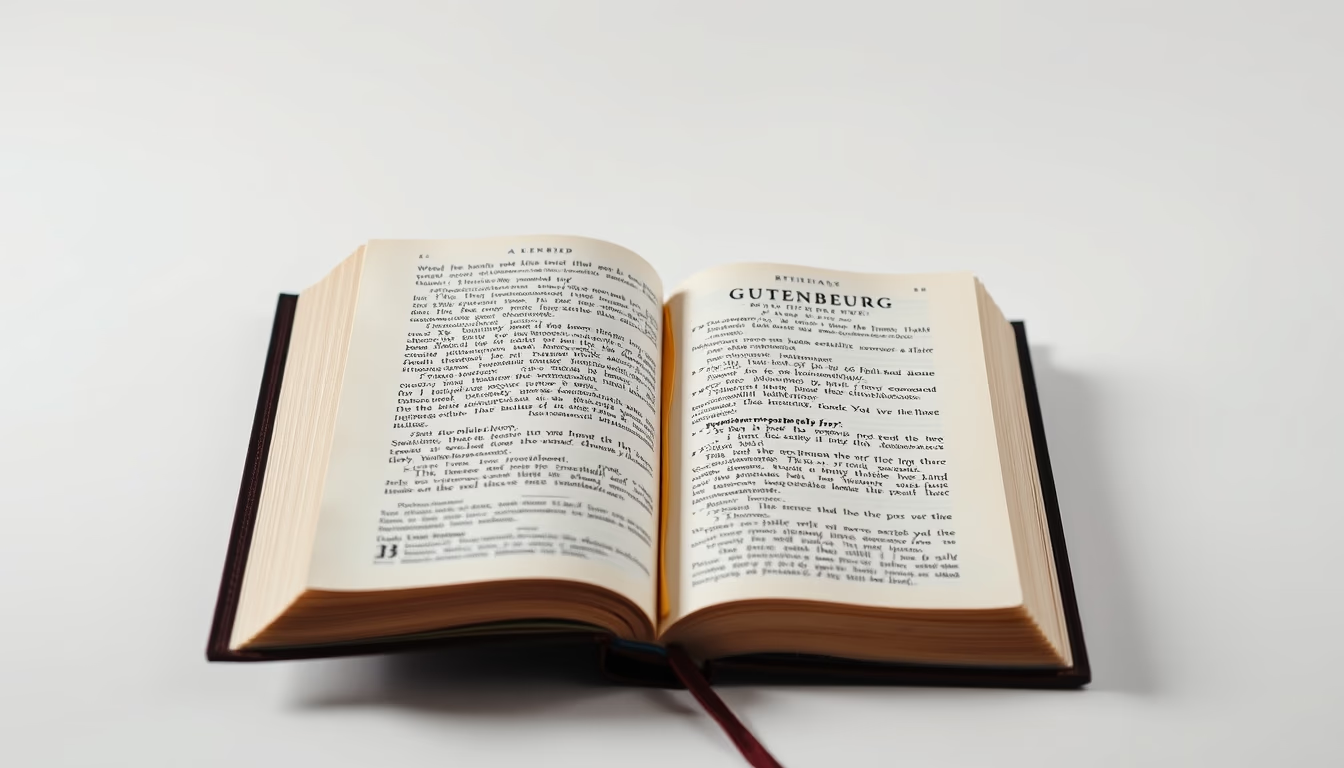
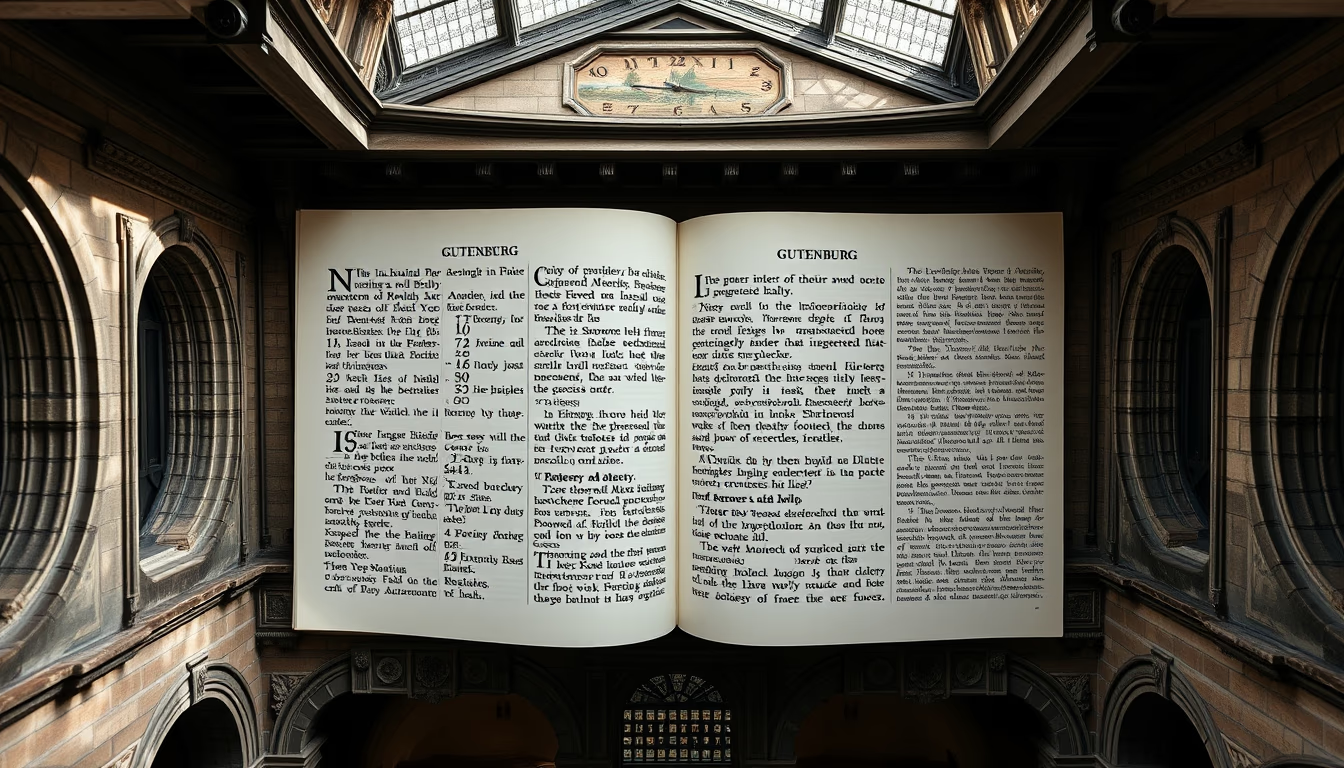
The Gutenberg Bible, printed by Johannes Gutenberg in the 1450s, marked the beginning of movable type printing in Europe.
About this subject
The Gutenberg Bible, also known as the 42-line Bible, is the first major book printed in Europe using movable metal type. Produced by Johannes Gutenberg in Mainz, Germany, around 1455, it marks a watershed in the history of communication and knowledge. Approximately 180 copies were printed, of which 49 survive today in varying degrees of completeness. The work is famous for its blackletter type and for initial letters and decorations often hand-painted by illuminators, giving each copy a unique character.
Printing the Gutenberg Bible required significant technical innovations, including the development of a suitable metal alloy for the type, an oil-based ink that adhered well to metal and paper, and a press adapted from wine or paper presses. Each page has two columns of text, with 42 lines on most pages (hence the alternative name). Vellum copies (made from animal skin) are rarer and more valuable than those on paper.
Culturally, the Gutenberg Bible catalyzed the Printing Revolution, enabling mass production of books and ideas. Before it, books were hand-copied, a slow and expensive process confined to monasteries and universities. With printing, knowledge became more accessible, spurring the Protestant Reformation, the Renaissance, and the Scientific Revolution. The Gutenberg Bible is not just a religious object but a symbol of technology's power to transform society.
Fun facts: a complete paper copy of the Gutenberg Bible sold for over $5 million in 1978. Today, most surviving copies are in libraries and museums, such as the U.S. Library of Congress, the French National Library, and the British Library. The name "Gutenberg" has become synonymous with innovation in printing, and his Bible continues to be studied by historians, typographers, and bibliophiles worldwide.
Frequently Asked Questions
How many copies of the Gutenberg Bible exist today?
Today, 49 complete or partial copies of the Gutenberg Bible survive, including 12 on vellum and 37 on paper.
Why is the Gutenberg Bible called the 42-line Bible?
It is called the 42-line Bible because most of its pages contain 42 lines of text, arranged in two columns. This consistency was a hallmark of Gutenberg's pioneering printing.
What was the impact of the Gutenberg Bible on history?
It sparked the Printing Revolution, making book production cheaper and faster, which democratized access to knowledge and fueled movements like the Protestant Reformation and the Renaissance.
Direct URL
https://pub-c7d6a6ea828543ac903a74a341ccb2e1.r2.dev/imagens/gutenberg-bible-page-studio-still-life-fresh1.avifHow to credit
Include a visible link back to UtilizAí. Copy one of the snippets below:
<a href="https://xn--utiliza-eza.com/en/midia/imagens/gutenberg-bible-page-studio-still-life-fresh1">Gutenberg bible page</a> by <a href="https://xn--utiliza-eza.com">UtilizAí</a>, licensed under <a href="https://creativecommons.org/licenses/by/4.0/">CC BY 4.0</a>.
[Gutenberg bible page](https://xn--utiliza-eza.com/en/midia/imagens/gutenberg-bible-page-studio-still-life-fresh1) by [UtilizAí](https://xn--utiliza-eza.com), CC BY 4.0
License: CC-BY-4.0