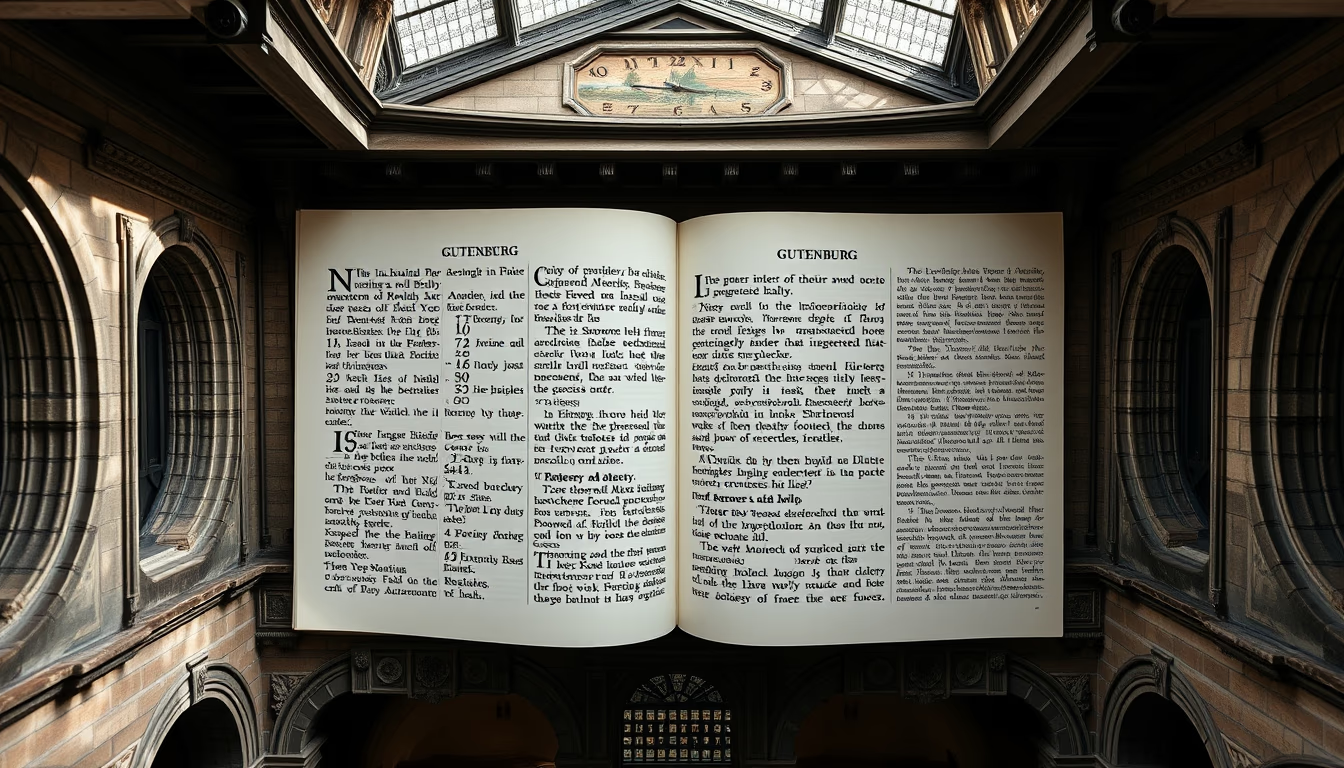
Gutenberg bible page
1344×768 · AVIF · CC BY 4.0
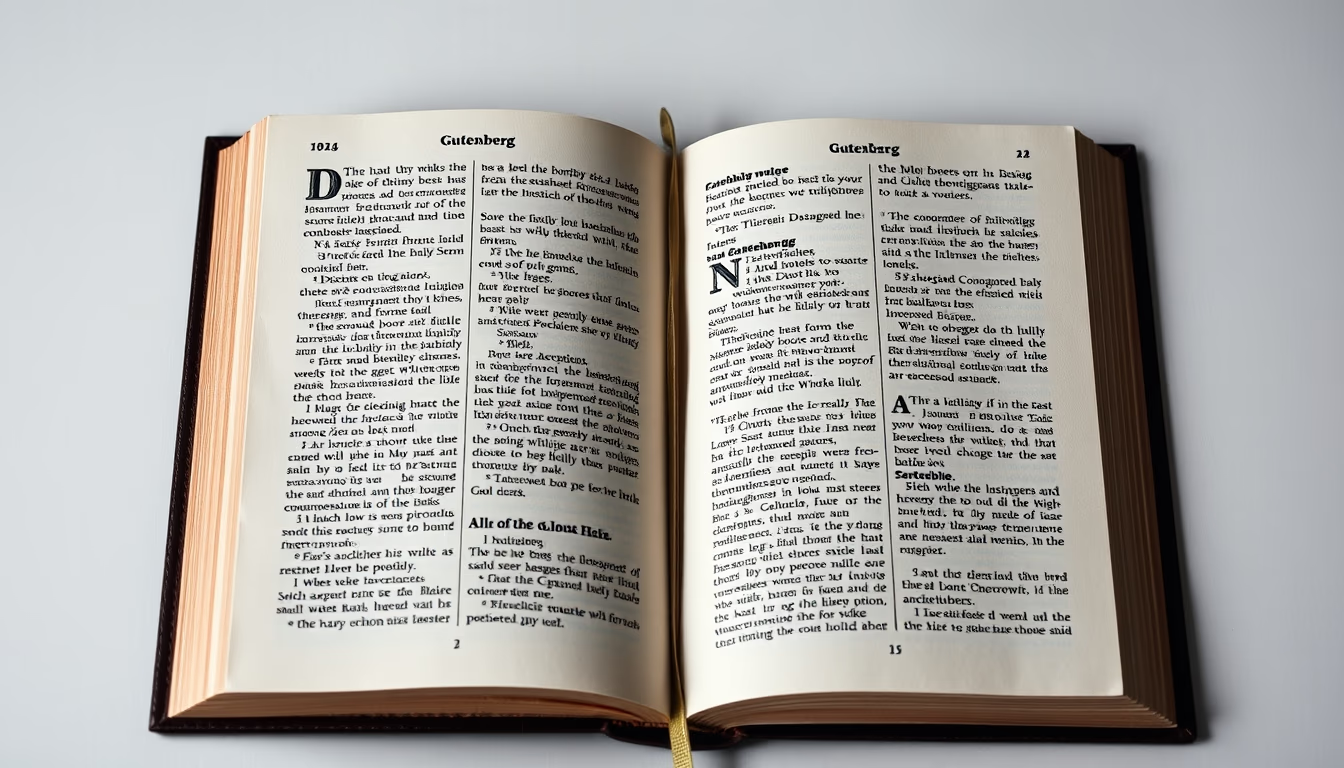
Page of the Gutenberg Bible, printed by Johannes Gutenberg in the 1450s, a landmark invention of the movable type press and the beginning of the printing era.
About this subject
The Gutenberg Bible, also known as the 42-line Bible, is the first major book printed in Western Europe using movable metal type. Produced in Mainz, Germany, by Johannes Gutenberg between 1452 and 1455, each copy contains approximately 1,282 pages, divided into two volumes. The printing employed six different ink types, including black for the main text and red for initials and titles, which were often hand-illuminated afterward.
The original print run is estimated at around 180 copies, of which about 49 survive today in museums and libraries. Each page has two columns of 42 lines each, hence the alternate name. The typeface used was Textualis, a variation of Gothic script. The printing quality is remarkable: even with manual methods, the consistency and alignment of the letters demonstrate Gutenberg's precision.
The cultural and historical impact of the Gutenberg Bible is immense. It democratized access to knowledge, allowing books to be reproduced on a large scale at more affordable prices. Before the press, books were copied by hand by monk scribes, a slow and error-prone process. The Gutenberg Bible catalyzed the Protestant Reformation and the spread of scientific and philosophical ideas during the Renaissance.
A curiosity: no paper complete Gutenberg Bible has sold for less than US$ 5 million at auction. Most remaining copies are in climate-controlled displays, requiring rigorous conservation to prevent damage from handling and light.
Frequently Asked Questions
How many Gutenberg Bibles still exist?
About 49 copies survive, but not all are complete. Most are held by institutions such as the Library of Congress, the National Library of France, and the British Library.
What is the value of a Gutenberg Bible?
Complete paper copies have sold for over US$ 5 million at auction. Vellum copies are even rarer and more valuable.
How did Gutenberg manage to print the first letters?
Gutenberg developed a metal alloy of lead, tin, and antimony to create durable type. He also adapted a wine press to apply uniform pressure on the paper.
Direct URL
https://pub-c7d6a6ea828543ac903a74a341ccb2e1.r2.dev/imagens/gutenberg-bible-page-studio-editorial-portrait-fresh9.avifHow to credit
Include a visible link back to UtilizAí. Copy one of the snippets below:
<a href="https://xn--utiliza-eza.com/en/midia/imagens/gutenberg-bible-page-studio-editorial-portrait-fresh9">Gutenberg bible page</a> by <a href="https://xn--utiliza-eza.com">UtilizAí</a>, licensed under <a href="https://creativecommons.org/licenses/by/4.0/">CC BY 4.0</a>.
[Gutenberg bible page](https://xn--utiliza-eza.com/en/midia/imagens/gutenberg-bible-page-studio-editorial-portrait-fresh9) by [UtilizAí](https://xn--utiliza-eza.com), CC BY 4.0
License: CC-BY-4.0