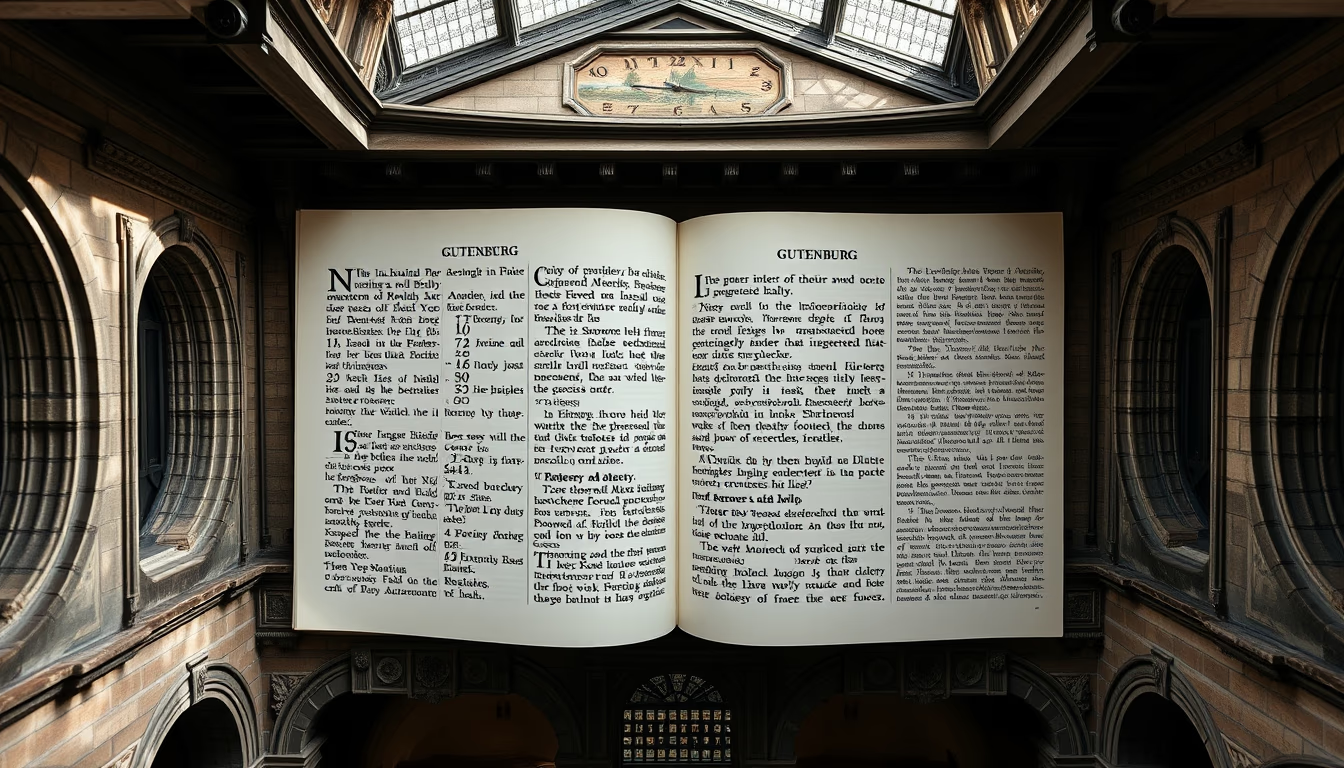
Gutenberg bible page
1344×768 · AVIF · CC BY 4.0

The Gutenberg Bible, printed by Johannes Gutenberg in the 1450s, was the first major book produced with movable type in Europe, revolutionizing the dissemination of knowledge.
About this subject
The Gutenberg Bible, also known as the 42-line Bible, is one of the most important books in the history of printing. Printed in Mainz, Germany, by Johannes Gutenberg between 1450 and 1455, it marked the beginning of Western printing with movable type. The text is the Latin Vulgate translation by Saint Jerome. Each page has two columns of 42 lines of Gothic text, with initials and ornaments hand-painted after printing. Gutenberg produced about 180 copies, of which approximately 49 survive today. The paper was made from linen rags, and some copies were printed on vellum (calfskin parchment). The total print run is uncertain, but it is estimated that 180 copies were produced: about 135 on paper and 45 on vellum. The work consists of two volumes, with 1,282 pages in total. The typeface was cast from an alloy of lead, tin, and antimony. Each character was individually molded and set by hand. The page layout is functional, with wide margins and decorated capital letters. The Gutenberg Bible was a commercial success at the time, although Gutenberg's business faced financial difficulties. It directly influenced the Protestant Reformation and the spread of ideas during the Renaissance. Today, copies are held by institutions such as the Library of Congress (USA) and the National Library of France.
Frequently Asked Questions
How many copies of the Gutenberg Bible were produced and how many survive today?
About 180 copies were produced, of which approximately 49 complete or partial copies still exist.
What is the difference between the paper and vellum copies?
About 135 copies were printed on linen rag paper and 45 on vellum (calfskin parchment). Vellum copies are rarer and more valuable.
Why is the Gutenberg Bible so important in history?
It was the first major book printed with movable type in Europe, enabling mass production of standardized texts and accelerating the spread of knowledge, preceding the Protestant Reformation.
Direct URL
https://pub-c7d6a6ea828543ac903a74a341ccb2e1.r2.dev/imagens/gutenberg-bible-page-minimalist-composition-fresh12.avifHow to credit
Include a visible link back to UtilizAí. Copy one of the snippets below:
<a href="https://xn--utiliza-eza.com/en/midia/imagens/gutenberg-bible-page-minimalist-composition-fresh12">Gutenberg bible page</a> by <a href="https://xn--utiliza-eza.com">UtilizAí</a>, licensed under <a href="https://creativecommons.org/licenses/by/4.0/">CC BY 4.0</a>.
[Gutenberg bible page](https://xn--utiliza-eza.com/en/midia/imagens/gutenberg-bible-page-minimalist-composition-fresh12) by [UtilizAí](https://xn--utiliza-eza.com), CC BY 4.0
License: CC-BY-4.0