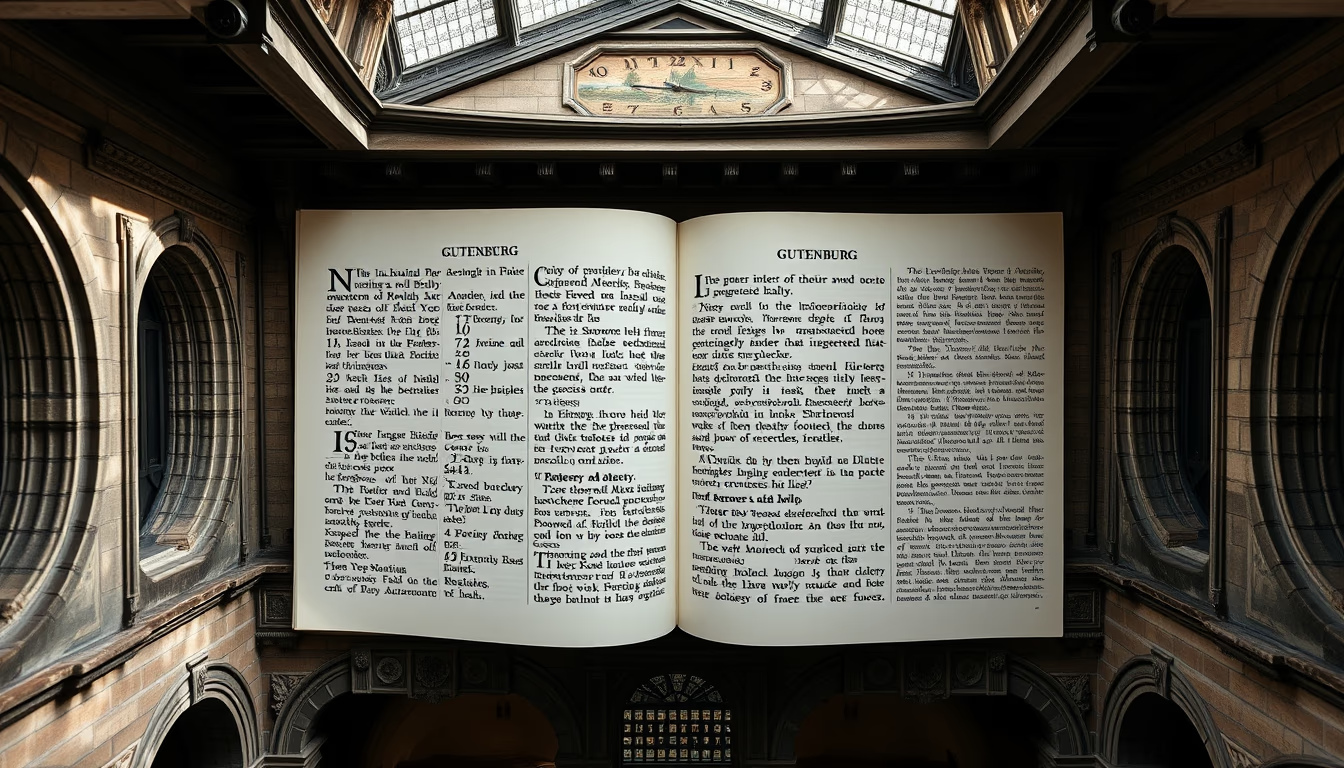
Gutenberg bible page
1344×768 · AVIF · CC BY 4.0
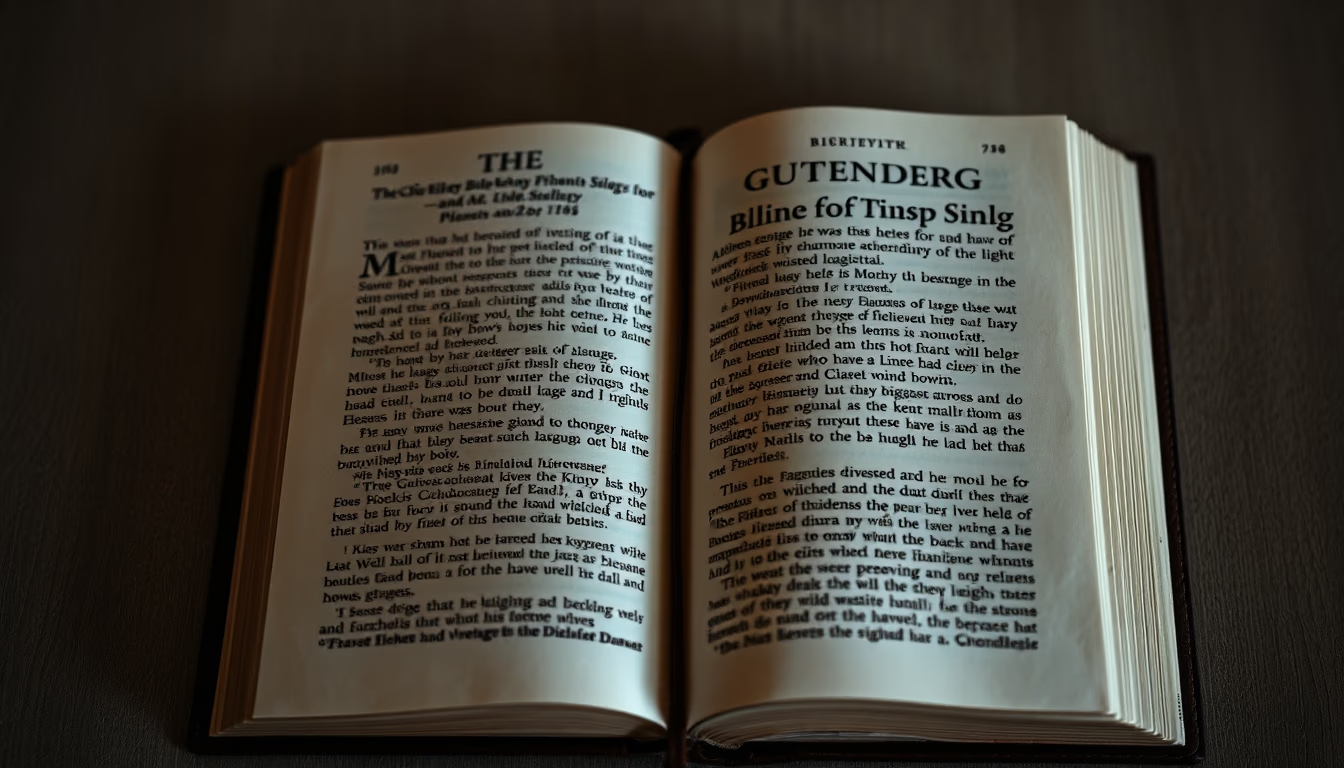
The Gutenberg Bible page represents a landmark in the history of printing and the spread of knowledge in the Western world.
About this subject
The Gutenberg Bible, also known as the 42-line Bible, was the first major book produced in Western Europe using movable type printing. Johannes Gutenberg completed the work around 1455 in Mainz, Germany. Each page features two columns of Gothic type, with 42 lines per column, hence its alternative name. Initials and decorations were often hand-illuminated after printing, making each copy unique. It is estimated that between 160 and 180 copies were printed, of which about 49 survive in complete or fragmentary form.
Gutenberg's technique revolutionized book production, drastically reducing the cost and time required to copy texts. Before the press, a manuscript took months or years to produce by scribes; with printing, hundreds of pages could be reproduced in days. This allowed an unprecedented dissemination of knowledge and is often cited as a crucial factor for the Renaissance, the Protestant Reformation, and the beginnings of modern science.
The pages of the Gutenberg Bible are printed on paper or vellum, using an oil-based ink developed by Gutenberg himself. There is no page numbering, but the text follows the Latin Vulgate. The work comprises two volumes: the Old Testament and the New Testament. Copies today are extremely rare and valuable; a single page may fetch tens of thousands of dollars at auction. Institutions such as the Library of Congress in the United States and the British Library in the United Kingdom hold complete copies.
Interestingly, the Gutenberg Bible was not the first book printed with movable type (similar techniques existed in Asia earlier), but it was the first to achieve a scale and quality that triggered a cultural revolution in the West. The page design influenced typography for centuries, and the term 'Gutenberg Bible' has become synonymous with innovation and a paradigm shift in human communication.
Frequently Asked Questions
How many pages does the Gutenberg Bible have?
The complete Gutenberg Bible has about 1,282 pages, divided into two volumes. The first volume contains the Old Testament, and the second the New Testament.
What is the value of an original Gutenberg Bible page?
A single leaf from the Gutenberg Bible can be worth between $25,000 and $100,000 at auction, depending on condition and illumination. Complete copies are valued in the millions of dollars.
Was the Gutenberg Bible the first printed book in the world?
No. Although it is the first major book printed with movable type in the West, movable type printing was practiced in China and Korea centuries earlier, with examples like the Jikji (1377). The Gutenberg Bible stands out for its technological and cultural impact in Europe.
Direct URL
https://pub-c7d6a6ea828543ac903a74a341ccb2e1.r2.dev/imagens/gutenberg-bible-page-fine-art-photography-fresh13.avifHow to credit
Include a visible link back to UtilizAí. Copy one of the snippets below:
<a href="https://xn--utiliza-eza.com/en/midia/imagens/gutenberg-bible-page-fine-art-photography-fresh13">Gutenberg bible page</a> by <a href="https://xn--utiliza-eza.com">UtilizAí</a>, licensed under <a href="https://creativecommons.org/licenses/by/4.0/">CC BY 4.0</a>.
[Gutenberg bible page](https://xn--utiliza-eza.com/en/midia/imagens/gutenberg-bible-page-fine-art-photography-fresh13) by [UtilizAí](https://xn--utiliza-eza.com), CC BY 4.0
License: CC-BY-4.0