Gutenberg bible page
1344×768 · AVIF · CC BY 4.0

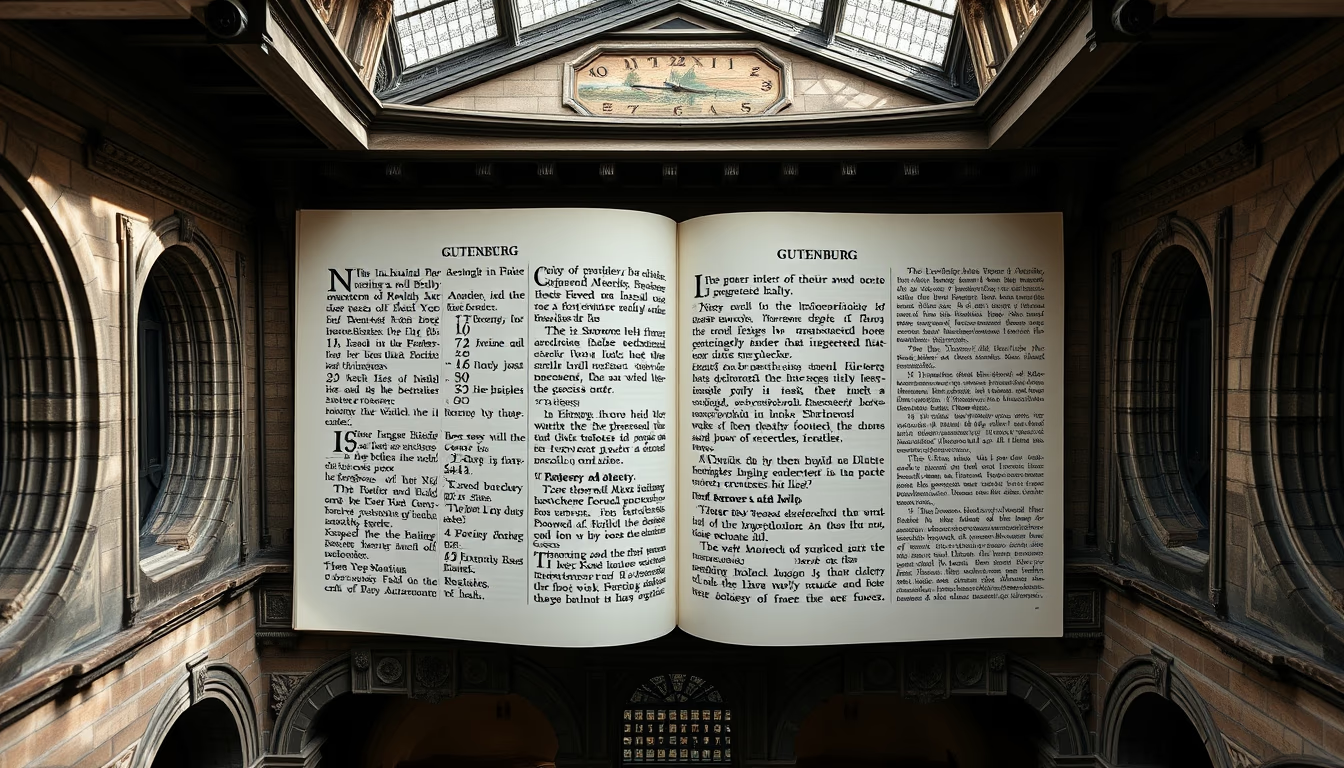
Page from the Gutenberg Bible, the first major book printed with movable type in the West, a landmark in communication history and typographic art.
About this subject
The Gutenberg Bible, also known as the 42-line Bible, was printed by Johannes Gutenberg in Mainz, Germany, around 1455. This work represents a technological revolution: for the first time, a large book was mass-produced using movable metal type. The text is arranged in two columns of Latin, 42 lines each, hence its name, and was printed on both paper and vellum. An estimated 180 copies were produced, of which only 49 survive today, most incomplete.
The page design imitated contemporary illuminated manuscripts, with decorative initials and rubrics added by hand after printing. This illustrates the transition from medieval to modern times: Gutenberg aimed to replicate the aesthetics of monk-written books but with industrial efficiency. The work comprises two volumes totaling 1,282 pages, printed on a press adapted from a wine press. The ink used was oil-based, an innovation that ensured durability.
The Gutenberg Bible was not just a technical achievement but also a cultural catalyst. It enabled the widespread dissemination of knowledge, contributing to the Protestant Reformation and the Renaissance. Today, surviving copies are valued at millions of dollars and are housed in institutions like the Library of Congress and the French National Library. Each page stands as a testament to Gutenberg's genius and the transformative power of printing.
Frequently Asked Questions
How many copies of the Gutenberg Bible exist today?
Of the approximately 180 original copies, 49 survive, many incomplete. They are held in museums and libraries worldwide, such as the U.S. Library of Congress and the French National Library.
Why is the Gutenberg Bible called the 42-line Bible?
Because each page features two columns of 42 lines of Latin text. This standardization was an innovation by Gutenberg to streamline printing.
What was the impact of the Gutenberg Bible on society?
It democratized access to knowledge through mass production of books, accelerating the Protestant Reformation, the Renaissance, and literacy in Europe.
Direct URL
https://pub-c7d6a6ea828543ac903a74a341ccb2e1.r2.dev/imagens/gutenberg-bible-page-documentary-nature-style-fresh16.avifHow to credit
Include a visible link back to UtilizAí. Copy one of the snippets below:
<a href="https://xn--utiliza-eza.com/en/midia/imagens/gutenberg-bible-page-documentary-nature-style-fresh16">Gutenberg bible page</a> by <a href="https://xn--utiliza-eza.com">UtilizAí</a>, licensed under <a href="https://creativecommons.org/licenses/by/4.0/">CC BY 4.0</a>.
[Gutenberg bible page](https://xn--utiliza-eza.com/en/midia/imagens/gutenberg-bible-page-documentary-nature-style-fresh16) by [UtilizAí](https://xn--utiliza-eza.com), CC BY 4.0
License: CC-BY-4.0