Glass blowing furnace
1344×768 · AVIF · CC BY 4.0
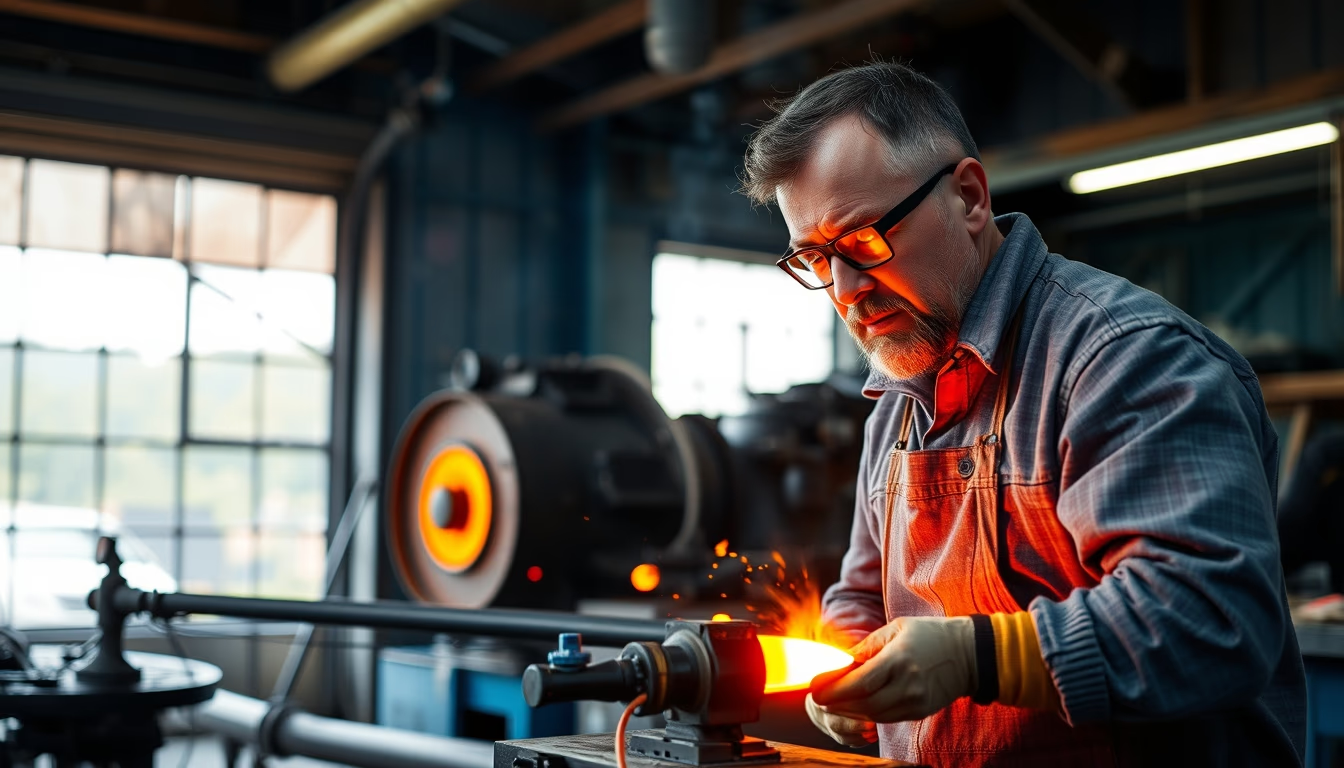
Glass blowing furnace, essential equipment for the ancient art of glassblowing, operating at extreme temperatures.
About this subject
The glass blowing furnace is a central piece of equipment in handmade glass production. It functions as a crucible where raw materials, mainly silica, soda ash, and limestone, are melted at temperatures between 1,100 °C and 1,500 °C. This process transforms the mixture into a viscous, glowing mass that the glassblower gathers on the end of a blowpipe to shape by blowing air.
Glassblowing was invented in the 1st century BCE in the Syrian region, revolutionizing the manufacture of vessels that were previously carved or molded. The furnace allowed faster and more precise manipulation of glass. The technique spread throughout the Roman Empire and flourished in centers such as the island of Murano in Venice, which became a global reference from the 13th century onward.
There are two main types of furnaces used in glassworking: the melting furnace, where glass is melted, and the annealing furnace (also called lehr), which slowly cools pieces to relieve internal stresses and prevent cracking. Controlled temperature is critical: abrupt changes can compromise the structural integrity of the glass. Experienced artisans constantly monitor the color and fluidity of the molten glass to decide the ideal moment to work it.
Beyond artisanal use, glass blowing furnaces are also employed in laboratories and the manufacture of scientific instruments, such as quartz glassware for high temperatures. Today, the craft has seen renewed interest with the maker movement and the appreciation of ancient techniques. Festivals and schools around the world, such as the Corning Museum of Glass in the United States, keep this tradition alive, combining materials science with artistic expression.
Frequently Asked Questions
What temperature does a glass blowing furnace reach?
Glass blowing furnaces operate between 1,100 °C and 1,500 °C to melt raw materials. The exact temperature depends on the glass composition and the technique used.
Who invented glassblowing?
Glassblowing was invented by Syrian craftsmen in the 1st century BCE. The technique allowed for thinner walls and faster production, revolutionizing the glass industry.
What is the difference between a melting furnace and an annealing furnace?
The melting furnace melts raw materials to form glass. The annealing furnace slowly cools finished pieces, relieving internal stresses and preventing cracks.
Direct URL
https://pub-c7d6a6ea828543ac903a74a341ccb2e1.r2.dev/imagens/glass-blowing-furnace-national-geographic-style-p5.avifHow to credit
Include a visible link back to UtilizAí. Copy one of the snippets below:
<a href="https://xn--utiliza-eza.com/en/midia/imagens/glass-blowing-furnace-national-geographic-style-p5">Glass blowing furnace</a> by <a href="https://xn--utiliza-eza.com">UtilizAí</a>, licensed under <a href="https://creativecommons.org/licenses/by/4.0/">CC BY 4.0</a>.
[Glass blowing furnace](https://xn--utiliza-eza.com/en/midia/imagens/glass-blowing-furnace-national-geographic-style-p5) by [UtilizAí](https://xn--utiliza-eza.com), CC BY 4.0
License: CC-BY-4.0