Glass blowing furnace
1344×768 · AVIF · CC BY 4.0
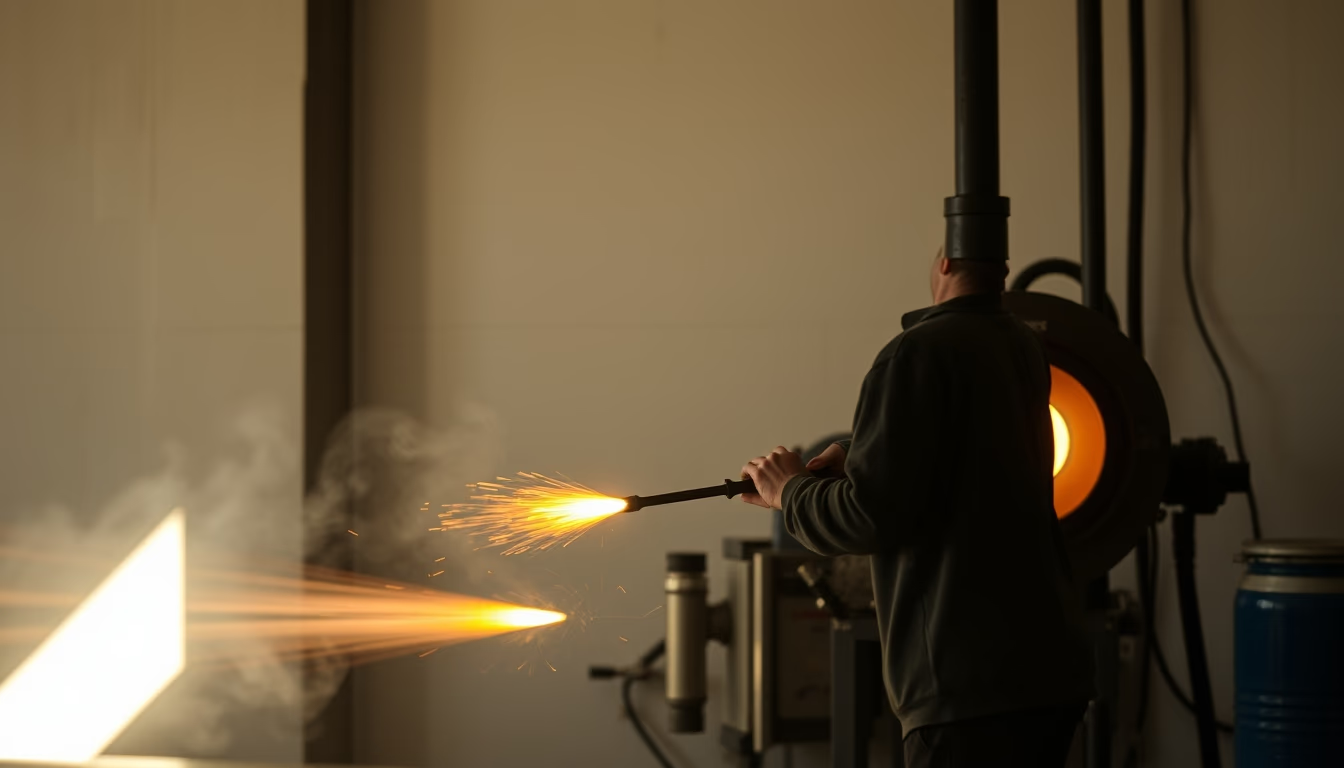
Discover the glass blowing furnace, an essential piece of equipment for handcrafting glass pieces, operating at temperatures exceeding 1000°C.
About this subject
The glass blowing furnace is the heart of any handcrafted glass studio. It keeps glass in a pasty state at temperatures ranging from 1000°C to 1200°C, allowing the artisan to gather it on the end of a blowpipe and shape it through blowing and tool manipulation. There are two main types: the melting furnace, where glass is melted from raw materials like silica, soda ash, and limestone, and the annealing furnace, used to slowly cool finished pieces, preventing internal stresses that could cause breakage.
The glass blowing process begins by gathering a gob of molten glass on the blowpipe. The artisan blows gently to create a bubble, then rotates and swings the pipe while shaping the glass with wet newspaper, tweezers, and other tools. The furnace must maintain a uniform and constant temperature: fluctuations can cause unwanted bubbles or flaws in the piece. After shaping, the piece is moved to the annealing furnace, where the temperature drops gradually over several hours or days.
The technique of glass blowing was developed in the Middle East around the 1st century BC and quickly spread throughout the Roman Empire. Over the centuries, furnaces evolved from clay structures fired by wood to sophisticated gas or electric furnaces with digital temperature control. Today, many artists combine traditional methods with modern technology, creating pieces ranging from functional vases to complex sculptures. The temperature of a glass blowing furnace exceeds that of volcanic lava, which typically ranges from 700°C to 1200°C, but the viscosity of glass demands pinpoint precision so the material neither runs nor hardens too quickly.
Frequently Asked Questions
What is the temperature of a glass blowing furnace?
The working temperature of the melting furnace is between 1000°C and 1200°C, while the annealing furnace initially operates around 500°C with controlled cooling.
How does the glass blowing process work?
The artisan gathers molten glass on the end of a blowpipe, blows to create a bubble, and shapes the glass by rotating and using tools. The piece is then slowly cooled in the annealing furnace.
What types of furnaces are used in glassblowing?
The main types are the melting furnace (to melt glass) and the annealing furnace (to cool finished pieces). There are also glory holes to reheat glass during work.
Direct URL
https://pub-c7d6a6ea828543ac903a74a341ccb2e1.r2.dev/imagens/glass-blowing-furnace-minimalist-composition-p0.avifHow to credit
Include a visible link back to UtilizAí. Copy one of the snippets below:
<a href="https://xn--utiliza-eza.com/en/midia/imagens/glass-blowing-furnace-minimalist-composition-p0">Glass blowing furnace</a> by <a href="https://xn--utiliza-eza.com">UtilizAí</a>, licensed under <a href="https://creativecommons.org/licenses/by/4.0/">CC BY 4.0</a>.
[Glass blowing furnace](https://xn--utiliza-eza.com/en/midia/imagens/glass-blowing-furnace-minimalist-composition-p0) by [UtilizAí](https://xn--utiliza-eza.com), CC BY 4.0
License: CC-BY-4.0