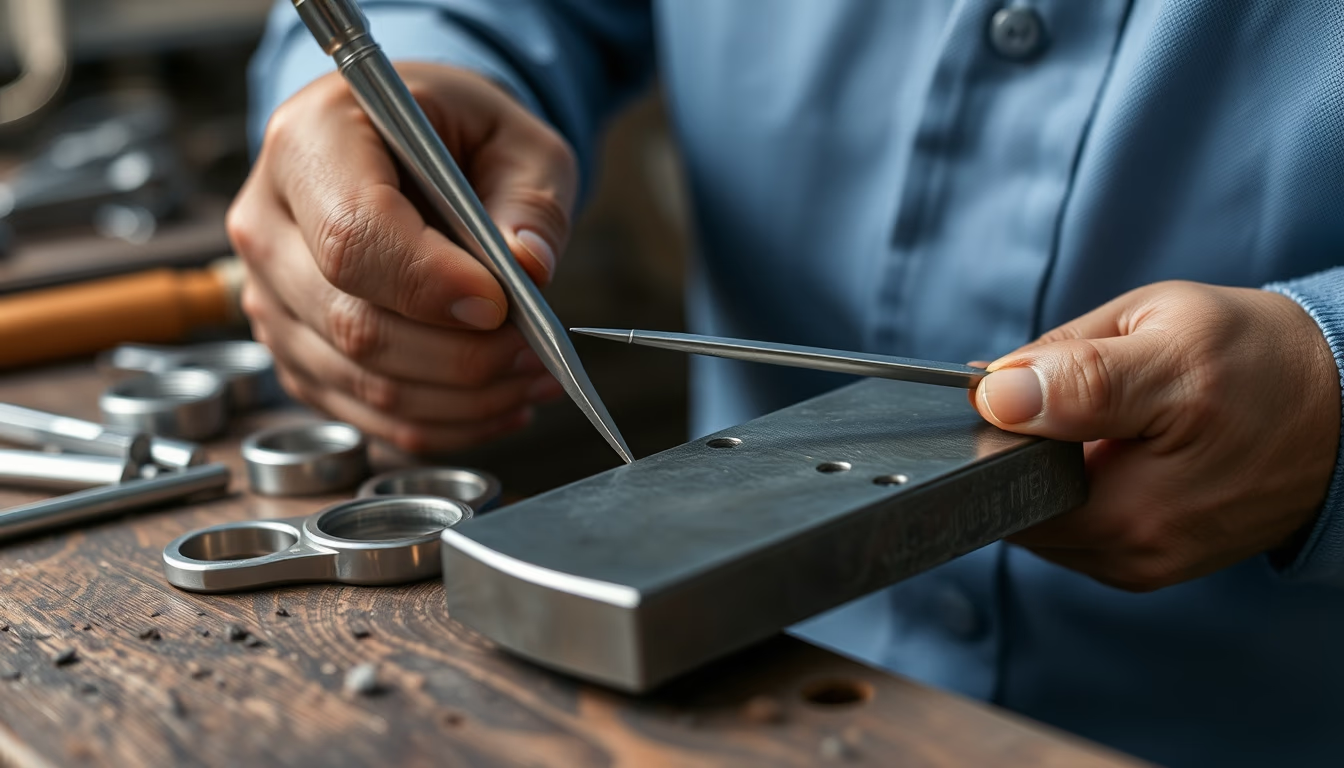
Glass blowing furnace
1344×768 · AVIF · CC BY 4.0

Glass blowing furnace maintains molten glass at high temperatures, essential for artisan shaping.
About this subject
The glass blowing furnace is the heart of artisanal glassmaking, keeping molten glass at temperatures ranging from 1,000°C to 1,200°C. There are two main types: the crucible furnace, where glass melts in a refractory container, and the pot furnace, common in larger production. This technology originated in 1st century BC Syria, but reached its artistic peak in Renaissance Venice. Venetian artisans, isolated on the island of Murano, developed techniques requiring precise temperature control of the furnace.
The furnace structure includes a combustion chamber, typically gas or electric, lined with refractory bricks. Heat is regulated by burners and exhaust systems. Raw materials (silica, soda ash, limestone) are loaded and melt into a homogeneous mass. The blower dips a steel pipe into the furnace, gathers a gob of glass, and blows air to create bubbles. The piece is constantly reheated in the furnace to maintain malleability.
Besides the main furnace, an annealing oven slowly cools the glass over several hours, relieving internal stresses and preventing cracks. In high-fashion and editorial contexts, glass furnaces are often photographed as backdrops evoking sophisticated craftsmanship and unique textures. The incandescent glow and interplay of heat and object attract designers seeking a refined industrial aesthetic.
Fun fact: modern furnaces can achieve up to 80% energy efficiency using advanced insulation, but traditional models lose much heat through the opening. Glass is one of the few materials that can be infinitely recycled without quality loss, and the furnace is the starting point for this sustainable chain.
Frequently Asked Questions
What temperature does a glass blowing furnace reach?
The ideal temperature for molten glass is between 1,000°C and 1,200°C, depending on the glass type. The annealing furnace operates around 500°C to 600°C.
How does a crucible furnace work?
A crucible furnace has a refractory container (crucible) where glass melts. Heat is applied externally, and the molten glass is manually gathered by the blower.
What is the difference between a glass blowing furnace and an annealing furnace?
The glass blowing furnace keeps glass molten for shaping. The annealing furnace slowly cools the shaped glass to relieve internal stresses and prevent cracks.
Direct URL
https://pub-c7d6a6ea828543ac903a74a341ccb2e1.r2.dev/imagens/glass-blowing-furnace-high-fashion-editorial-p6.avifHow to credit
Include a visible link back to UtilizAí. Copy one of the snippets below:
<a href="https://xn--utiliza-eza.com/en/midia/imagens/glass-blowing-furnace-high-fashion-editorial-p6">Glass blowing furnace</a> by <a href="https://xn--utiliza-eza.com">UtilizAí</a>, licensed under <a href="https://creativecommons.org/licenses/by/4.0/">CC BY 4.0</a>.
[Glass blowing furnace](https://xn--utiliza-eza.com/en/midia/imagens/glass-blowing-furnace-high-fashion-editorial-p6) by [UtilizAí](https://xn--utiliza-eza.com), CC BY 4.0
License: CC-BY-4.0