Glass blowing furnace
1344×768 · AVIF · CC BY 4.0
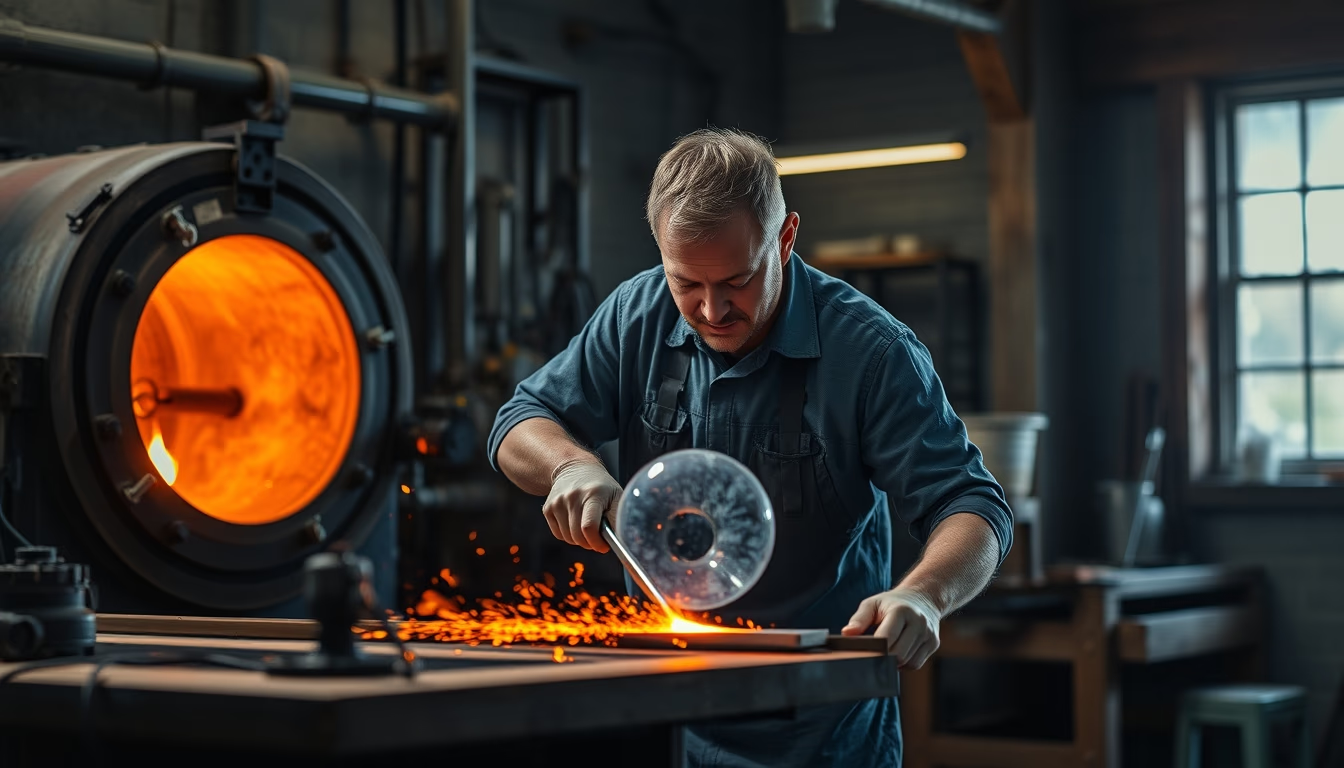
The glass blowing furnace is central equipment in handmade glassblowing, capable of maintaining temperatures between 1000°C and 1200°C to melt and shape glass.
About this subject
The glass blowing furnace, also known as the glass melting furnace, is the key piece in the handmade production of glass objects. It operates at extremely high temperatures, typically between 1000°C and 1200°C, to keep glass in a viscous liquid state. There are different types: the pot furnace, where glass is melted in crucibles; the tank furnace, used for larger productions; and the glory hole, a reheating furnace that maintains the piece at working temperature. The exact temperature depends on the glass composition, soda-lime glass, common in crafts, melts around 1100°C, while specialty glasses like borosilicate require higher temperatures.
The history of the glass blowing furnace dates back to the 1st century BCE, when Syrian and Phoenician craftsmen developed glass blowing using primitive furnaces. The technique spread throughout the Roman Empire and later across Europe. In the Middle Ages, Venice became the glassmaking center, perfecting furnace designs to produce clear crystal glass. Today, furnaces are built with high-alumina or silica refractories capable of withstanding extreme heat without deforming. Gas or electric firing systems precisely control temperature, ensuring consistency in melting.
In the glassblower's practice, the furnace serves three main functions: melting the raw glass batch in a primary furnace, reheating the piece during blowing (glory hole), and annealing the finished object in an annealing oven. The process requires quick and precise movements, as glass cools and hardens in seconds outside the furnace. Maintaining uniform temperature is crucial to avoid internal stresses that cause cracking. Beyond artistic production, these furnaces are used in manufacturing laboratory glassware, scientific instruments, and decorative items. Safety is paramount: furnaces require protective equipment like heat-resistant gloves and filter glasses against infrared radiation.
The glass blowing furnace also holds cultural significance: in artisan communities, it symbolizes the transformation of sand into art. Glass fairs and festivals often feature live glassblowing demonstrations, drawing audiences to the spectacle of fire and glass. In Brazil, the tradition of handmade glassblowing is present in regions such as Vale do Paraíba (SP) and the Federal District, where master glassblowers maintain centuries-old techniques adapted to modern furnaces. The choice of fuel (gas, electricity, or oil) influences glass quality, gas flame produces a reducing atmosphere that can alter metallic colors, making it preferred by artists working with colored glass.
Frequently Asked Questions
What is the typical temperature of a glass blowing furnace?
The temperature ranges between 1000°C and 1200°C, depending on the glass type. Soda-lime glass melts around 1100°C; borosilicate glass requires higher temperatures, near 1200°C.
What types of furnaces are used in handmade glassblowing?
The main types are the pot furnace (for melting glass in crucibles), the tank furnace (for continuous production), and the glory hole (used to reheat the piece during blowing).
Why is an annealing furnace important in the process?
After blowing, the glass is placed in an annealing furnace that cools it slowly. This relieves internal stresses, preventing cracks and ensuring mechanical strength.
Direct URL
https://pub-c7d6a6ea828543ac903a74a341ccb2e1.r2.dev/imagens/glass-blowing-furnace-fine-art-photography-p1.avifHow to credit
Include a visible link back to UtilizAí. Copy one of the snippets below:
<a href="https://xn--utiliza-eza.com/en/midia/imagens/glass-blowing-furnace-fine-art-photography-p1">Glass blowing furnace</a> by <a href="https://xn--utiliza-eza.com">UtilizAí</a>, licensed under <a href="https://creativecommons.org/licenses/by/4.0/">CC BY 4.0</a>.
[Glass blowing furnace](https://xn--utiliza-eza.com/en/midia/imagens/glass-blowing-furnace-fine-art-photography-p1) by [UtilizAí](https://xn--utiliza-eza.com), CC BY 4.0
License: CC-BY-4.0