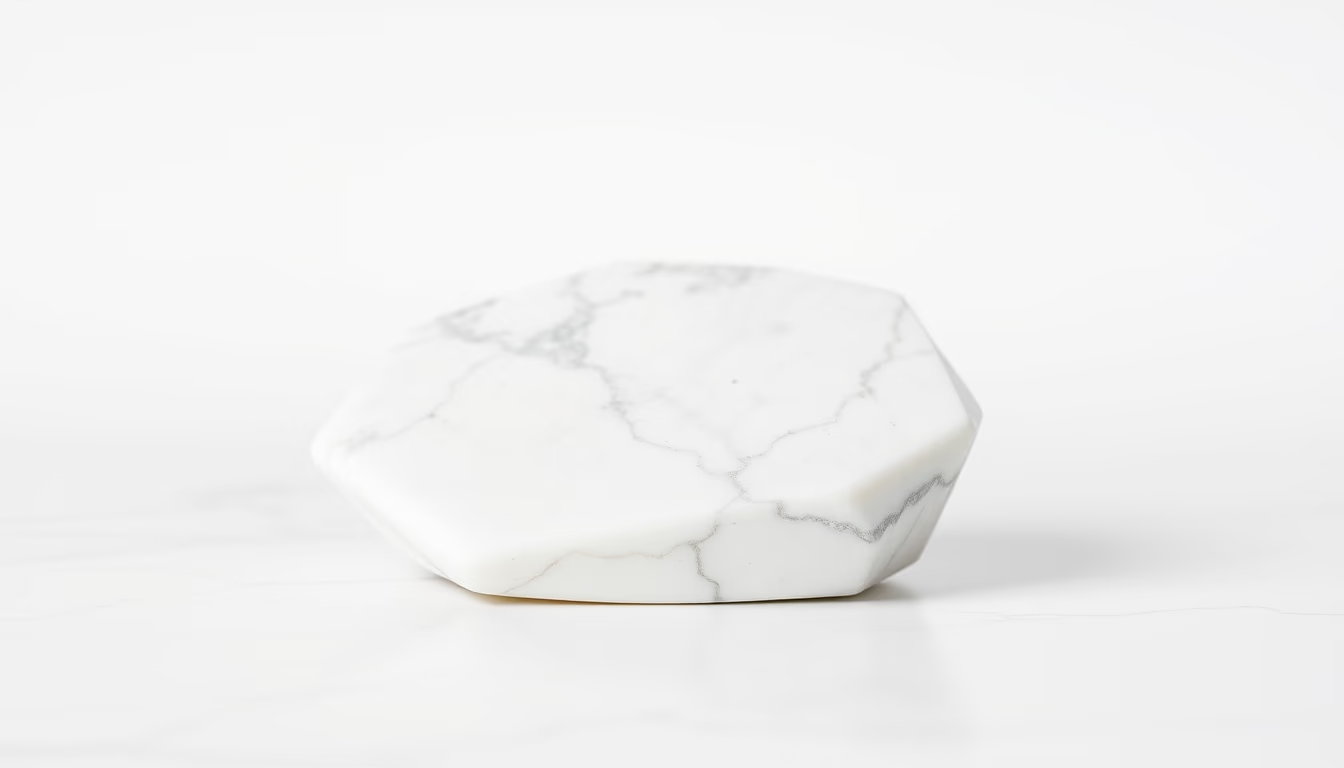
Geometric pattern minimal
1344×768 · AVIF · CC BY 4.0

Minimalist geometric patterns stand out in contemporary art and design, combining simplicity and visual impact in wide-frame compositions.
About this subject
Minimalist geometric patterns represent an intersection of art, mathematics, and design. Their origins trace back to movements such as Bauhaus and De Stijl, which valued pure forms like squares, circles, and triangles. Artists like Piet Mondrian and Kazimir Malevich explored this aesthetic, influencing architecture, fashion, and even digital interfaces. In photography and cinema, the wide shot framing is used to highlight the repetition and symmetry of these patterns, creating a sense of order and balance.
In Brazilian culture, geometric forms appear in works by artists like Athos Bulcão, who integrated modular tiles in Brasília, and in furniture designs by Sérgio Rodrigues. The global trend for 2026 points to a resurgence of minimalism, driven by the search for sustainability and clean digital aesthetics. Geometric patterns are widely employed in branding, sustainable architecture, and even data visualization.
Interestingly, geometry also appears in nature, such as in honeycombs and crystals, connecting abstract design to real structures. The use of sober colors and precise lines in minimalist compositions allows viewers to focus on the essence of shapes without distractions. This style is especially relevant in urban environments, where visual pollution demands clear and impactful visual solutions.
The wide shot technique, common in auteur cinema, is adapted for abstract photography to emphasize the scale and repetition of patterns. This approach creates an immersive experience, inviting viewers to explore details within an apparently simple structure. In 2026, the combination of geometric minimalism with augmented reality technology promises new forms of visual interaction.
Frequently Asked Questions
What are minimalist geometric patterns?
They are visual compositions using basic geometric shapes (circles, squares, triangles) with reduced colors and precise lines, eliminating unnecessary elements to emphasize simplicity and balance.
Where are these patterns applied?
They are used in graphic design, architecture, fashion, digital art, branding, and photography. In Brazil, notable examples include Athos Bulcão's modular tiles and minimalist furniture design.
Why is geometric minimalism a trend for 2026?
The trend reflects a search for visual and mental sustainability, with a clean aesthetic that aligns with digital technology and the reduction of visual pollution in urban and digital spaces.
Direct URL
https://pub-c7d6a6ea828543ac903a74a341ccb2e1.r2.dev/imagens/geometric-pattern-minimal-cinematic-wide-shot-p0.avifHow to credit
Include a visible link back to UtilizAí. Copy one of the snippets below:
<a href="https://xn--utiliza-eza.com/en/midia/imagens/geometric-pattern-minimal-cinematic-wide-shot-p0">Geometric pattern minimal</a> by <a href="https://xn--utiliza-eza.com">UtilizAí</a>, licensed under <a href="https://creativecommons.org/licenses/by/4.0/">CC BY 4.0</a>.
[Geometric pattern minimal](https://xn--utiliza-eza.com/en/midia/imagens/geometric-pattern-minimal-cinematic-wide-shot-p0) by [UtilizAí](https://xn--utiliza-eza.com), CC BY 4.0
License: CC-BY-4.0