Fusion reactor tokamak
1344×768 · AVIF · CC BY 4.0
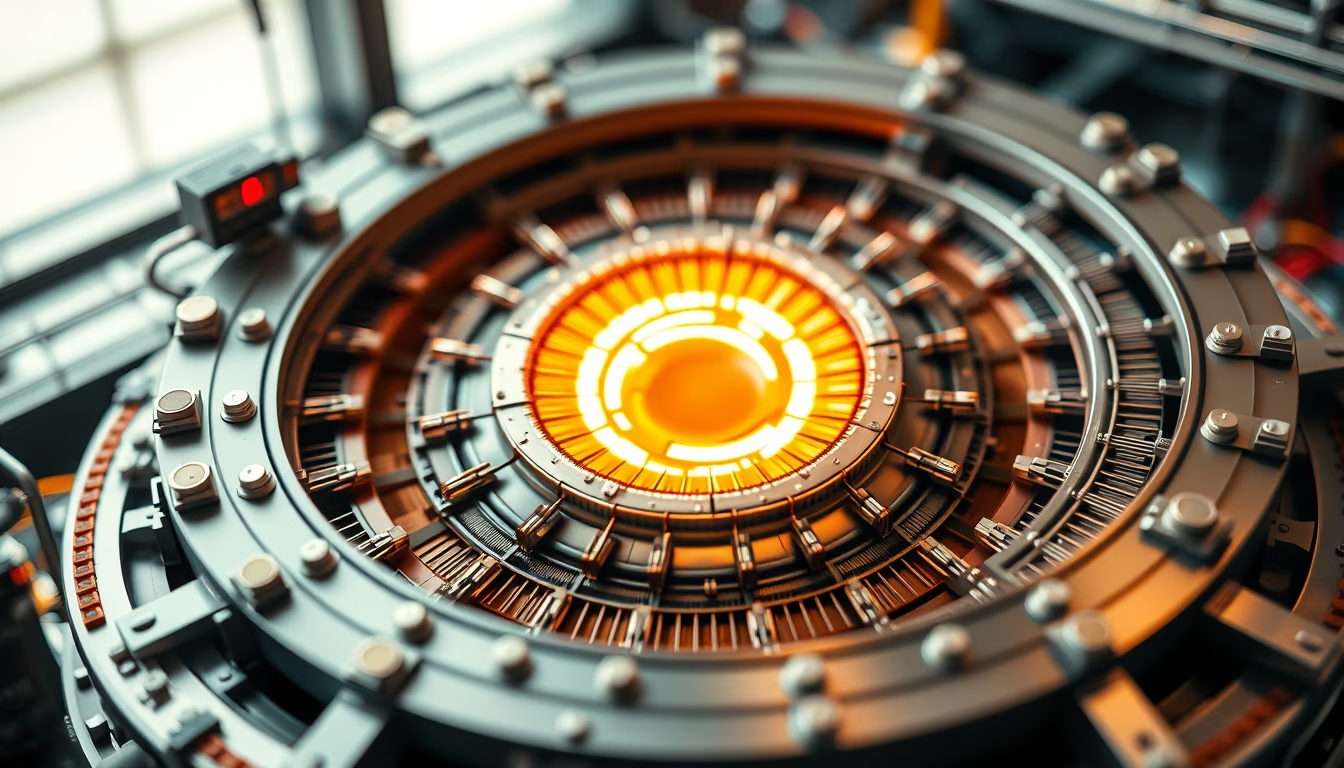
The tokamak is a magnetic confinement fusion reactor that traps plasma to produce clean energy, with projects like ITER and JET.
About this subject
The tokamak fusion reactor was conceived in the 1950s by Soviet physicists Igor Tamm and Andrei Sakharov. Its name is a Russian acronym for 'toroidal chamber with magnetic coils'. The basic principle involves heating a mixture of deuterium and tritium to over 150 million degrees Celsius, forming a plasma that is confined by helical magnetic fields inside a donut-shaped (toroidal) chamber. This confinement prevents the plasma from touching the reactor walls, which would cause energy loss and structural damage.
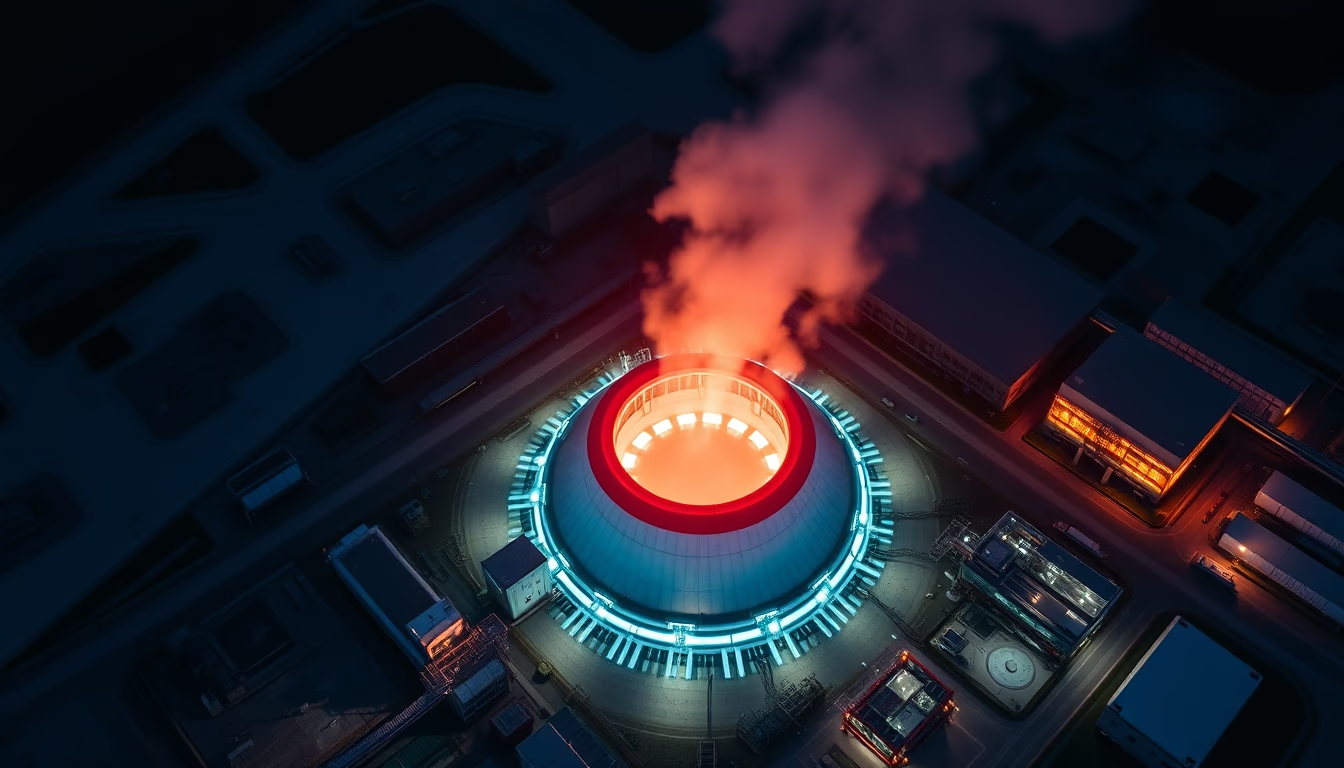
The largest and most ambitious tokamak project under construction is ITER in France, a collaboration of 35 countries. Its goal is to produce 500 MW of fusion power from 50 MW of input, demonstrating the feasibility of fusion as an energy source. ITER's first plasma is expected in 2025, with full fusion operation around 2035. Other important tokamaks include JET (UK), which holds the fusion power record (16 MW in 1997), and the EAST (China) and KSTAR (South Korea) experiments, which investigate long-pulse plasma operations.
Fusion power offers significant advantages: abundant fuel (deuterium from water, tritium bred inside the reactor from lithium), no CO2 emissions, short-lived radioactive waste, and virtually no risk of nuclear accidents. However, technical challenges remain, such as developing materials that withstand intense neutron flux, sustainable tritium breeding, and stable long-duration operation. Estimates suggest commercial fusion plants could begin operation around 2050, complementing renewables and fission in combating climate change.
Frequently Asked Questions
How does a tokamak work?
A tokamak heats a mixture of deuterium and tritium to extreme temperatures (above 150 million °C), creating a plasma. Helical magnetic fields confine this plasma in a toroidal shape, preventing it from touching the reactor walls.
What temperature is inside a tokamak?
The fusion plasma inside a tokamak reaches temperatures exceeding 150 million degrees Celsius, about 10 times hotter than the Sun's core.
When will commercial fusion be viable?
Projects like ITER and DEMO aim to demonstrate technical and economic feasibility. Commercial fusion power plants are expected to begin operation around 2050, after decades of research and development.
Direct URL
https://pub-c7d6a6ea828543ac903a74a341ccb2e1.r2.dev/imagens/fusion-reactor-tokamak-tilt-shift-miniature-p7.avifHow to credit
Include a visible link back to UtilizAí. Copy one of the snippets below:
<a href="https://xn--utiliza-eza.com/en/midia/imagens/fusion-reactor-tokamak-tilt-shift-miniature-p7">Fusion reactor tokamak</a> by <a href="https://xn--utiliza-eza.com">UtilizAí</a>, licensed under <a href="https://creativecommons.org/licenses/by/4.0/">CC BY 4.0</a>.
[Fusion reactor tokamak](https://xn--utiliza-eza.com/en/midia/imagens/fusion-reactor-tokamak-tilt-shift-miniature-p7) by [UtilizAí](https://xn--utiliza-eza.com), CC BY 4.0
License: CC-BY-4.0