Fusion reactor tokamak
1344×768 · AVIF · CC BY 4.0
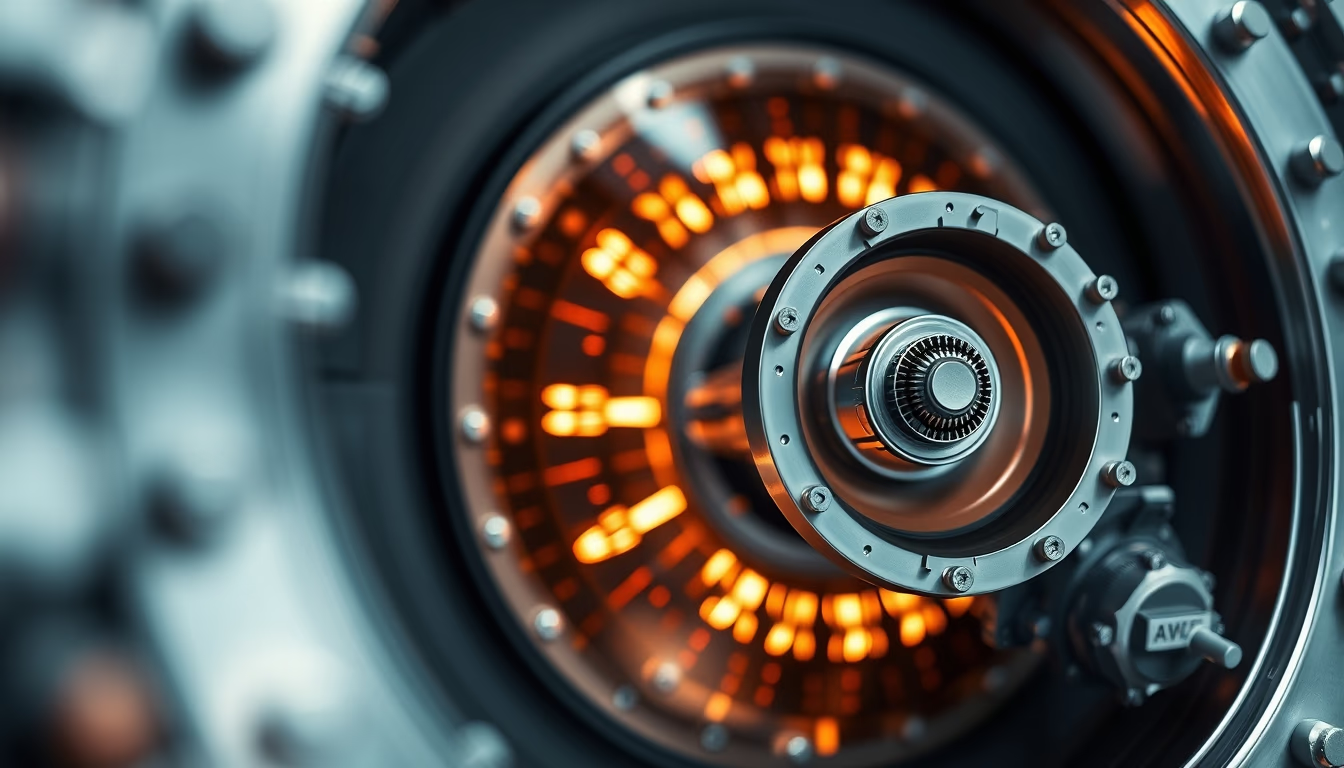
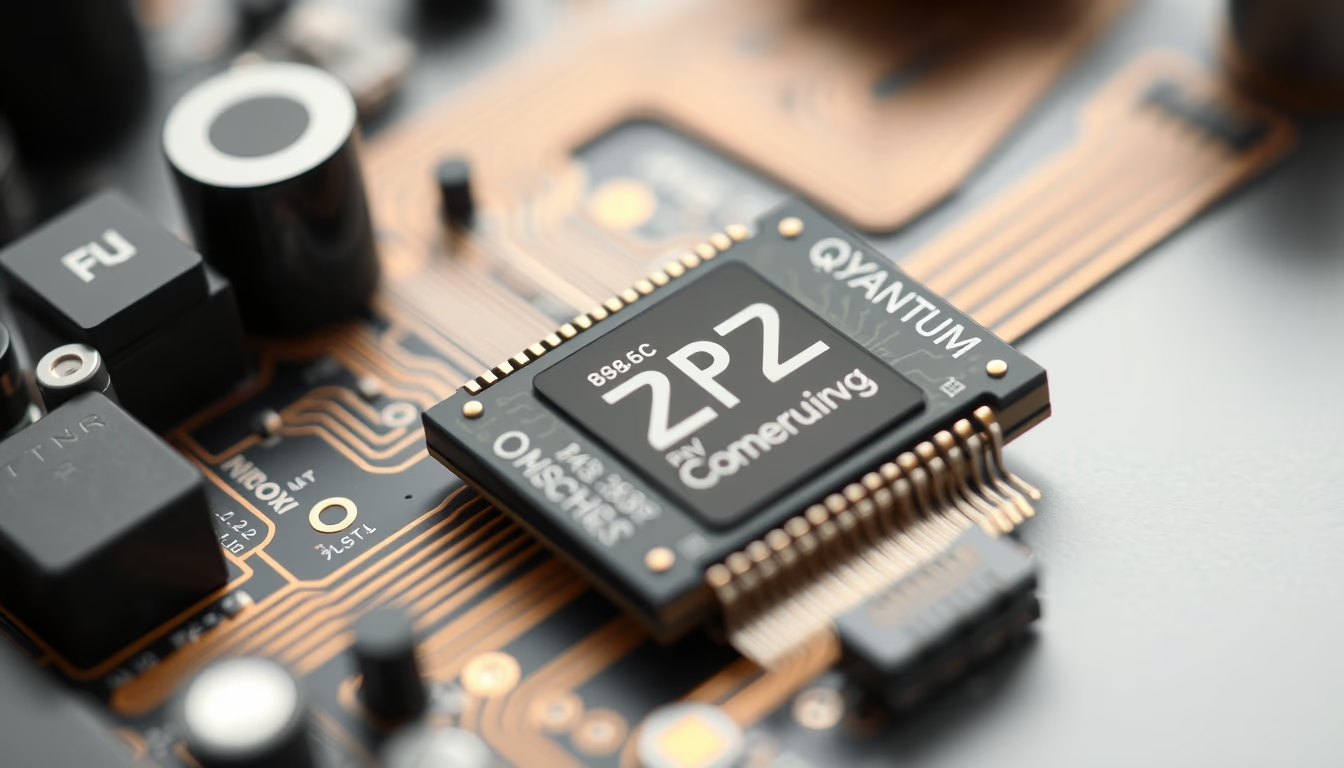
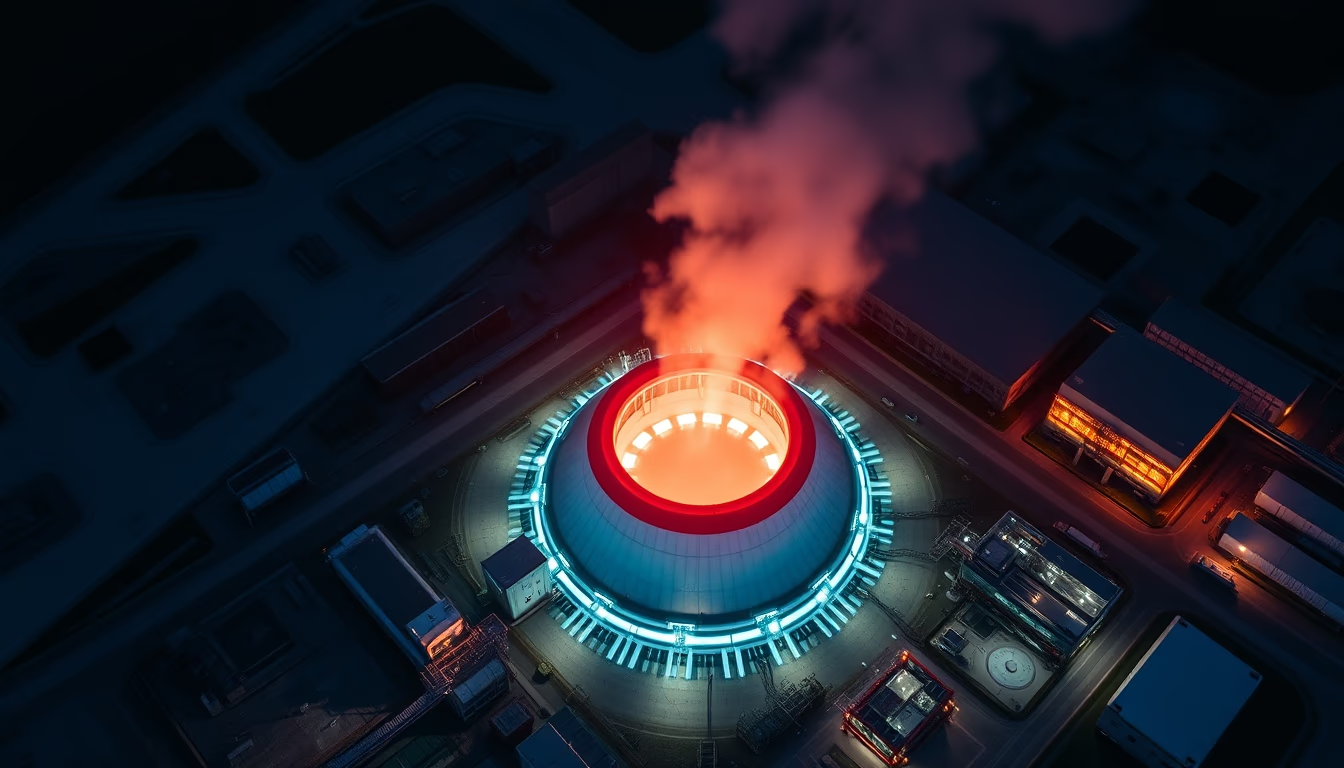
Tokamak fusion reactor: understand its operation, challenges, and role in the quest for clean, sustainable energy.
About this subject
A tokamak is an experimental device designed to confine plasma using toroidal and poloidal magnetic fields, aiming to achieve controlled nuclear fusion. Originally conceived by Soviet physicists Igor Tamm and Andrei Sakharov in the 1950s, the tokamak has become the most studied configuration for fusion reactors. The name is a Russian acronym describing the toroidal chamber with magnetic coils.
Inside a tokamak, fuel, typically deuterium and tritium, is heated to temperatures exceeding 100 million degrees Celsius, forming a plasma. Intense magnetic fields prevent the plasma from touching the reactor walls, avoiding energy loss and structural damage. The main challenge lies in maintaining a stable plasma long enough for fusion to produce more energy than required to heat and confine it.
Currently, the largest international project in this field is ITER, under construction in southern France. ITER aims to demonstrate the scientific and technological feasibility of fusion as a large-scale energy source. Other notable tokamaks include the Joint European Torus (JET) in the UK, which holds records for fusion power, and the KSTAR tokamak in South Korea, known for operating high-temperature plasma for extended periods. Recent advances in high-temperature superconductors enable more compact designs, such as SPARC, developed by a consortium led by MIT.
Nuclear fusion offers the prospect of a virtually inexhaustible energy source, with low long-lived radioactive waste and no greenhouse gas emissions. However, significant technological challenges remain. Continuous reactor operation, plasma confinement, neutron-resistant materials, and energy efficiency must be overcome before fusion becomes a commercial electricity source. Research worldwide continues to advance toward this goal, with expectations that first demonstration reactors will begin operation in the coming decades.
Frequently Asked Questions
How does a tokamak generate energy?
A tokamak heats fuel (deuterium and tritium) to extreme temperatures, forming plasma. Atomic nuclei fuse, releasing high-energy neutrons that heat a blanket around the reactor. This heat generates steam to drive turbines, producing electricity.
What is the difference between fusion and nuclear fission?
Fission splits heavy nuclei (e.g., uranium) into lighter ones, releasing energy and long-lived radioactive waste. Fusion combines light nuclei (like hydrogen isotopes), yielding more energy per mass and short-lived waste, with lower accident risk.
When will nuclear fusion be commercially available?
There is no fixed date. Projects like ITER aim to demonstrate fusion plasma at scale around 2035. Commercial reactors likely after 2050, depending on advances in materials and engineering.
Direct URL
https://pub-c7d6a6ea828543ac903a74a341ccb2e1.r2.dev/imagens/fusion-reactor-tokamak-macro-closeup-p12.avifHow to credit
Include a visible link back to UtilizAí. Copy one of the snippets below:
<a href="https://xn--utiliza-eza.com/en/midia/imagens/fusion-reactor-tokamak-macro-closeup-p12">Fusion reactor tokamak</a> by <a href="https://xn--utiliza-eza.com">UtilizAí</a>, licensed under <a href="https://creativecommons.org/licenses/by/4.0/">CC BY 4.0</a>.
[Fusion reactor tokamak](https://xn--utiliza-eza.com/en/midia/imagens/fusion-reactor-tokamak-macro-closeup-p12) by [UtilizAí](https://xn--utiliza-eza.com), CC BY 4.0
License: CC-BY-4.0