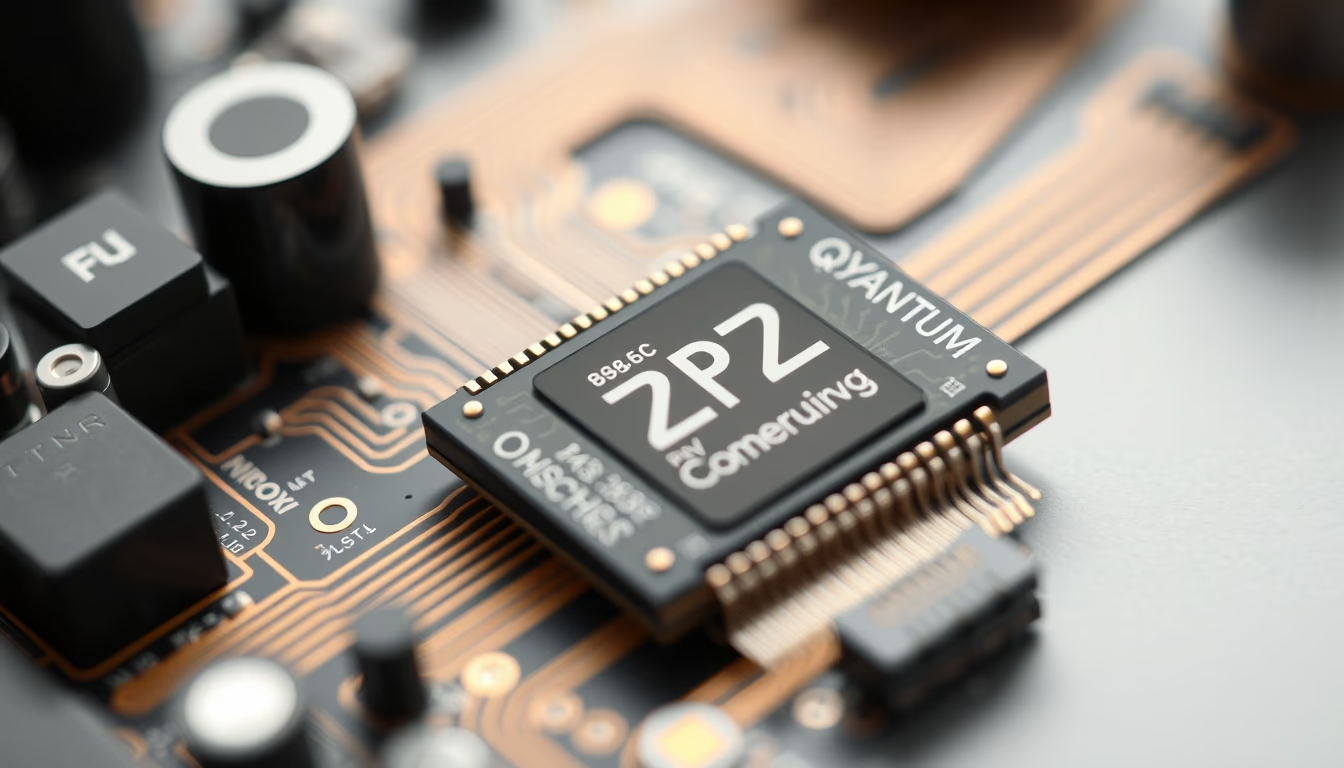
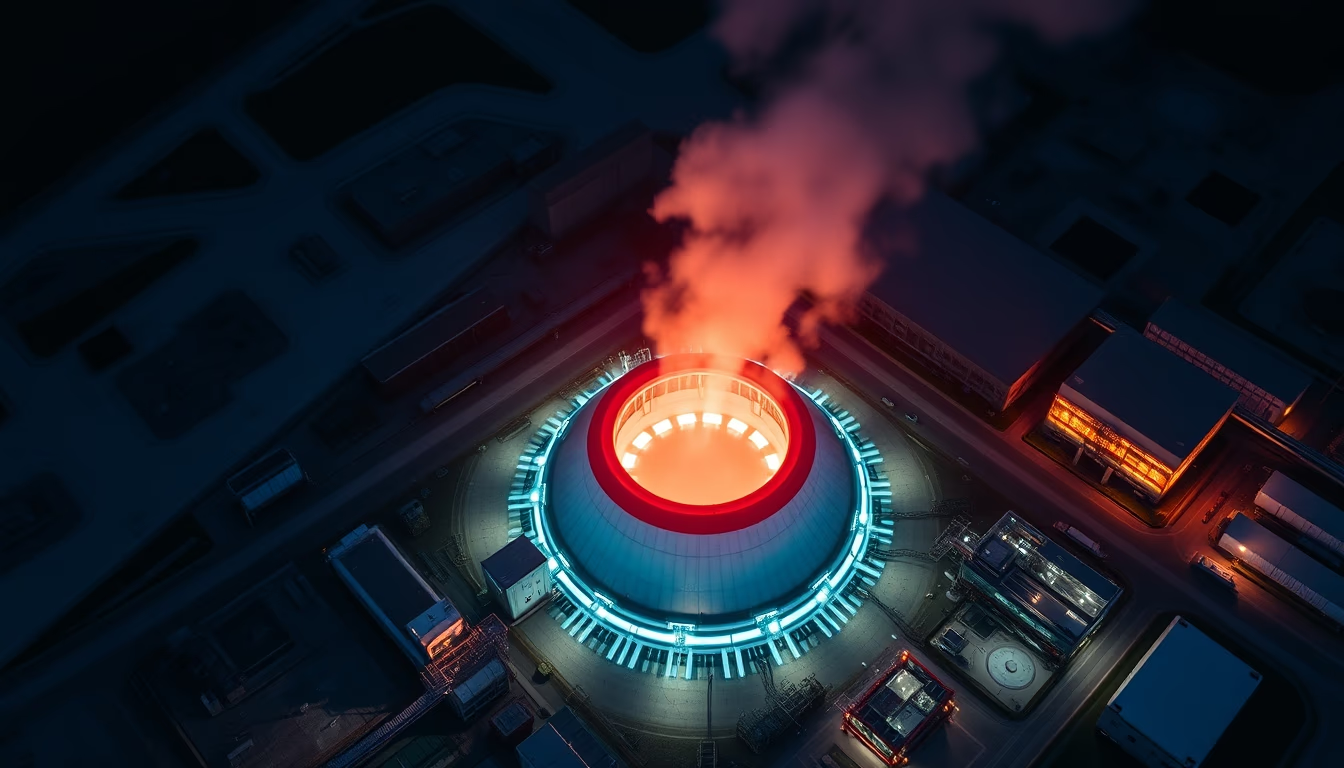
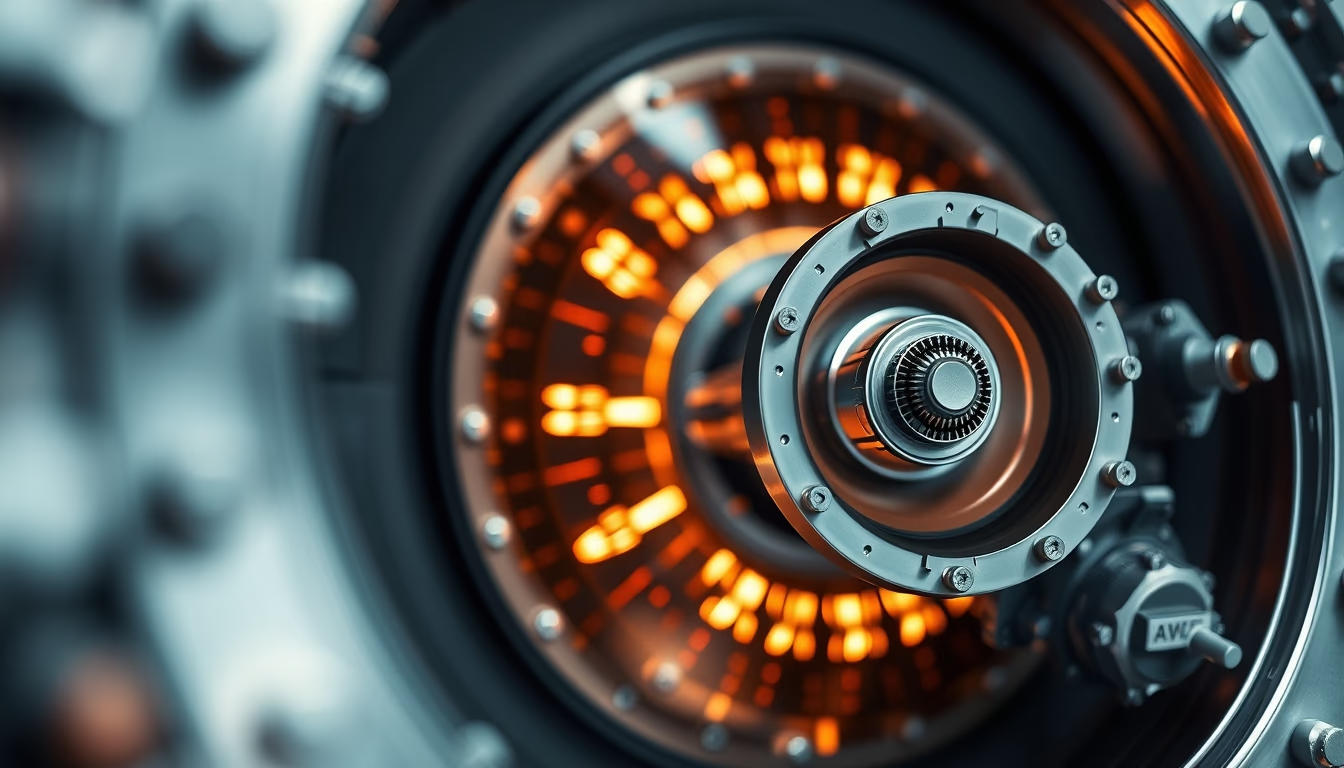
Fusion reactor tokamak
1344×768 · AVIF · CC BY 4.0
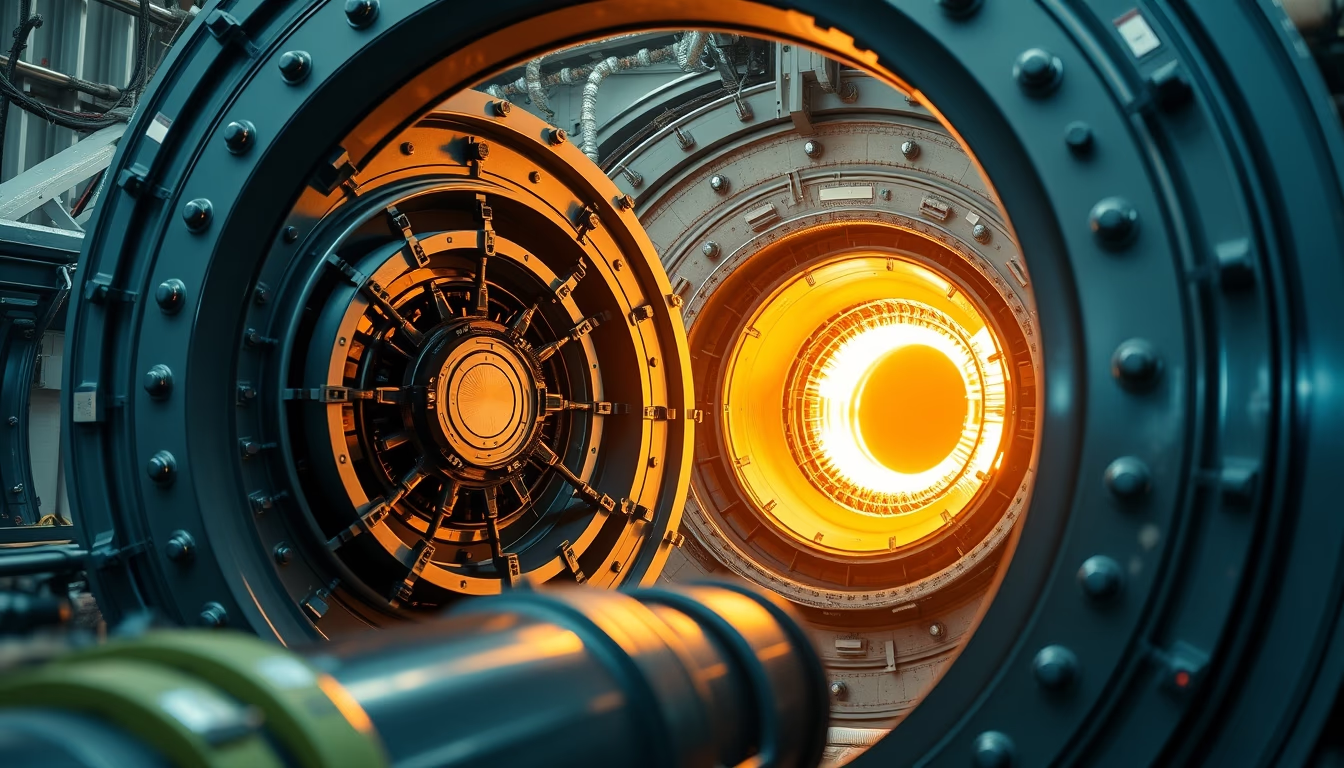
The tokamak is a magnetic confinement device designed to enable controlled nuclear fusion, a potential source of clean and virtually limitless energy.
About this subject
The tokamak, initially developed by Soviet physicists in the 1950s and 1960s, stands as one of the most promising approaches to controlled nuclear fusion. Its name is a Russian acronym for "toroidal chamber with magnetic coils". The operating principle relies on confining superheated plasma at temperatures exceeding 100 million degrees Celsius using intense magnetic fields in a doughnut shape. This plasma, composed of hydrogen isotopes like deuterium and tritium, is heated until atomic nuclei overcome electrostatic repulsion and fuse, releasing vast amounts of energy.
Currently, the largest experimental tokamak project in the world is ITER, under construction in southern France. With funding and collaboration from 35 countries, ITER aims to demonstrate the technical and economic feasibility of fusion. Other operating tokamaks include JET in the United Kingdom and KSTAR in South Korea, along with numerous reactors at universities and research institutes. Nuclear fusion offers significant advantages over fission: it produces no long-lived radioactive waste, uses fuel that is abundant in nature, and poses no risk of uncontrolled chain reactions. However, persistent technological challenges, such as plasma stability and material degradation under intense neutron flux, still need to be overcome for commercial reactors to become a reality. It is estimated that the first fusion power plant capable of feeding electricity into the grid could emerge around the middle of the 21st century.
Frequently Asked Questions
How does a tokamak work?
A tokamak uses toroidal magnetic fields to confine hydrogen plasma heated to extreme temperatures. In this plasma, deuterium and tritium nuclei fuse, releasing energy in the form of heat, which can be converted into electricity.
What is the difference between fusion and fission?
Fusion joins light nuclei to form a heavier one, while fission splits heavy nuclei. Fusion produces less long-lived radioactive waste and uses more abundant fuel, such as hydrogen from seawater.
When will commercial fusion reactors be available?
Projects like ITER aim to demonstrate technical feasibility by 2035, but commercial power plants are expected only around 2050, depending on technological advances and investment.
Direct URL
https://pub-c7d6a6ea828543ac903a74a341ccb2e1.r2.dev/imagens/fusion-reactor-tokamak-documentary-photography-p8.avifHow to credit
Include a visible link back to UtilizAí. Copy one of the snippets below:
<a href="https://xn--utiliza-eza.com/en/midia/imagens/fusion-reactor-tokamak-documentary-photography-p8">Fusion reactor tokamak</a> by <a href="https://xn--utiliza-eza.com">UtilizAí</a>, licensed under <a href="https://creativecommons.org/licenses/by/4.0/">CC BY 4.0</a>.
[Fusion reactor tokamak](https://xn--utiliza-eza.com/en/midia/imagens/fusion-reactor-tokamak-documentary-photography-p8) by [UtilizAí](https://xn--utiliza-eza.com), CC BY 4.0
License: CC-BY-4.0