Fusion reactor tokamak
1344×768 · AVIF · CC BY 4.0
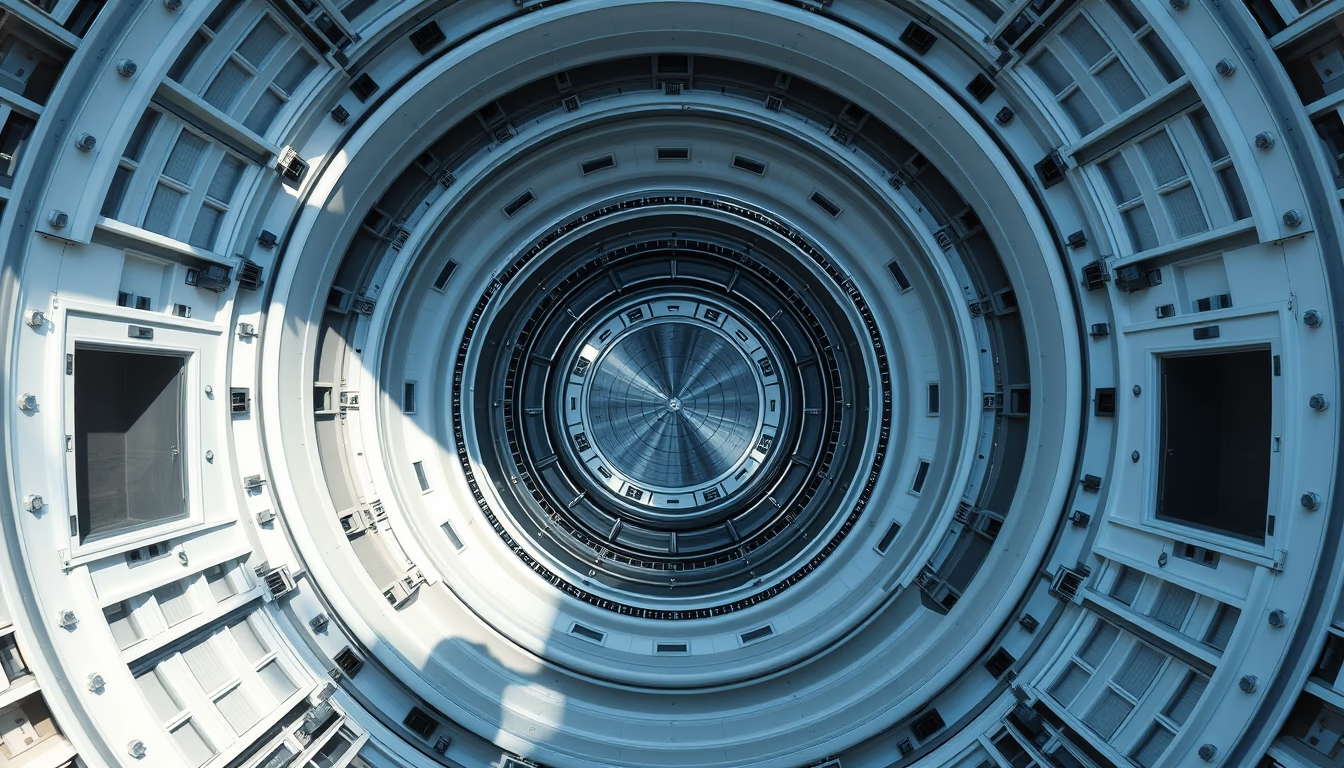
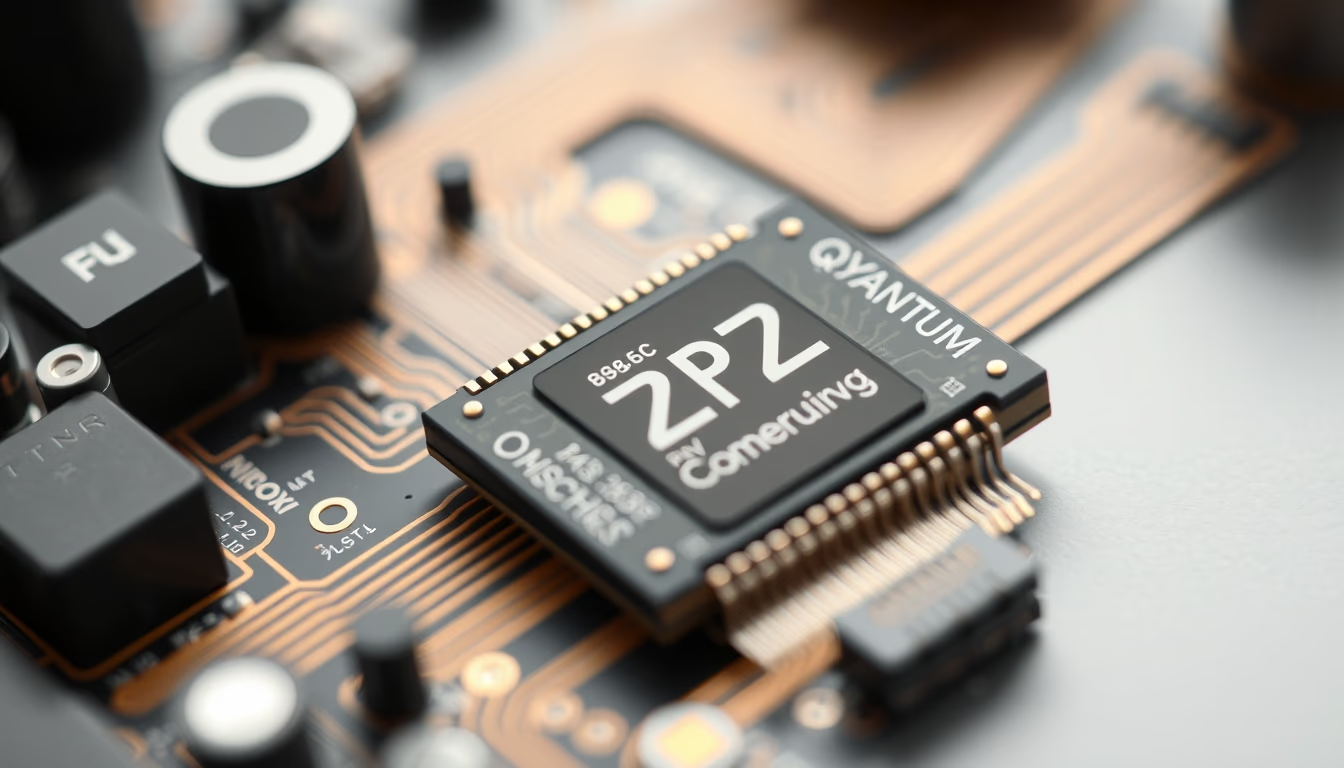
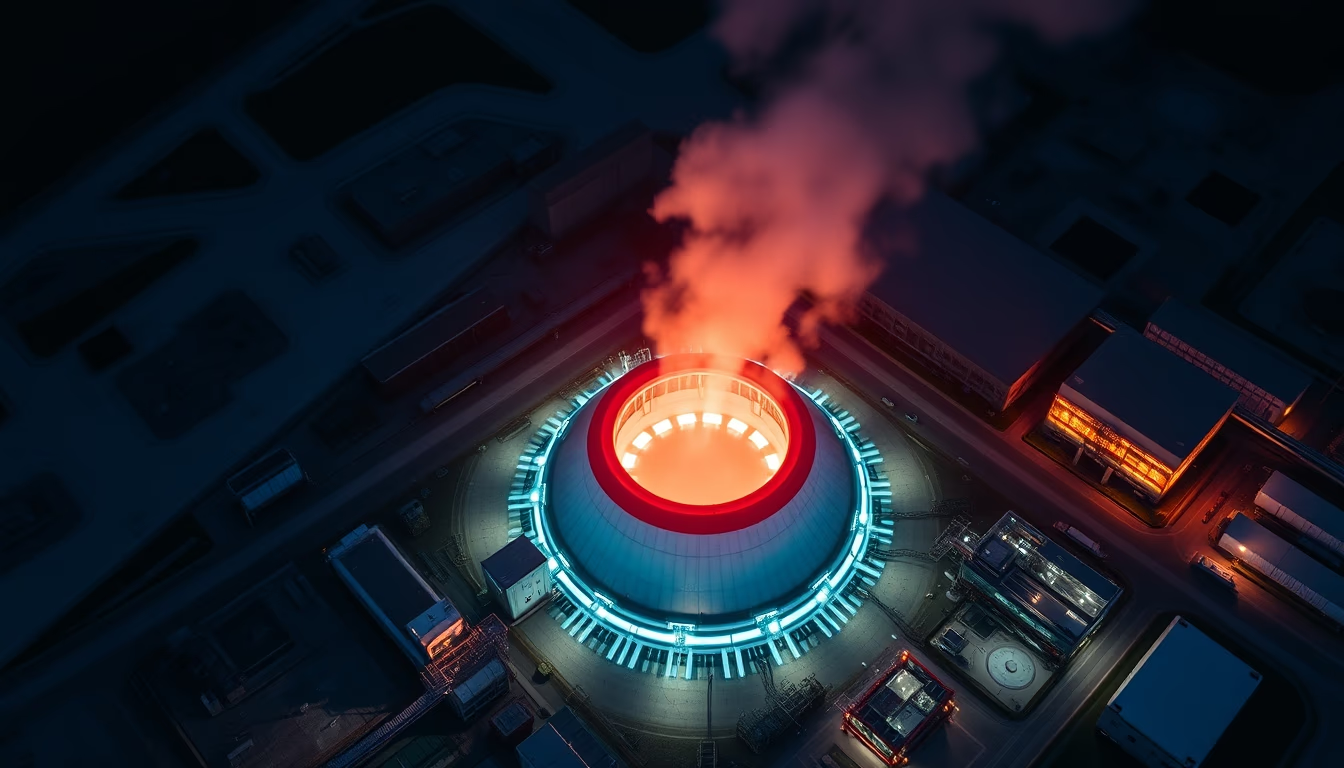
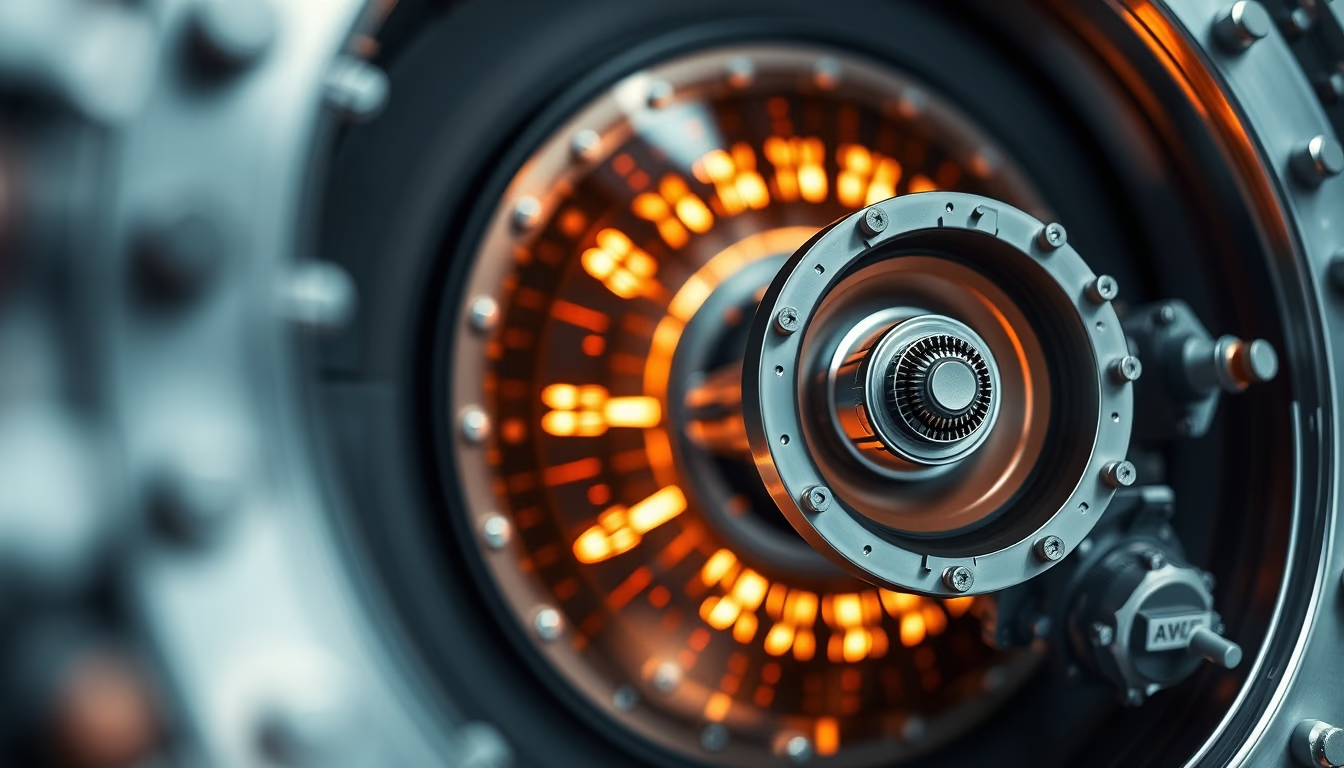
Tokamaks are experimental devices that confine plasma in a doughnut shape using magnetic fields, aiming to generate clean energy via nuclear fusion.
About this subject
Tokamaks represent the most promising approach to controlled nuclear fusion, the process that powers the Sun and stars. Inside these reactors, hydrogen plasma is heated to temperatures exceeding 150 million degrees Celsius, ten times hotter than the solar core. To withstand these extreme conditions, the plasma is suspended by powerful magnetic fields generated by superconducting coils, forming a toroidal chamber. The configuration was developed in the 1950s by Soviet physicists Igor Tamm and Andrei Sakharov at the Kurchatov Institute in Moscow. Since then, hundreds of tokamaks have been built worldwide, including JET in the UK and JT-60SA in Japan. The largest ongoing project is ITER, in southern France, an international collaboration aiming to demonstrate the commercial viability of fusion. Nuclear fusion offers the prospect of practically inexhaustible energy, with no greenhouse gas emissions and low-level radioactive waste. Unlike nuclear fission, fusion reactors pose no risk of meltdown, as any deviation from operating conditions instantly stops the reaction. Despite progress, technical challenges remain, such as stable plasma confinement and the development of materials resistant to intense neutron flux. Current research focuses on prolonging confinement and increasing energy efficiency, with hopes that the first commercial reactor could be operational within decades.
Frequently Asked Questions
How does a tokamak work?
A tokamak uses magnetic fields to confine plasma in a doughnut shape. The plasma is heated to extremely high temperatures so atomic nuclei overcome their repulsion and fuse, releasing energy.
What's the difference between nuclear fusion and fission?
Fusion combines light nuclei into a heavier one, while fission splits heavy nuclei. Fusion produces more energy per mass, generates no long-lived waste, and has no risk of uncontrolled chain reaction.
When will we have fusion energy?
Experts estimate a commercially viable fusion reactor could be operational between 2050 and 2070, after successful demonstrations in projects like ITER and DEMO.
Direct URL
https://pub-c7d6a6ea828543ac903a74a341ccb2e1.r2.dev/imagens/fusion-reactor-tokamak-architectural-photography-p0.avifHow to credit
Include a visible link back to UtilizAí. Copy one of the snippets below:
<a href="https://xn--utiliza-eza.com/en/midia/imagens/fusion-reactor-tokamak-architectural-photography-p0">Fusion reactor tokamak</a> by <a href="https://xn--utiliza-eza.com">UtilizAí</a>, licensed under <a href="https://creativecommons.org/licenses/by/4.0/">CC BY 4.0</a>.
[Fusion reactor tokamak](https://xn--utiliza-eza.com/en/midia/imagens/fusion-reactor-tokamak-architectural-photography-p0) by [UtilizAí](https://xn--utiliza-eza.com), CC BY 4.0
License: CC-BY-4.0