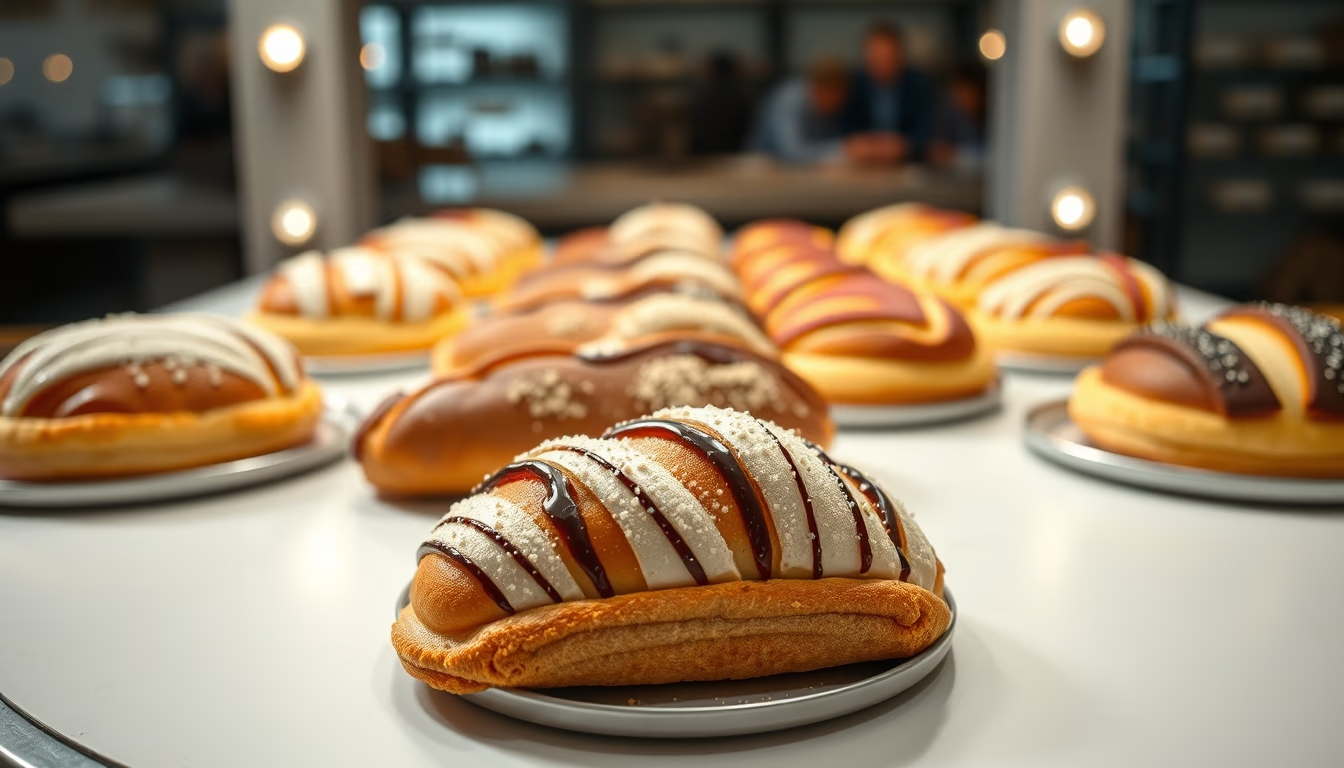
French pastries display
1344×768 · AVIF · CC BY 4.0
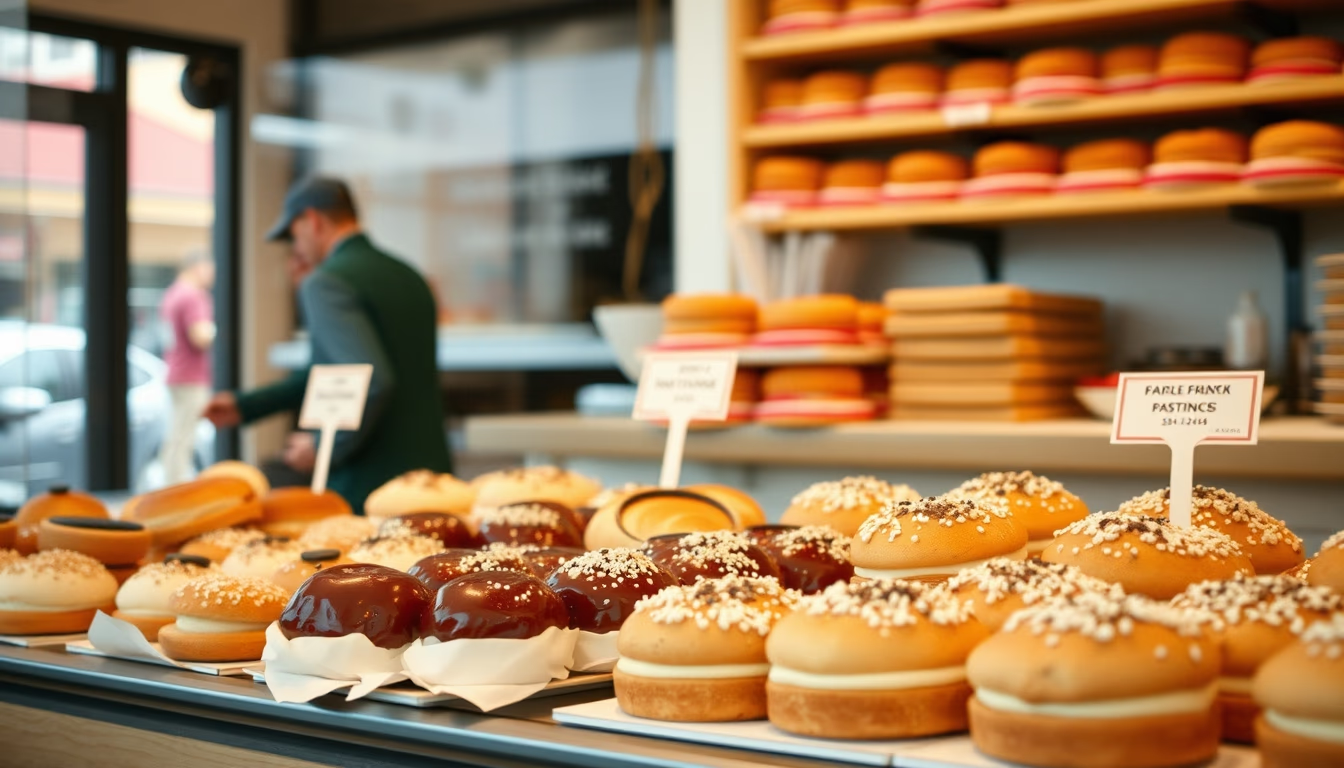
A display of traditional French pastries showcases the richness of pâtisserie, featuring classics like croissants, éclairs and macarons.
About this subject
France is globally renowned for its pâtisserie tradition, an art that combines precise technique and high-quality ingredients. A display of French pastries typically includes iconic items such as the croissant, whose origins date back to the 17th century with Viennese bakers. Each pastry carries a story: the éclair emerged in the 19th century as an evolution of the profiterole, while the macaron was introduced by Catherine de Medici in the 16th century and popularized by houses like Ladurée.
Among the classics, the croissant is made with laminated dough that yields flaky, buttery layers. The pain au chocolat uses the same dough but with chocolate bars inside. The mille-feuille, also called Napoleon, combines layers of puff pastry with pastry cream and icing. Another standout is the tarte Tatin, an upside-down caramelized apple tart. These preparations require specific ingredients: butter with at least 82% fat content, type 55 wheat flour, and fresh eggs.
French pâtisserie was elevated to an artistic level by chefs such as Marie-Antoine Carême, known as the 'cook of kings,' and Auguste Escoffier, who systematized recipes. Today, France has over 30,000 pâtisseries, and the title of 'Best Pâtissier' is contested annually. Presentation is crucial: each pastry is arranged with symmetry and vibrant colors to catch the eye. This tradition is so valued that UNESCO recognized the French gastronomic meal as an Intangible Cultural Heritage.
Visiting a pâtisserie in Paris or any French city is a sensory experience. The glass cases display showcases full of colors, shines, and aromas of butter and vanilla. Each season brings specialties: galette des rois in January, bûche de Noël at year-end, and colorful macarons all year round. To fully appreciate, it is recommended to taste with coffee or tea, respecting the order: light pastries first, followed by richer ones.
Frequently Asked Questions
What is the origin of the croissant?
The croissant was inspired by the Austrian kipferl, brought by Viennese bakers in the 17th century. Marie Antoinette popularized the French version, which evolved into the butter-laminated dough we know today.
What is the difference between an éclair and a profiterole?
Both are made from choux pastry, but the éclair is elongated and filled with pastry cream, topped with icing. The profiterole is round and usually filled with ice cream or cream, often covered with chocolate sauce.
What makes French macarons special?
French macarons use aged egg whites, almond flour, and confectioners' sugar. They are baked at low temperature to develop the characteristic 'foot.' Filled with ganache, buttercream, or jam, they are famous for their crisp shell and soft interior.
Direct URL
https://pub-c7d6a6ea828543ac903a74a341ccb2e1.r2.dev/imagens/french-pastries-display-film-grain-authentic-fresh15.avifHow to credit
Include a visible link back to UtilizAí. Copy one of the snippets below:
<a href="https://xn--utiliza-eza.com/en/midia/imagens/french-pastries-display-film-grain-authentic-fresh15">French pastries display</a> by <a href="https://xn--utiliza-eza.com">UtilizAí</a>, licensed under <a href="https://creativecommons.org/licenses/by/4.0/">CC BY 4.0</a>.
[French pastries display](https://xn--utiliza-eza.com/en/midia/imagens/french-pastries-display-film-grain-authentic-fresh15) by [UtilizAí](https://xn--utiliza-eza.com), CC BY 4.0
License: CC-BY-4.0