Fontana plaza navona
1344×768 · JPG · CC BY 4.0
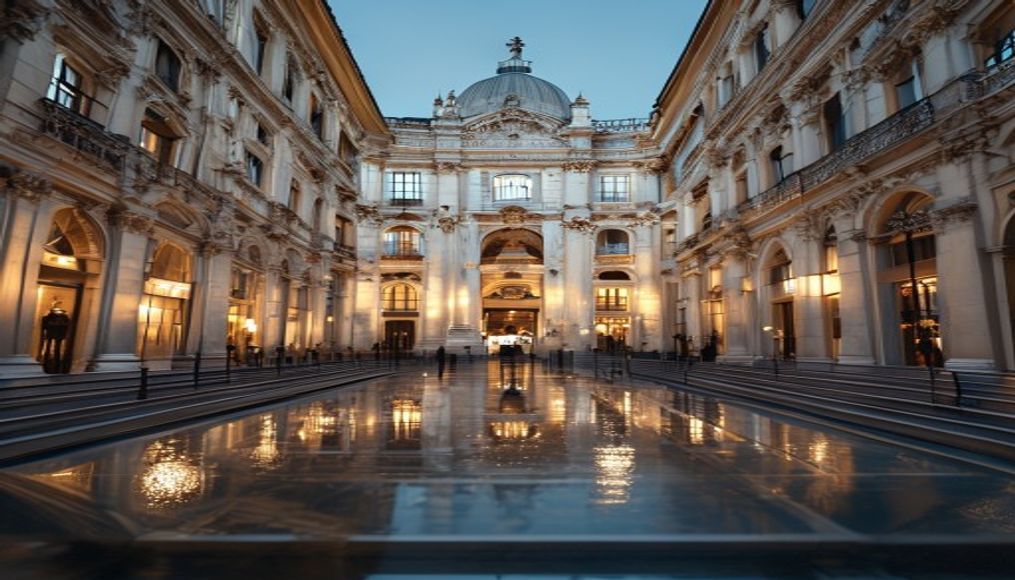
The iconic Fountain of the Four Rivers, Bernini's masterpiece in Piazza Navona, Rome, Italy.
About this subject
The Fountain of the Four Rivers (Fontana dei Quattro Fiumi) is one of the most celebrated works of Roman Baroque, sculpted by Gian Lorenzo Bernini between 1648 and 1651. Commissioned by Pope Innocent X, the fountain was installed in the center of Piazza Navona, one of Rome's most iconic public squares. The structure represents four major rivers from the then-known continents: the Nile (Africa), the Ganges (Asia), the Danube (Europe), and the Río de la Plata (Americas). Each allegorical figure is accompanied by animals and plants typical of its region, such as a lion, a seahorse, and a palm tree, creating a dynamic and theatrical composition. At the center, a 16-meter Egyptian obelisk, originally from the Circus of Maxentius, rises above a travertine rock, symbolizing the victory of Christian faith over paganism. A popular legend claims that one of the figures, the Nile, covers its face with a veil to avoid seeing the facade of the church of Sant'Agnese in Agone, designed by Bernini's rival, Francesco Borromini. In reality, the gesture is an artistic effect representing the unknown source of the river at the time. The fountain has undergone several restorations, the most recent in 2011, and remains a must-see tourist attraction, drawing millions of visitors each year. Its sculptural complexity and interplay of water reflect the splendor of Italian Baroque and Bernini's skill in integrating architecture, sculpture, and urban planning.
Frequently Asked Questions
Who designed the Fountain of the Four Rivers?
It was designed and sculpted by the Italian Baroque artist Gian Lorenzo Bernini, commissioned by Pope Innocent X.
What do the four figures of the fountain represent?
Each figure symbolizes a major river from a different continent: the Nile (Africa), the Ganges (Asia), the Danube (Europe), and the Río de la Plata (Americas).
Why does one of the figures cover its face?
The Nile figure covers its face with a veil, sparking a legend that it was avoiding the rival church by Borromini. In reality, the gesture represents the unknown source of the river at the time.
Direct URL
https://pub-c7d6a6ea828543ac903a74a341ccb2e1.r2.dev/imagens/fontana-plaza-navona-studio-still-life-p4.jpgHow to credit
Include a visible link back to UtilizAí. Copy one of the snippets below:
<a href="https://xn--utiliza-eza.com/en/midia/imagens/fontana-plaza-navona-studio-still-life-p4">Fontana plaza navona</a> by <a href="https://xn--utiliza-eza.com">UtilizAí</a>, licensed under <a href="https://creativecommons.org/licenses/by/4.0/">CC BY 4.0</a>.
[Fontana plaza navona](https://xn--utiliza-eza.com/en/midia/imagens/fontana-plaza-navona-studio-still-life-p4) by [UtilizAí](https://xn--utiliza-eza.com), CC BY 4.0
License: CC-BY-4.0