Fluorite cubes octahedral
1344×768 · AVIF · CC BY 4.0
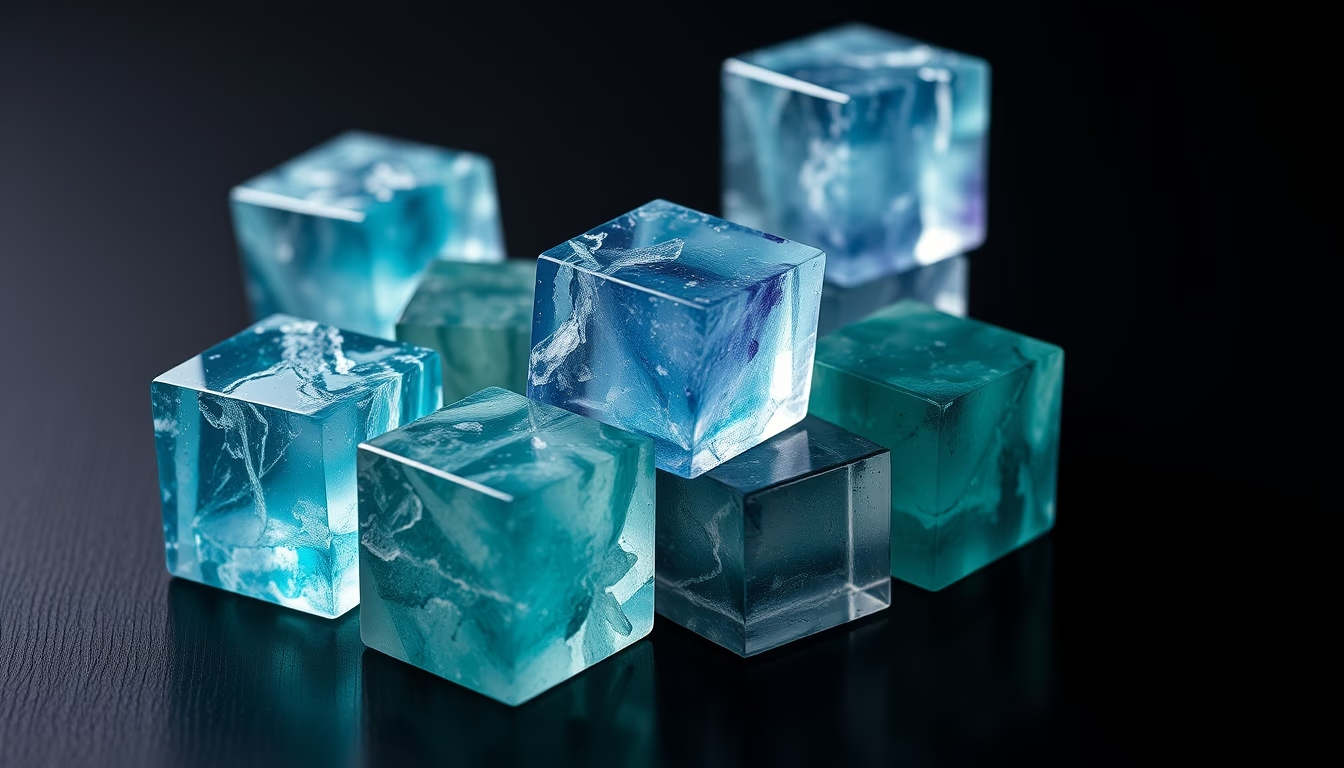
Fluorite is a calcium fluoride mineral known for its cubic and octahedral crystals and wide range of colors.
About this subject
Fluorite, also known as fluorspar, is a calcium fluoride mineral (CaF2) that crystallizes in the cubic system. Its crystal structure allows for perfect cubic forms, but octahedral crystals are also common, resulting from variations in growth conditions. Fluorite is famous for its wide color range, it can be colorless, purple, green, yellow, blue, pink, or even black, often with color zoning due to impurities and lattice defects.
The mineral occurs in hydrothermal veins, often associated with calcite, quartz, galena, and sphalerite. Major deposits include England (especially Durham and Derbyshire), China, Mexico, the United States (Illinois), and South Africa. In Brazil, notable occurrences are found in Santa Catarina and Paraná. Fluorite is the primary source of fluorine, used to produce hydrofluoric acid, cryolite for aluminum smelting, and fluorocarbons. In optics, pure crystals are used for lenses and windows due to low dispersion and high transmittance in the infrared and ultraviolet ranges.
An interesting property is fluorescence under ultraviolet light, a phenomenon that gave the mineral its name. In some localities, like Mexico, fluorite can contain hydrocarbon inclusions forming colorful geodes. With a hardness of 4 on the Mohs scale, it is relatively soft and often carved into decorative objects. In mining, fluorite is a strategic mineral, classified as a critical raw material by the European Union due to its use in high-tech industries.
Frequently Asked Questions
What determines the color of fluorite?
The color of fluorite is caused by impurities, defects in the crystal lattice, or exposure to radiation. For instance, purple color often comes from traces of ytterbium or natural radiation.
Where can I find fluorite in Brazil?
In Brazil, significant fluorite deposits are in Santa Catarina, such as Rio do Sul and Trombudo Central, and in Paraná, in the Cerro Azul region.
Is fluorite dangerous?
In its natural mineral form, fluorite is safe to handle. However, dust or fine particles can be irritating, and ingestion is not recommended. The fluorine extracted from it is toxic in high concentrations.
Direct URL
https://pub-c7d6a6ea828543ac903a74a341ccb2e1.r2.dev/imagens/fluorite-cubes-octahedral-fine-art-photography-p2.avifHow to credit
Include a visible link back to UtilizAí. Copy one of the snippets below:
<a href="https://xn--utiliza-eza.com/en/midia/imagens/fluorite-cubes-octahedral-fine-art-photography-p2">Fluorite cubes octahedral</a> by <a href="https://xn--utiliza-eza.com">UtilizAí</a>, licensed under <a href="https://creativecommons.org/licenses/by/4.0/">CC BY 4.0</a>.
[Fluorite cubes octahedral](https://xn--utiliza-eza.com/en/midia/imagens/fluorite-cubes-octahedral-fine-art-photography-p2) by [UtilizAí](https://xn--utiliza-eza.com), CC BY 4.0
License: CC-BY-4.0