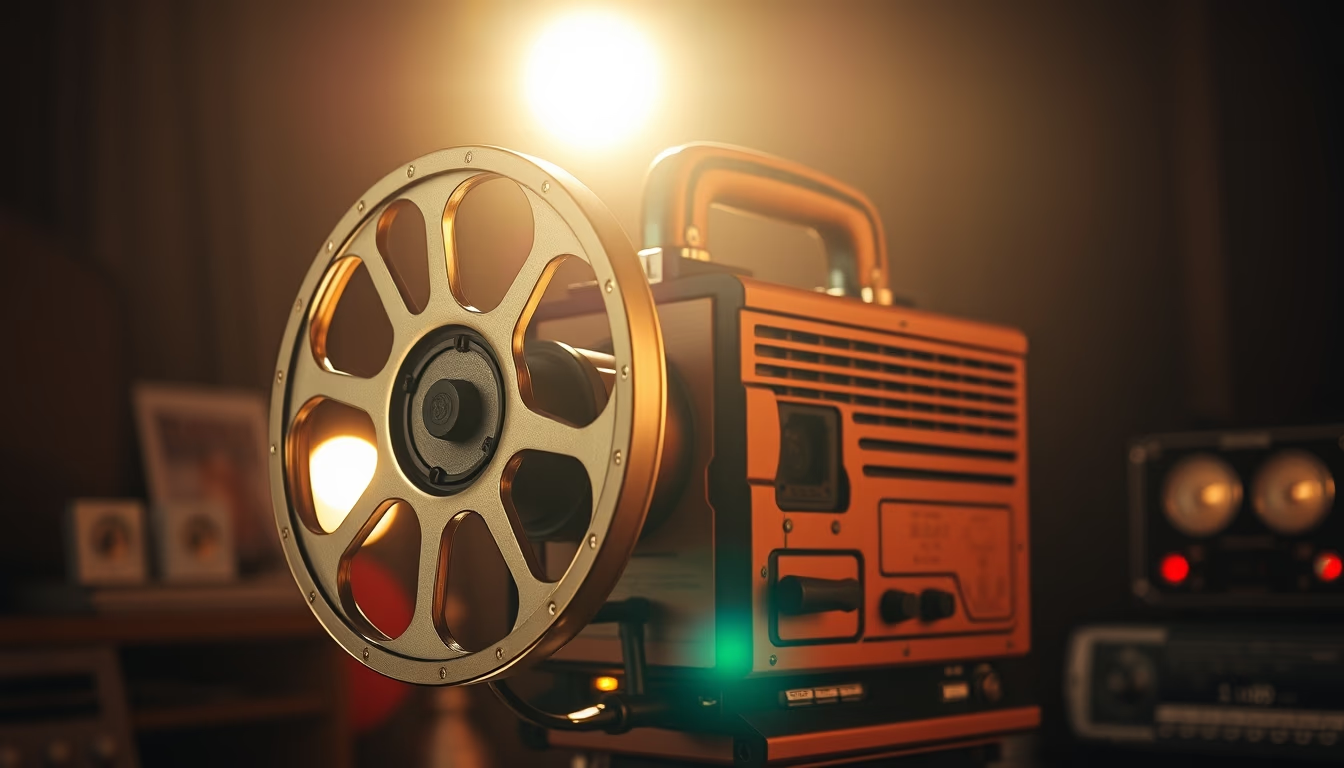
Film camera vintage cinematic
1344×768 · AVIF · CC BY 4.0
Vintage film cameras, such as Arriflex and Panavision models, left a mark on cinema history with their mechanical engineering and analog image quality.
About this subject
Vintage cinema cameras are pieces of equipment that defined the aesthetics and technique of the seventh art throughout much of the 20th century. Unlike modern digital models, these cameras used celluloid film, a photochemical medium that gave productions unique grain, contrast, and color. Brands such as Arriflex, founded in Germany in 1917, and Panavision, established in the United States in the 1950s, became benchmarks for their robustness and optical innovation. The Arriflex 35 BL, for example, was one of the first reflex cameras with a rotating shutter, allowing the operator to see exactly what the film would capture, a significant advance in filming precision.
In Brazil, the use of vintage cameras was fundamental for Cinema Novo and the revival of national production. Models like the Swiss Bolex H16 and the French Éclair NPR were widely adopted by filmmakers such as Glauber Rocha and Nelson Pereira dos Santos, due to their portability and optical quality. These cameras required skilled technical knowledge: the camera assistant had to load the magazines with film in complete darkness, adjust focus manually, and calculate exposure using external light meters. The lack of automation made every shot an exercise in precision and art.
The historical value of vintage cameras goes beyond nostalgia. They represent the transition from artisanal to industrial filmmaking. Many contemporary directors, such as Quentin Tarantino and Christopher Nolan, choose to shoot on film precisely to achieve the texture and light behavior characteristic of these cameras, which digital cameras still seek to emulate. Preserving these devices is a task for museums, film archives, and collectors, who keep alive the technical memory of cinematic language.
Frequently Asked Questions
What is the difference between a vintage cinema camera and a modern digital one?
Vintage cameras use celluloid film, which records the image chemically, while digital cameras use electronic sensors. The difference results in distinct characteristics such as grain, exposure latitude, and color reproduction, as well as requiring different development and editing processes.
Which vintage camera brands are most well-known?
Brands such as Arriflex, Panavision, Bolex, Éclair, and Mitchell are among the most iconic. Each has famous models, like the Arriflex 35 BL, Bolex H16, and Mitchell BNCR, which were widely used in film productions worldwide.
Is it still possible to shoot with vintage cinema cameras?
Yes, many are still operational, but they require specialized maintenance and access to virgin film, which is still manufactured by companies like Kodak and Fujifilm. There are communities of filmmakers and collectors who keep these devices active, especially for projects seeking analog aesthetics.
Direct URL
https://pub-c7d6a6ea828543ac903a74a341ccb2e1.r2.dev/imagens/film-camera-vintage-cinematic-architectural-photography-p3.avifHow to credit
Include a visible link back to UtilizAí. Copy one of the snippets below:
<a href="https://xn--utiliza-eza.com/en/midia/imagens/film-camera-vintage-cinematic-architectural-photography-p3">Film camera vintage cinematic</a> by <a href="https://xn--utiliza-eza.com">UtilizAí</a>, licensed under <a href="https://creativecommons.org/licenses/by/4.0/">CC BY 4.0</a>.
[Film camera vintage cinematic](https://xn--utiliza-eza.com/en/midia/imagens/film-camera-vintage-cinematic-architectural-photography-p3) by [UtilizAí](https://xn--utiliza-eza.com), CC BY 4.0
License: CC-BY-4.0