Fiber optic transceiver
1344×768 · AVIF · CC BY 4.0
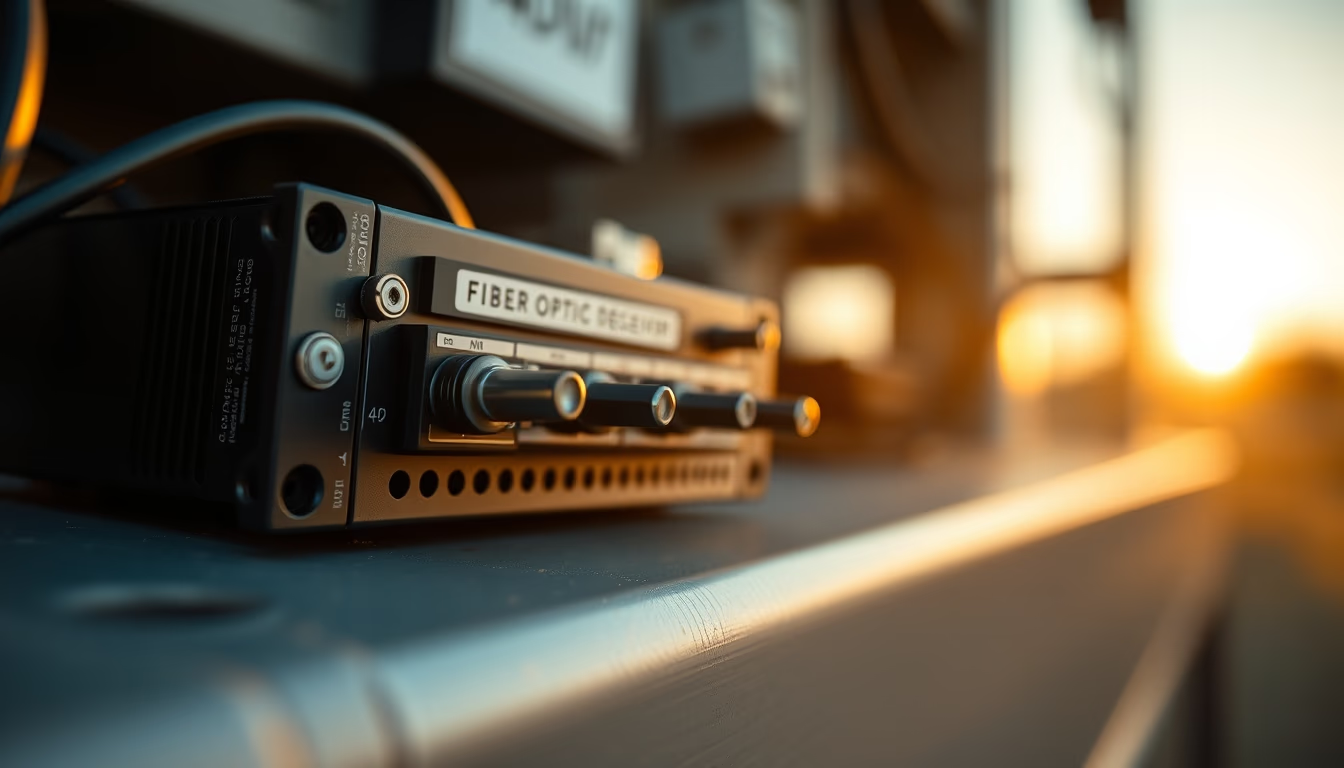
A fiber optic transceiver converts electrical signals to optical and vice versa, crucial for high-speed networks.
About this subject
A fiber optic transceiver is a device that combines a transmitter and a receiver in a single module, enabling bidirectional communication over fiber optic cables. It converts electrical signals into light signals (laser or LED) for transmission and, at the receiver, converts the light back into electrical signals. This technology is the backbone of modern telecommunications networks, including the internet, telephony, and enterprise data systems.
Transceivers follow standards defined by the Multi-Source Agreement (MSA), such as SFP, SFP+, QSFP, and CFP, which dictate form factors, data rates, and reach distances. For example, an SFP+ can support rates up to 10 Gbps, while a QSFP28 can reach 100 Gbps. They operate at different wavelengths, typically 850 nm for multimode and 1310 nm or 1550 nm for single-mode, each optimized for specific distances, from a few meters to over 80 km.
The importance of fiber optic transceivers lies in their ability to transmit large volumes of data with low latency and high reliability. They are used in data centers, long-haul networks, carrier infrastructure, and structured cabling systems. The evolution of transceivers has kept pace with growing bandwidth demand, from gigabit to terabit per second in advanced solutions like CFP8.
Interestingly, the first fiber optic transmission occurred in the 1970s, and since then transceivers have become more compact and energy-efficient. Today, pluggable transceivers allow easy replacement and upgrades without needing to change cables. Additionally, technologies like Wavelength Division Multiplexing (WDM) enable multiple channels on a single fiber, multiplying transmission capacity.
Frequently Asked Questions
What is the difference between SFP and SFP+ transceivers?
SFP (Small Form-factor Pluggable) supports up to 1 Gbps, while SFP+ is an enhanced version that reaches up to 10 Gbps. They share the same physical form factor, but SFP+ operates at higher bandwidth.
Do fiber optic transceivers work with any cable?
No. Each transceiver is designed for a specific fiber type: multimode (short distances) or single-mode (long distances). Using the wrong transceiver can cause signal loss or damage.
What is the lifespan of a fiber optic transceiver?
Typical lifespan is 5 to 10 years, depending on operating conditions like temperature and humidity. Factors such as dust on connectors can accelerate degradation.
Direct URL
https://pub-c7d6a6ea828543ac903a74a341ccb2e1.r2.dev/imagens/fiber-optic-transceiver-travel-photography-p5.avifHow to credit
Include a visible link back to UtilizAí. Copy one of the snippets below:
<a href="https://xn--utiliza-eza.com/en/midia/imagens/fiber-optic-transceiver-travel-photography-p5">Fiber optic transceiver</a> by <a href="https://xn--utiliza-eza.com">UtilizAí</a>, licensed under <a href="https://creativecommons.org/licenses/by/4.0/">CC BY 4.0</a>.
[Fiber optic transceiver](https://xn--utiliza-eza.com/en/midia/imagens/fiber-optic-transceiver-travel-photography-p5) by [UtilizAí](https://xn--utiliza-eza.com), CC BY 4.0
License: CC-BY-4.0