Fiber optic transceiver
1344×768 · AVIF · CC BY 4.0
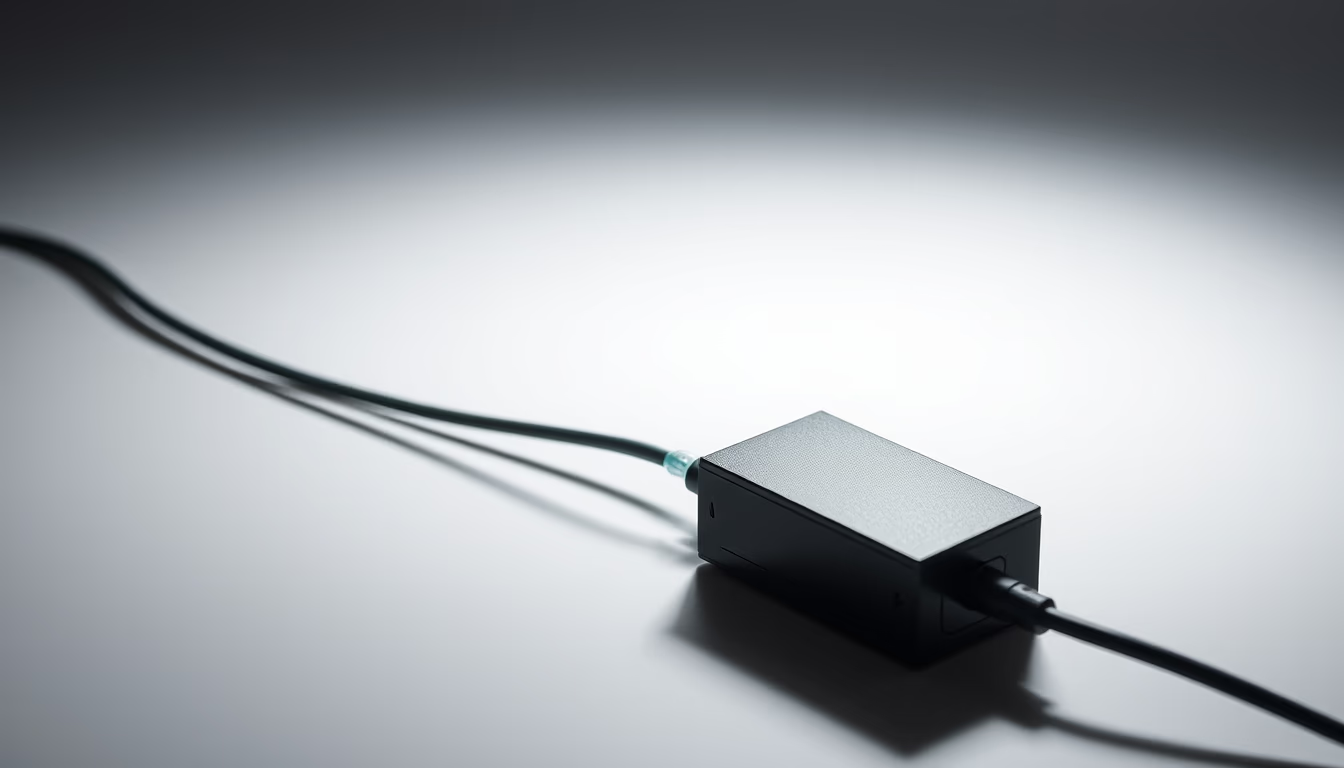
Fiber optic transceivers convert electrical signals into optical signals for high-speed data transmission in telecommunications networks.
About this subject
Fiber optic transceivers are essential components in modern communication networks, responsible for converting electrical signals into optical signals and vice versa. They enable long-distance data transmission with high bandwidth and low signal loss, widely used in data centers, telecommunications networks, cable TV systems, and internet infrastructure. There are various standardized form factors such as SFP (Small Form-factor Pluggable), SFP+, QSFP, and CFP, supporting data rates from 1 Gbps to 400 Gbps or more. Each type is designed for specific applications, including Ethernet, Fibre Channel, or SONET/SDH.
The technology has evolved significantly since the first optical transceivers in the 1970s. Modern transceivers use vertical-cavity surface-emitting lasers (VCSELs) for short distances and distributed feedback lasers (DFBs) for long distances, operating at wavelengths such as 850 nm, 1310 nm, and 1550 nm. Wavelength division multiplexing (WDM) allows multiple data channels to be transmitted simultaneously over a single fiber, further increasing network capacity.
Installation and replacement of transceivers are facilitated by hot-pluggable design, allowing them to be inserted or removed without powering down the equipment. This is crucial for maintenance and network upgrades without service disruption. Transceivers adhere to multi-source agreements (MSAs) to ensure interoperability among manufacturers like Cisco, Juniper, and Huawei. The demand for fiber optic transceivers continues to grow with the expansion of 5G networks, cloud computing, and the Internet of Things (IoT).
Frequently Asked Questions
What is the difference between SFP and SFP+?
SFP (Small Form-factor Pluggable) supports data rates up to 1 Gbps, while SFP+ is an enhanced version supporting up to 10 Gbps. They share the same physical size, but SFP+ is used for higher-speed applications.
How to choose the correct optical transceiver?
Selection depends on transmission distance, required data rate, and fiber type (single-mode or multimode). Also verify compatibility with the equipment (switch, router) and MSA standards.
Are optical transceivers compatible across different brands?
Yes, as long as they follow multi-source agreements (MSA). However, some manufacturers may enforce restrictions via firmware, so using approved or reliable third-party transceivers is recommended.
Direct URL
https://pub-c7d6a6ea828543ac903a74a341ccb2e1.r2.dev/imagens/fiber-optic-transceiver-studio-still-life-p11.avifHow to credit
Include a visible link back to UtilizAí. Copy one of the snippets below:
<a href="https://xn--utiliza-eza.com/en/midia/imagens/fiber-optic-transceiver-studio-still-life-p11">Fiber optic transceiver</a> by <a href="https://xn--utiliza-eza.com">UtilizAí</a>, licensed under <a href="https://creativecommons.org/licenses/by/4.0/">CC BY 4.0</a>.
[Fiber optic transceiver](https://xn--utiliza-eza.com/en/midia/imagens/fiber-optic-transceiver-studio-still-life-p11) by [UtilizAí](https://xn--utiliza-eza.com), CC BY 4.0
License: CC-BY-4.0