Family planning savings at the dining table
1344×768 · AVIF · CC BY 4.0

Planning household finances at the dining table is a strategy that combines home economics with family financial planning.
About this subject
The habit of discussing family finances during meals, especially at the dining table, is a growing practice among Brazilians seeking greater budget control. IBGE studies show that 60% of Brazilian families do not maintain a formal budget, but those who do can save up to 20% of their monthly income. The dining table, as a central living space, becomes the ideal place to review expenses, set short-term goals (like vacations) and long-term goals (like retirement).
The association between food and finances is not random. Consumer behavior research indicates that family meals reduce financial impulsiveness, as the collaborative environment encourages more rational decisions. Additionally, planning meals together with the budget reduces food waste, which in Brazil reaches 30% of annual production, according to FAO.
In the Brazilian context, where food inflation historically pressures household budgets (IPCA 2023 recorded a 5.79% increase in food and beverages), the dining table becomes a stage for financial negotiations. Families adopting the "envelope system" (dividing money into envelopes by category) often use the post-meal moment to reallocate resources, a practice documented in financial education books like "The Richest Man in Babylon."
Curiosity: the expression "table economy" dates back to the 19th century, when European families recorded expenses in notebooks during dinner. Today, personal finance apps try to replicate this ritual, but eye contact and the exchange of glances at the table are still pointed out by financial therapists as success factors to avoid conflicts over money.
Frequently Asked Questions
How to start planning finances at the table with the family?
Set a fixed day of the week, like Sunday after lunch. Gather all members, use a spreadsheet or notebook, and list income, fixed and variable expenses. Set realistic goals, such as reducing delivery spending by 10%.
What are the main mistakes when discussing money in the family?
Blaming others for excessive spending, ignoring children/teenagers' opinions, and not setting clear limits. Ideally, keep a neutral tone and focus on solutions, not criticism.
Can young children participate in financial planning?
Yes, with a playful approach: use piggy banks or board games about finances. This teaches early on the importance of saving and prioritizing expenses.
Direct URL
https://pub-c7d6a6ea828543ac903a74a341ccb2e1.r2.dev/imagens/family-planning-savings-at-the-dining-table-symmetric-bright-midday.avifHow to credit
Include a visible link back to UtilizAí. Copy one of the snippets below:
<a href="https://xn--utiliza-eza.com/en/midia/imagens/family-planning-savings-at-the-dining-table-symmetric-bright-midday">Family planning savings at the dining table</a> by <a href="https://xn--utiliza-eza.com">UtilizAí</a>, licensed under <a href="https://creativecommons.org/licenses/by/4.0/">CC BY 4.0</a>.
[Family planning savings at the dining table](https://xn--utiliza-eza.com/en/midia/imagens/family-planning-savings-at-the-dining-table-symmetric-bright-midday) by [UtilizAí](https://xn--utiliza-eza.com), CC BY 4.0
License: CC-BY-4.0
Tags
Related images
 Aerial view of São Paulo financial district at golden hour with B3 building
 Aerial view of São Paulo financial district at golden hour with B3 building
 Aerial view of São Paulo financial district at golden hour with B3 building
 Aerial view of São Paulo financial district at golden hour with B3 building
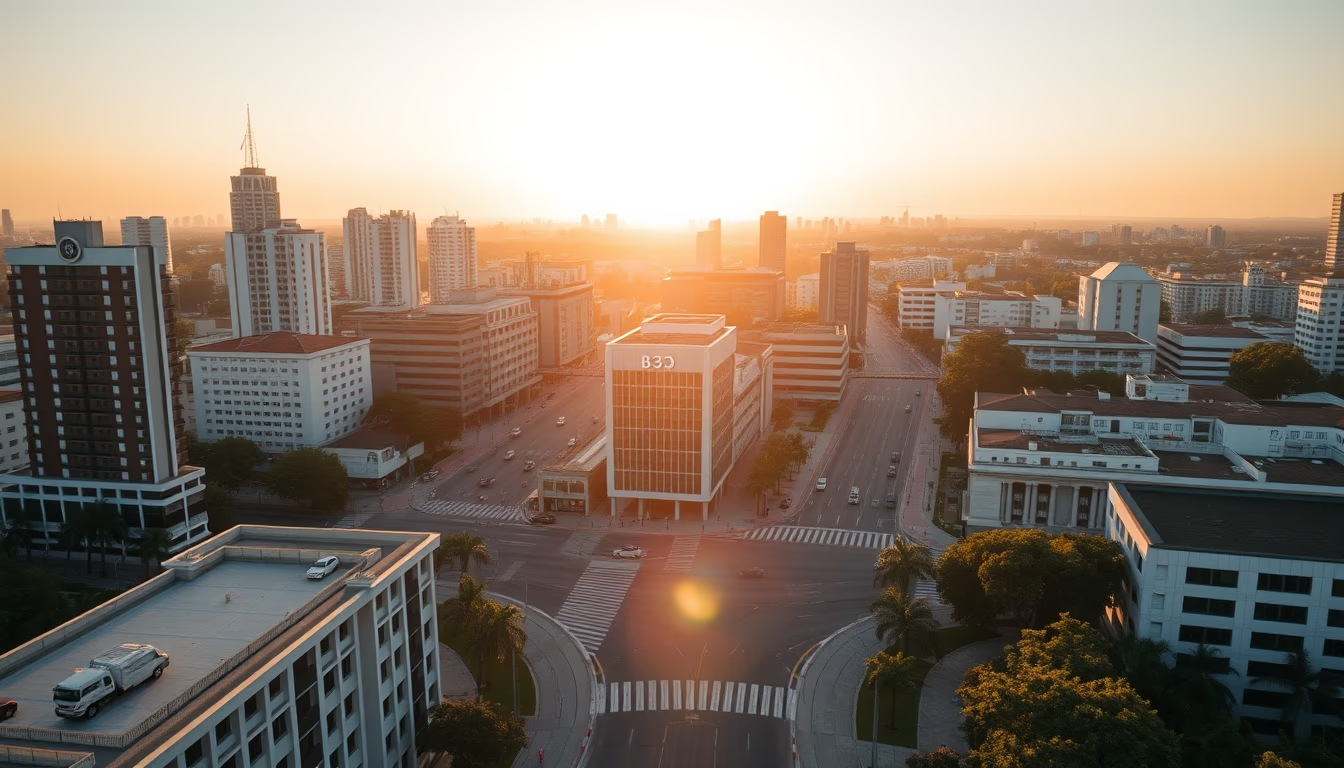 Aerial view of São Paulo financial district at golden hour with B3 building
 Aerial view of São Paulo financial district at golden hour with B3 building