Eyjafjallajökull volcano
1344×768 · AVIF · CC BY 4.0
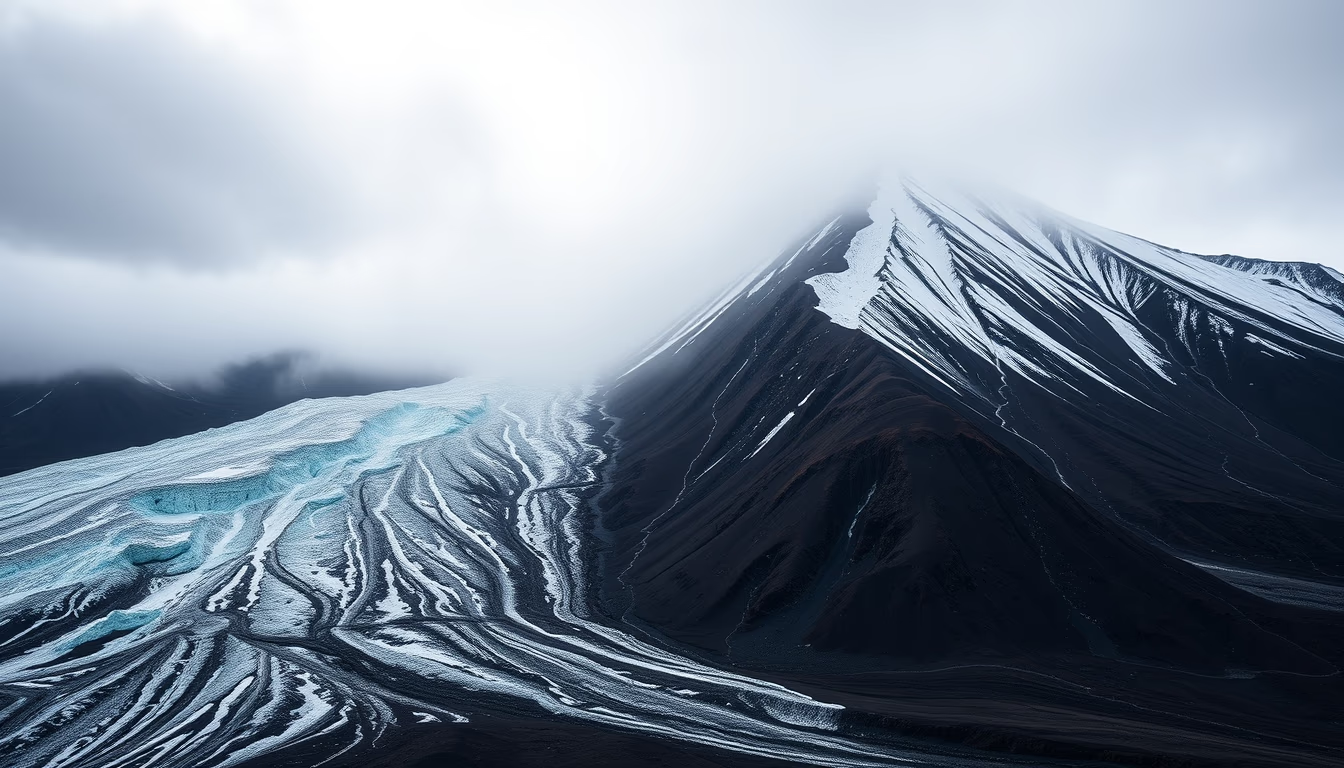
Eyjafjallajökull, one of Iceland's most famous volcanoes, erupted in 2010 causing the largest closure of European airspace since World War II.
About this subject
Eyjafjallajökull volcano is located in southern Iceland, beneath an ice cap of the same name. Standing at 1,666 meters, it is a stratovolcano that erupted in March 2010 after nearly 200 years of dormancy. The eruption occurred in two phases, sending volcanic ash up to 9 kilometers into the atmosphere, disrupting air travel across much of Europe for weeks.
The 2010 eruption had enormous economic and social impact. An estimated 10 million passengers were affected, and airlines lost billions of dollars. It also sparked debate about aviation safety and volcanic monitoring. The name Eyjafjallajökull means "glacier of the island mountains" in Icelandic, combining eyja (island), fjalla (mountain), and jökull (glacier).
Besides the 2010 event, the volcano had smaller eruptions in 920, 1612, and 1821, 1823. Its location under a glacier causes explosive interactions between magma and ice, producing especially fine ash hazardous to aircraft. The volcanic system also includes the Katla volcano to the east, considered more dangerous.
Today, Eyjafjallajökull is a popular tourist destination for hiking and glacier observation. The surrounding area features dramatic landscapes shaped by past eruptions. Despite its sudden fame, the volcano remains dormant but is constantly monitored by seismographs.
Frequently Asked Questions
How do you pronounce Eyjafjallajökull?
The approximate English pronunciation is "AY-ya-fyat-la-YO-kutl" or "EYE-a-fyalla-jokull". In Icelandic, it sounds like "Eia-fiatla-yoku-tl".
What was the largest eruption of Eyjafjallajökull?
The most famous and impactful eruption was in 2010, which disrupted European air travel. However, earlier eruptions like the one in 1821, 1823 were larger in volume.
Is the volcano still active?
Yes, Eyjafjallajökull is considered an active volcano, but it has been dormant since the 2010 eruption. Scientists continuously monitor its seismic activity, and future eruptions are possible.
Direct URL
https://pub-c7d6a6ea828543ac903a74a341ccb2e1.r2.dev/imagens/eyjafjallajokull-volcano-fine-art-photography-p1.avifHow to credit
Include a visible link back to UtilizAí. Copy one of the snippets below:
<a href="https://xn--utiliza-eza.com/en/midia/imagens/eyjafjallajokull-volcano-fine-art-photography-p1">Eyjafjallajökull volcano</a> by <a href="https://xn--utiliza-eza.com">UtilizAí</a>, licensed under <a href="https://creativecommons.org/licenses/by/4.0/">CC BY 4.0</a>.
[Eyjafjallajökull volcano](https://xn--utiliza-eza.com/en/midia/imagens/eyjafjallajokull-volcano-fine-art-photography-p1) by [UtilizAí](https://xn--utiliza-eza.com), CC BY 4.0
License: CC-BY-4.0