Eyjafjallajökull volcano
1344×768 · AVIF · CC BY 4.0
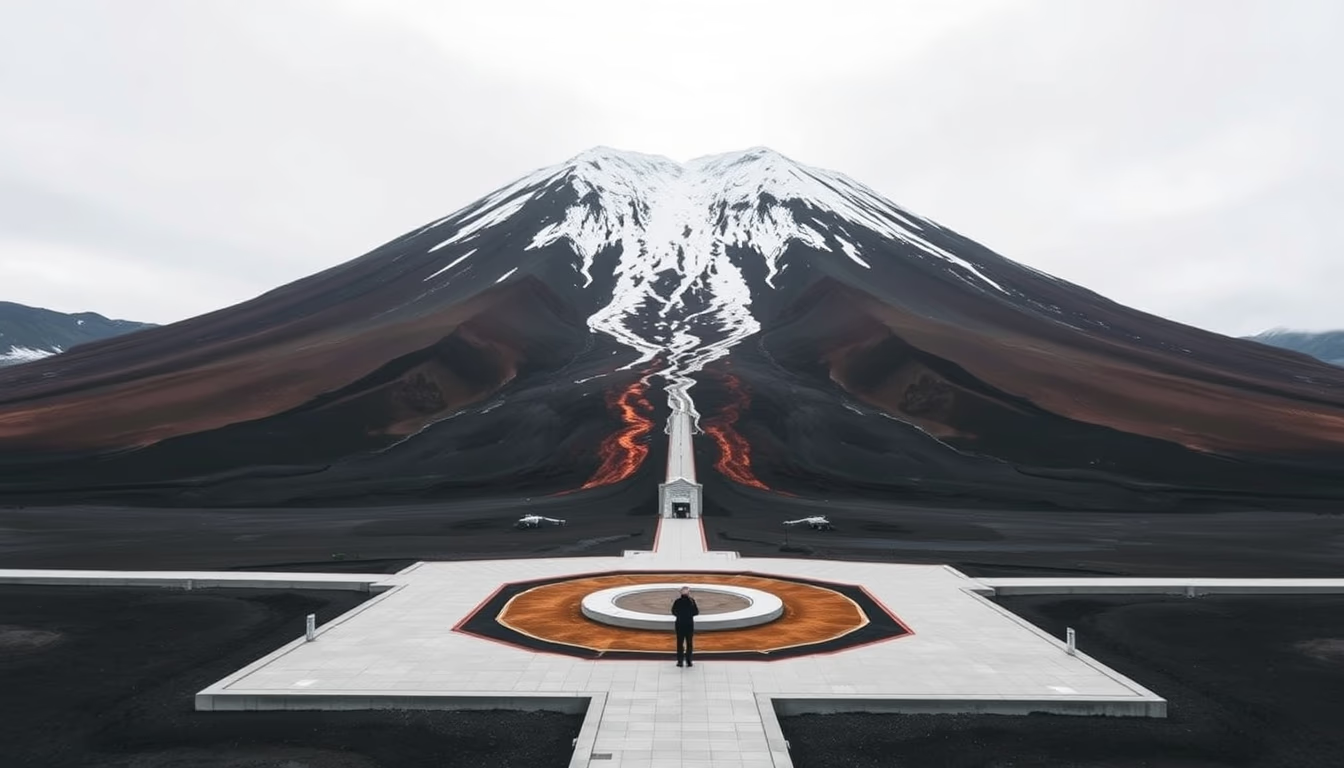
Eyjafjallajökull is a subglacial volcano in Iceland, notorious for its 2010 eruption that paralyzed European air traffic.
About this subject
Located beneath an ice cap in southern Iceland, Eyjafjallajökull is a stratovolcano reaching 1,666 meters. Its last eruption, which began on March 20, 2010, had two distinct phases: a fissure eruption on the flank and, from April 14, a subglacial explosion at the summit. The interaction of magma with ice produced a fine ash plume that rose to 9 km and spread across Europe. The ash contained silica particles highly abrasive to aircraft engines, triggering the largest shutdown of European airspace since World War II. About 10 million passengers were affected, and the aviation industry lost an estimated €1.7 billion.
The name Eyjafjallajökull translates to "island mountain glacier" in Icelandic. The volcano is part of a larger volcanic system that includes the nearby Katla, which is more powerful and often erupts after Eyjafjallajökull. Despite the massive disruption, the 2010 eruption released a relatively small volume of lava but was exceptional due to the ice interaction. Currently, the volcano is monitored by seismometers and GPS, with activity remaining stable.
Culturally, the eruption put Iceland on the global map but also caused economic hardship. The event sparked debates about aviation resilience and led to new regulations for flying in volcanic ash zones. The ash fertilized Icelandic soils when deposited, though it damaged some pastures. Volcanic tourism increased after 2010, with visitors seeking trails and views of the glacier covering the crater.
Frequently Asked Questions
What caused the shutdown of European airspace in 2010?
The subglacial eruption of Eyjafjallajökull produced fine ash containing silica that could damage aircraft engines. Authorities closed airspace to prevent accidents, affecting millions of passengers.
Is Eyjafjallajökull still active?
Yes, it is an active volcano, but since 2010 it has been in a calm state. Continuous monitoring shows little seismic activity or ground deformation.
What is the relationship between Eyjafjallajökull and Katla volcano?
Both are part of the same volcanic system. Eruptions at Eyjafjallajökull often precede eruptions at Katla, which is larger and more dangerous. Katla last erupted in 1918.
Direct URL
https://pub-c7d6a6ea828543ac903a74a341ccb2e1.r2.dev/imagens/eyjafjallajokull-volcano-architectural-photography-p7.avifHow to credit
Include a visible link back to UtilizAí. Copy one of the snippets below:
<a href="https://xn--utiliza-eza.com/en/midia/imagens/eyjafjallajokull-volcano-architectural-photography-p7">Eyjafjallajökull volcano</a> by <a href="https://xn--utiliza-eza.com">UtilizAí</a>, licensed under <a href="https://creativecommons.org/licenses/by/4.0/">CC BY 4.0</a>.
[Eyjafjallajökull volcano](https://xn--utiliza-eza.com/en/midia/imagens/eyjafjallajokull-volcano-architectural-photography-p7) by [UtilizAí](https://xn--utiliza-eza.com), CC BY 4.0
License: CC-BY-4.0