English saddle dressage
1344×768 · AVIF · CC BY 4.0
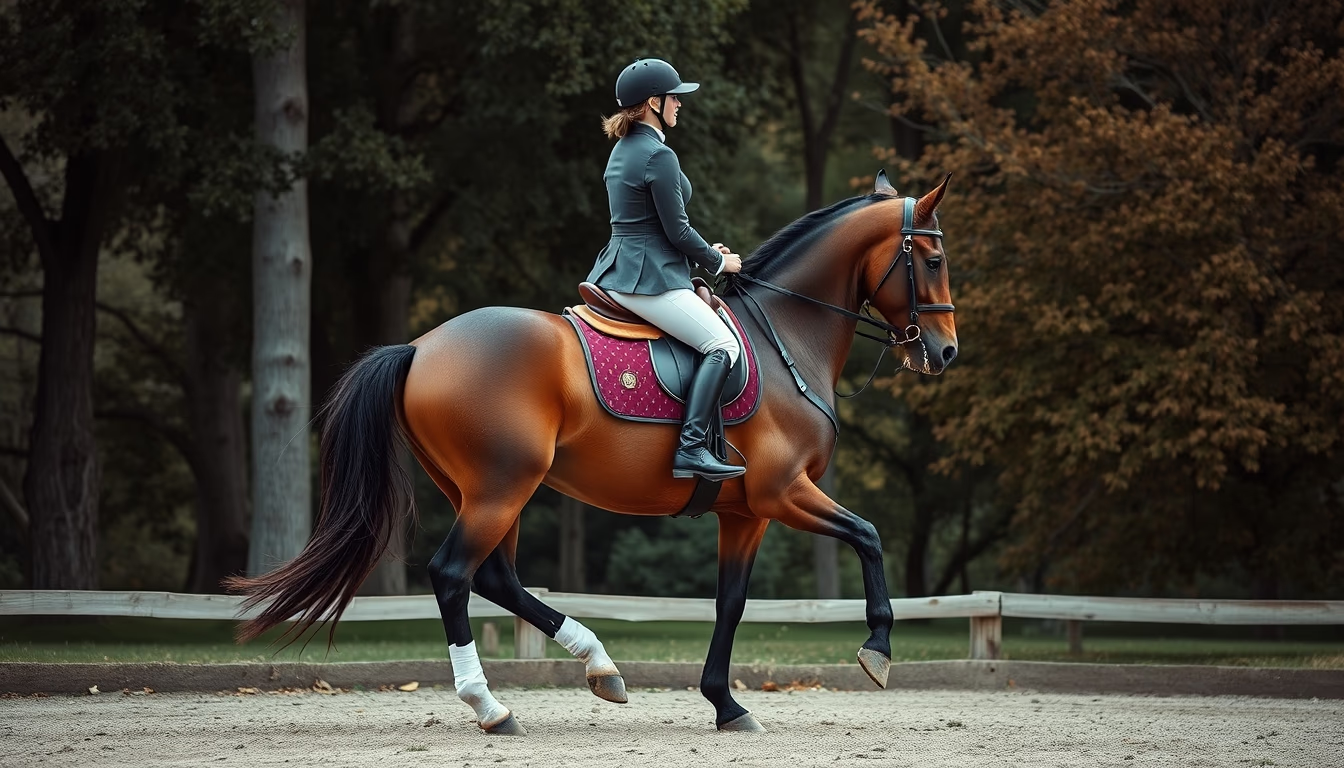
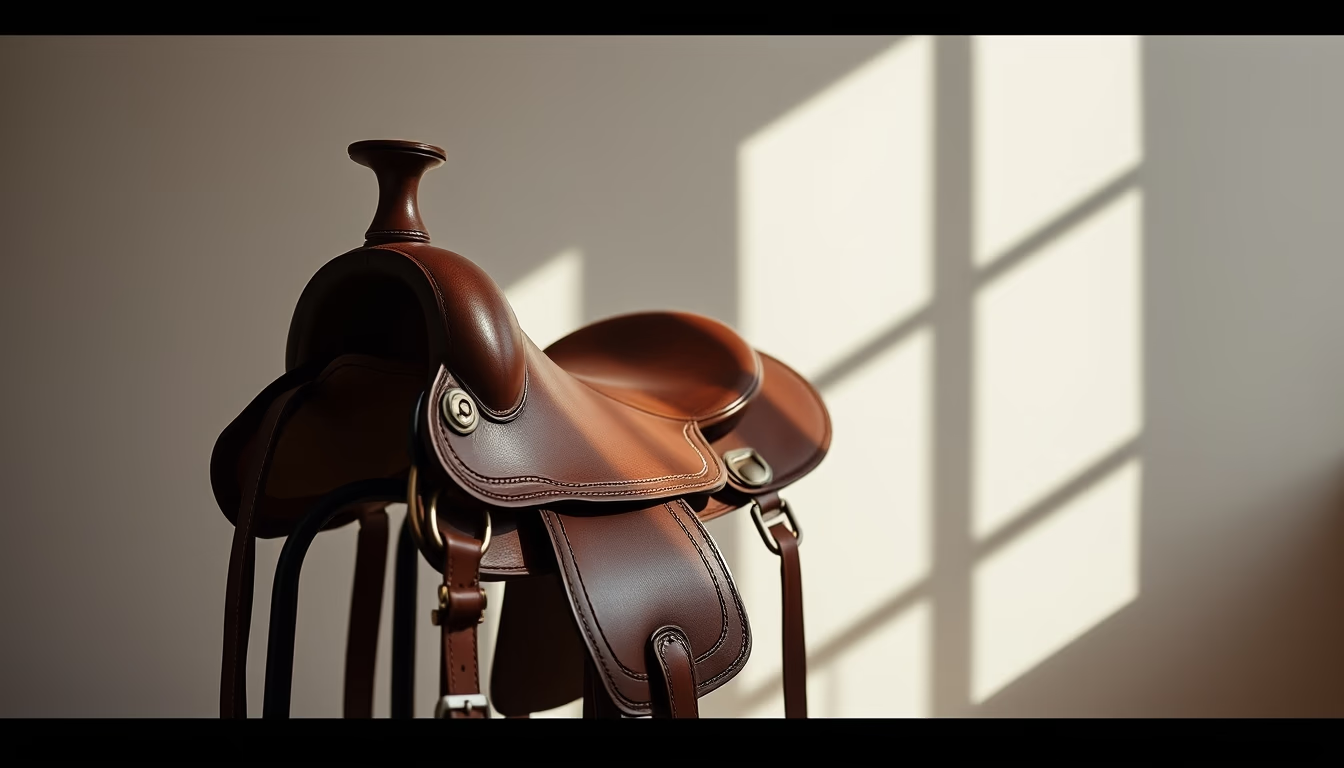
The English dressage saddle is essential for precision and communication between horse and rider in the Olympic discipline of dressage.
About this subject
The English dressage saddle, or dressage saddle, is a specialized piece of equipment designed for the equestrian discipline of dressage, considered the most technical and artistic of horse riding. Unlike jumping or general-purpose saddles, the dressage saddle features a deeper, straighter seat with longer flaps (the rear part), allowing the rider to maintain a correct, lengthened posture with legs extended and heel aligned with the shoulder. This design facilitates the transmission of subtle aids through weight and leg pressure, essential for executing movements such as halt, piaffe, and passage.
The origin of the dressage saddle dates back to the 16th and 17th centuries, when classical riding schools such as the Spanish Riding School in Vienna developed saddles to maximize contact and balance. The tree (internal structure) is typically narrower, and the panel (padding under the saddle) is shaped to fit perfectly on the horse's back, avoiding pressure points. The saddle is made of high-quality leather, often with handcrafted stitching, and may be adorned with details like piping and embroidery, reflecting the tradition and refinement of the discipline.
In Brazil, dressage has grown in popularity, with competitions organized by the Brazilian Equestrian Confederation (CBH). The English dressage saddle is mandatory in official competitions, following regulations from the International Equestrian Federation (FEI). Choosing the right saddle is crucial for performance, as an improper fit can harm the horse's biomechanics and cause discomfort. Therefore, saddles are often customized for each animal, with precise measurements of the withers and back.
Interestingly, the dressage saddle does not have stirrups as forward as jumping saddles, because the leg position is more fixed. Additionally, the girth system (strap that passes under the horse's belly) is adjusted to ensure stability without overtightening. Maintenance includes regular cleaning with leather soap and conditioning with specific oils to preserve material flexibility.
Frequently Asked Questions
What is the difference between a dressage saddle and a jumping saddle?
The dressage saddle has a deeper seat and longer flaps to allow extended legs and subtle aids. The jumping saddle has a shorter seat and more forward flaps to give the rider freedom during jumps.
How do I properly fit a dressage saddle on a horse?
Check that the tree does not pinch the withers, that the panel distributes weight evenly, and that the girth is snug but not too tight. Professional saddle fitting is recommended.
Is the dressage saddle used in other disciplines?
No, it is specific to dressage due to its conformation that favors the posture and communication required by the discipline. Other events, such as eventing, use different saddles.
Direct URL
https://pub-c7d6a6ea828543ac903a74a341ccb2e1.r2.dev/imagens/english-saddle-dressage-documentary-nature-style-fresh1.avifHow to credit
Include a visible link back to UtilizAí. Copy one of the snippets below:
<a href="https://xn--utiliza-eza.com/en/midia/imagens/english-saddle-dressage-documentary-nature-style-fresh1">English saddle dressage</a> by <a href="https://xn--utiliza-eza.com">UtilizAí</a>, licensed under <a href="https://creativecommons.org/licenses/by/4.0/">CC BY 4.0</a>.
[English saddle dressage](https://xn--utiliza-eza.com/en/midia/imagens/english-saddle-dressage-documentary-nature-style-fresh1) by [UtilizAí](https://xn--utiliza-eza.com), CC BY 4.0
License: CC-BY-4.0