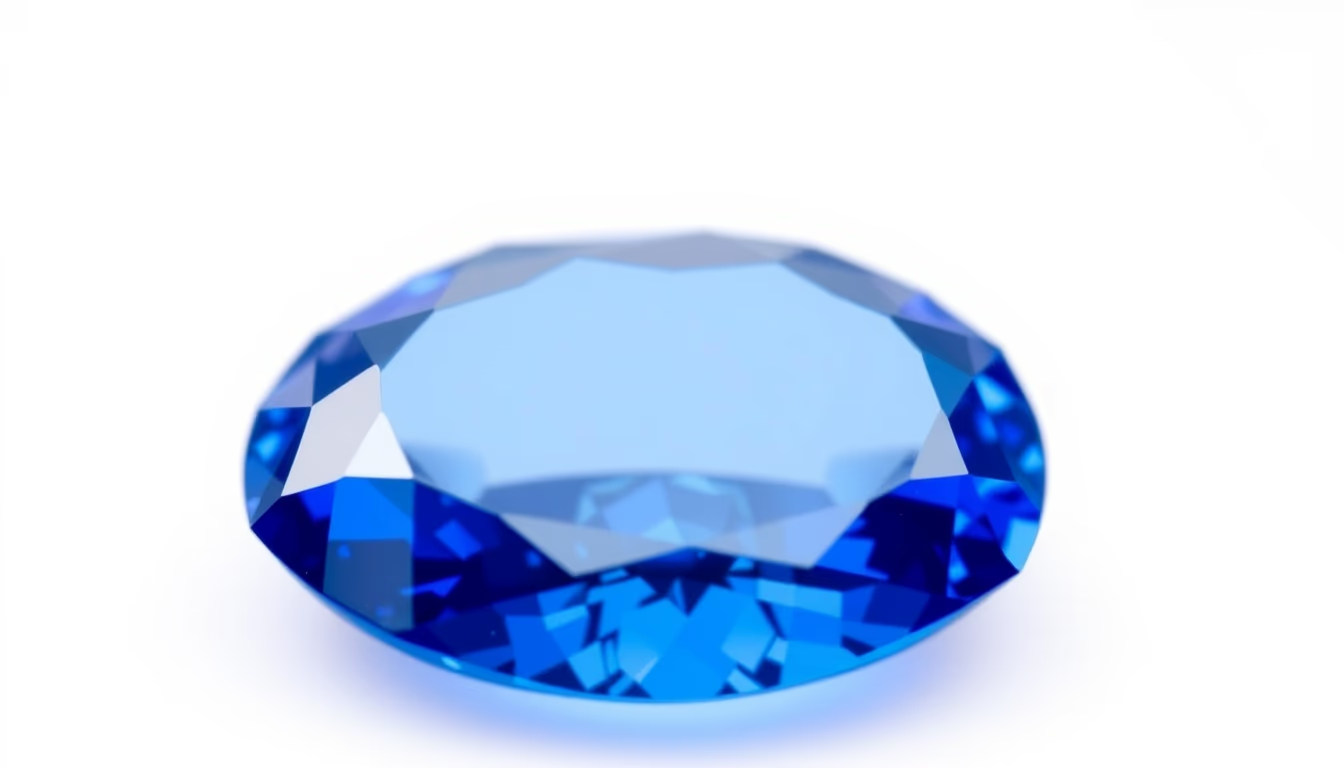
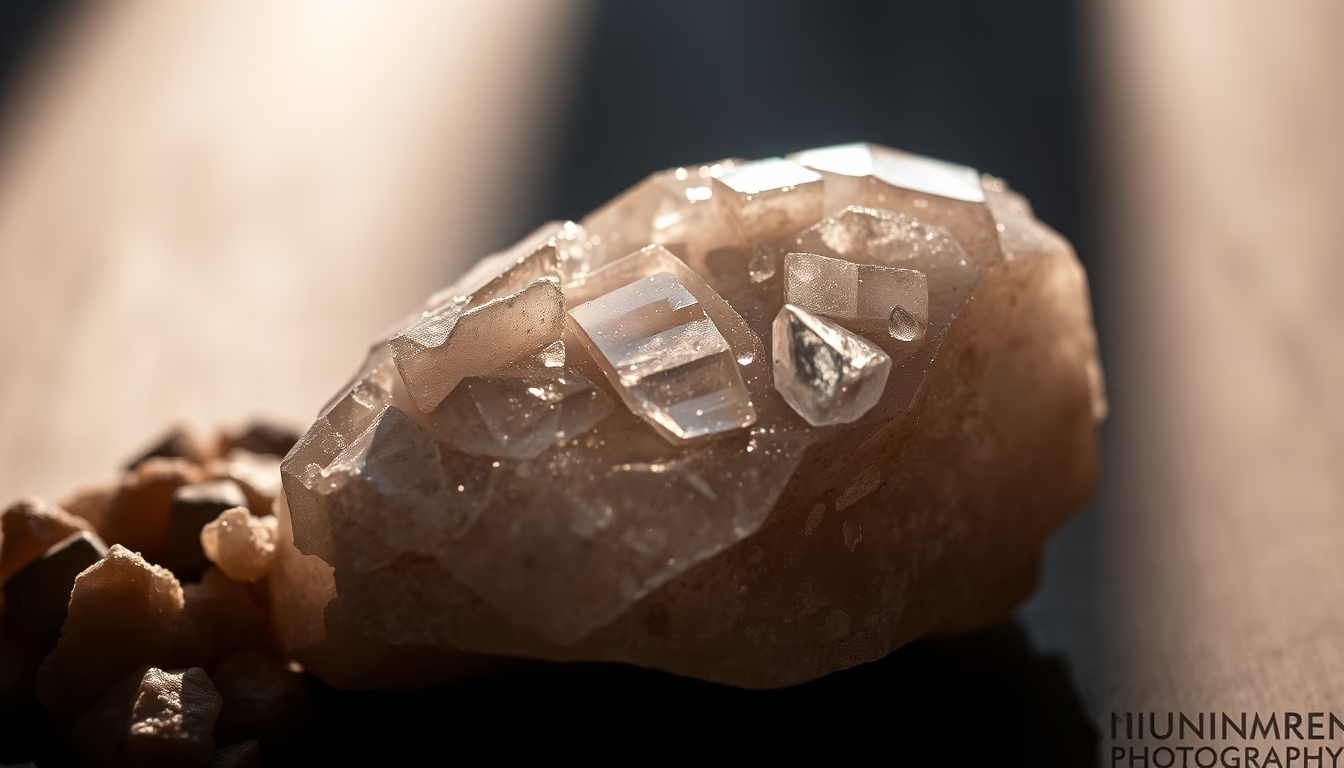
Emerald rough green
1344×768 · AVIF · CC BY 4.0
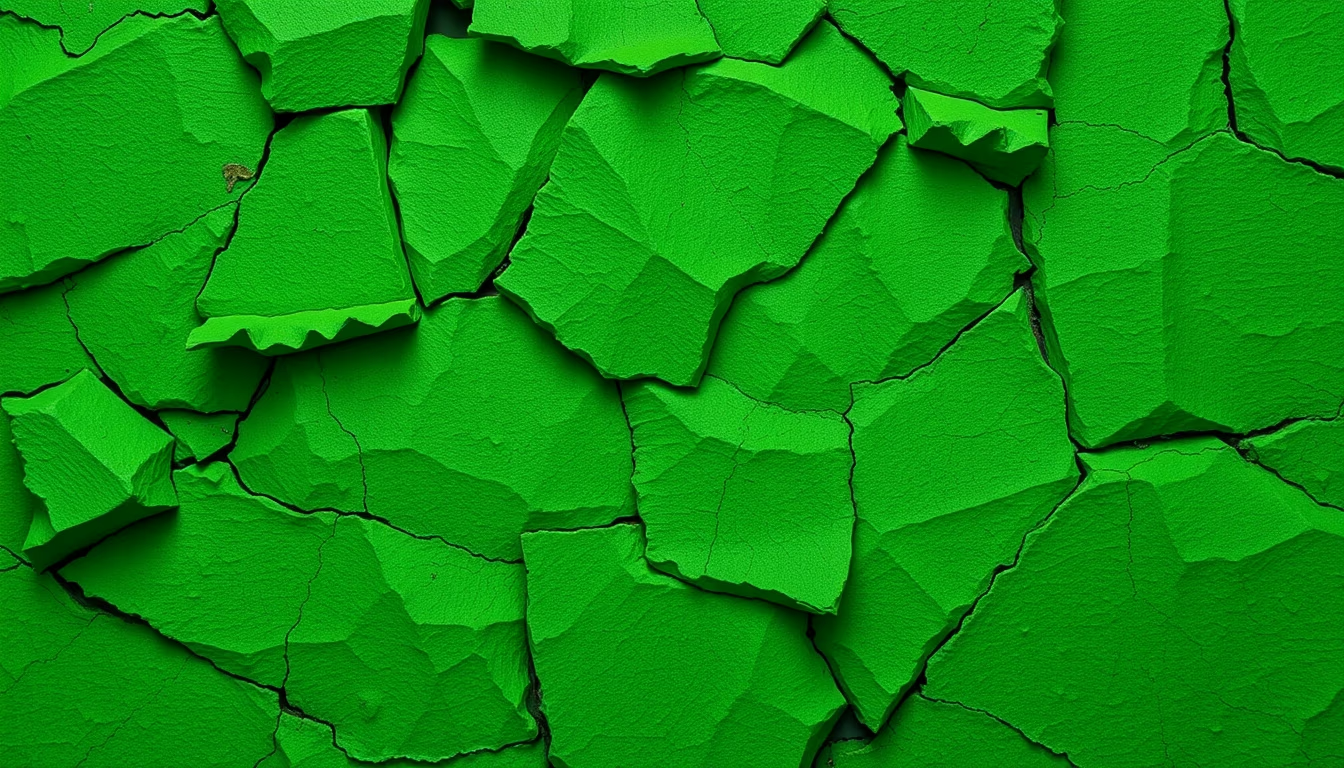
Rough green emerald is a variety of beryl, colored by chromium and vanadium, mined mainly in Brazil, Colombia and Zambia.
About this subject
Emerald is one of the most valuable gemstones in the world, belonging to the beryl family (Be3Al2(SiO3)6). Its intense green color comes from the substitution of aluminum atoms by chromium and, to a lesser extent, vanadium in the crystal structure. With a hardness of 7.5 to 8 on the Mohs scale, it is relatively durable but brittle due to natural inclusions, called "jardins", which help identify genuine specimens.
The main emerald deposits are in Colombia (Muzo, Chivor and Coscuez mines), responsible for about 70% of global gem-quality production. Brazil is also a major producer, with highlights being the Belmont mine (Minas Gerais) and Pirenópolis (Goiás), yielding lighter-colored, less included crystals. In Zambia, the Kagem mine produces emeralds with a highly prized bluish-green hue. Each region imparts unique color and clarity characteristics.
Historically, emeralds were mined in Ancient Egypt as early as 1500 BC, in Cleopatra's mines. In modern times, they became a symbol of royalty and elegance, serving as the birthstone for May. Besides jewelry, synthetic emeralds are produced in laboratories for industrial and gemological use, but natural ones remain the most coveted, with rare specimens fetching over $100,000 per carat.
Frequently Asked Questions
What determines the color of an emerald?
The green color of emerald is caused by the presence of chromium and vanadium in its crystal structure, substituting for aluminum atoms. The intensity of the hue depends on the concentration of these elements and the geological formation conditions.
Where are the best emeralds in the world found?
The highest quality emeralds come from Colombia, especially the Muzo and Chivor mines. Brazil and Zambia also produce highly valued gems, each with distinct color and clarity characteristics.
How to identify a natural emerald?
Natural emeralds almost always contain internal inclusions called "jardins," visible under magnification. The color is also typically uneven. Gemological tests such as refractive index and fluorescence help differentiate them from synthetic or imitation stones.
Direct URL
https://pub-c7d6a6ea828543ac903a74a341ccb2e1.r2.dev/imagens/emerald-rough-green-isometric-flat-lay-p3.avifHow to credit
Include a visible link back to UtilizAí. Copy one of the snippets below:
<a href="https://xn--utiliza-eza.com/en/midia/imagens/emerald-rough-green-isometric-flat-lay-p3">Emerald rough green</a> by <a href="https://xn--utiliza-eza.com">UtilizAí</a>, licensed under <a href="https://creativecommons.org/licenses/by/4.0/">CC BY 4.0</a>.
[Emerald rough green](https://xn--utiliza-eza.com/en/midia/imagens/emerald-rough-green-isometric-flat-lay-p3) by [UtilizAí](https://xn--utiliza-eza.com), CC BY 4.0
License: CC-BY-4.0