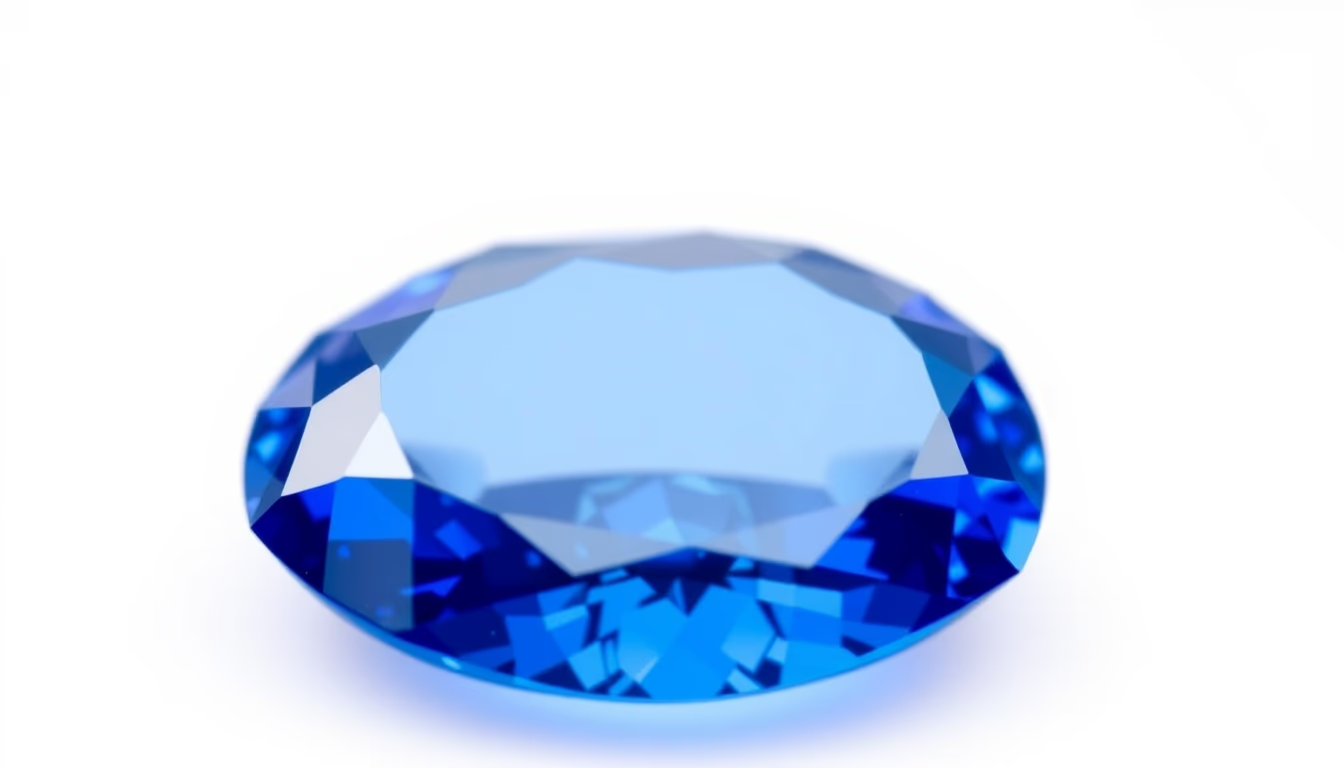
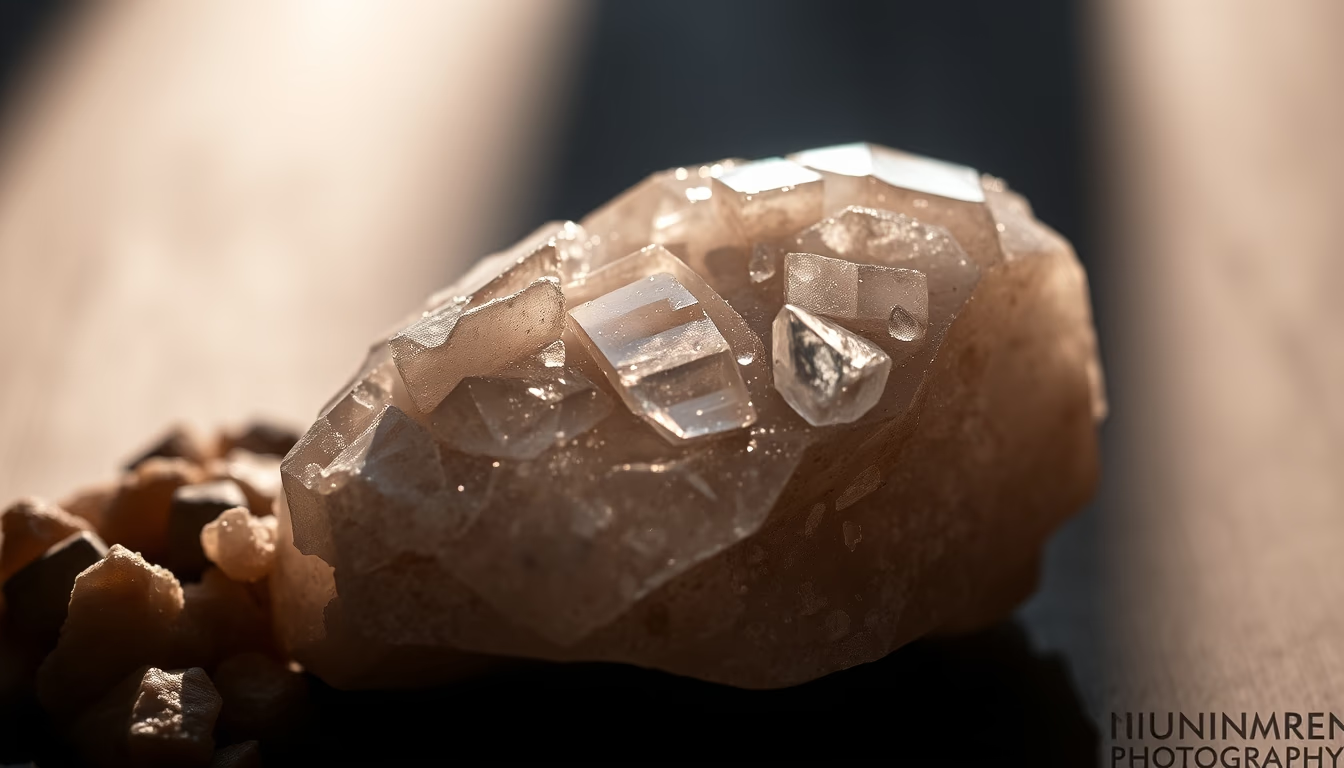
Emerald rough green
1344×768 · AVIF · CC BY 4.0

Rough green emeralds, a variety of beryl, are precious gemstones formed under specific geological conditions, famous for their intense color and characteristic inclusions.
About this subject
Emeralds are a variety of the mineral beryl, chemically composed of beryllium, aluminum, and silicate, whose intense green color is due to the presence of chromium and vanadium in its crystal structure. These gemstones form in metamorphic rocks and hydrothermal veins, often associated with shale and limestone deposits. Major producing countries include Colombia, Brazil, Zambia, and Afghanistan. Colombia is renowned for producing the highest quality emeralds, with deep green coloration and high transparency, while Brazil is known for large crystals, though often with more inclusions.
The term "rough" refers to the gemstone in its natural state, before cutting and polishing. Rough emeralds are often treated with oils or resins to fill natural fractures and improve clarity, a common practice in the industry. Inclusions, called "jardin," are accepted as part of the gem's identity, distinguishing it from other green stones like tourmaline and peridot. The hardness on the Mohs scale is 7.5 to 8, making them relatively durable but brittle due to internal fractures.
Historically, emeralds were mined in Ancient Egypt as early as 1500 BCE, but the Colombian mines, discovered by conquistadors in the 16th century, became the main source for European royalty. The gem symbolizes rebirth and eternal love, and it is the birthstone for May. In Brazil, emerald mining occurs mainly in Minas Gerais, Bahia, and Goiás, with highlights in the Belmont and Capoeirana regions. Artisanal mining is still common, providing local employment but also environmental and regulatory challenges.
Fun fact: The largest emerald ever found weighed over 300 kg and was discovered in 2001 in Brazil, in the Carnaíba region of Bahia. This rough gem, nicknamed "Bahia Emerald," sparked legal and ownership controversies. Additionally, synthetic emeralds have been produced in laboratories since the 1940s, but natural ones remain more valuable due to their rarity and characteristic inclusions.
Frequently Asked Questions
What is the difference between natural and synthetic emeralds?
Natural emeralds are formed by geological processes over millions of years, exhibiting inclusions and color variations. Synthetic emeralds are created in a laboratory with identical chemical composition but generally have fewer inclusions and are more affordable.
Why do emeralds usually have inclusions?
Inclusions are natural features of emeralds due to their formation conditions, such as the presence of other minerals and fluids. They are considered a "fingerprint" of the gem and help distinguish natural emeralds from synthetics.
Is oil treatment permanent in emeralds?
No, the oil used to fill fractures can dry out or leak over time, especially under heat or solvents. Therefore, treated emeralds require special care and may need retreatment.
Direct URL
https://pub-c7d6a6ea828543ac903a74a341ccb2e1.r2.dev/imagens/emerald-rough-green-cinematic-wide-shot-p7.avifHow to credit
Include a visible link back to UtilizAí. Copy one of the snippets below:
<a href="https://xn--utiliza-eza.com/en/midia/imagens/emerald-rough-green-cinematic-wide-shot-p7">Emerald rough green</a> by <a href="https://xn--utiliza-eza.com">UtilizAí</a>, licensed under <a href="https://creativecommons.org/licenses/by/4.0/">CC BY 4.0</a>.
[Emerald rough green](https://xn--utiliza-eza.com/en/midia/imagens/emerald-rough-green-cinematic-wide-shot-p7) by [UtilizAí](https://xn--utiliza-eza.com), CC BY 4.0
License: CC-BY-4.0