Emerald rough green
1344×768 · AVIF · CC BY 4.0
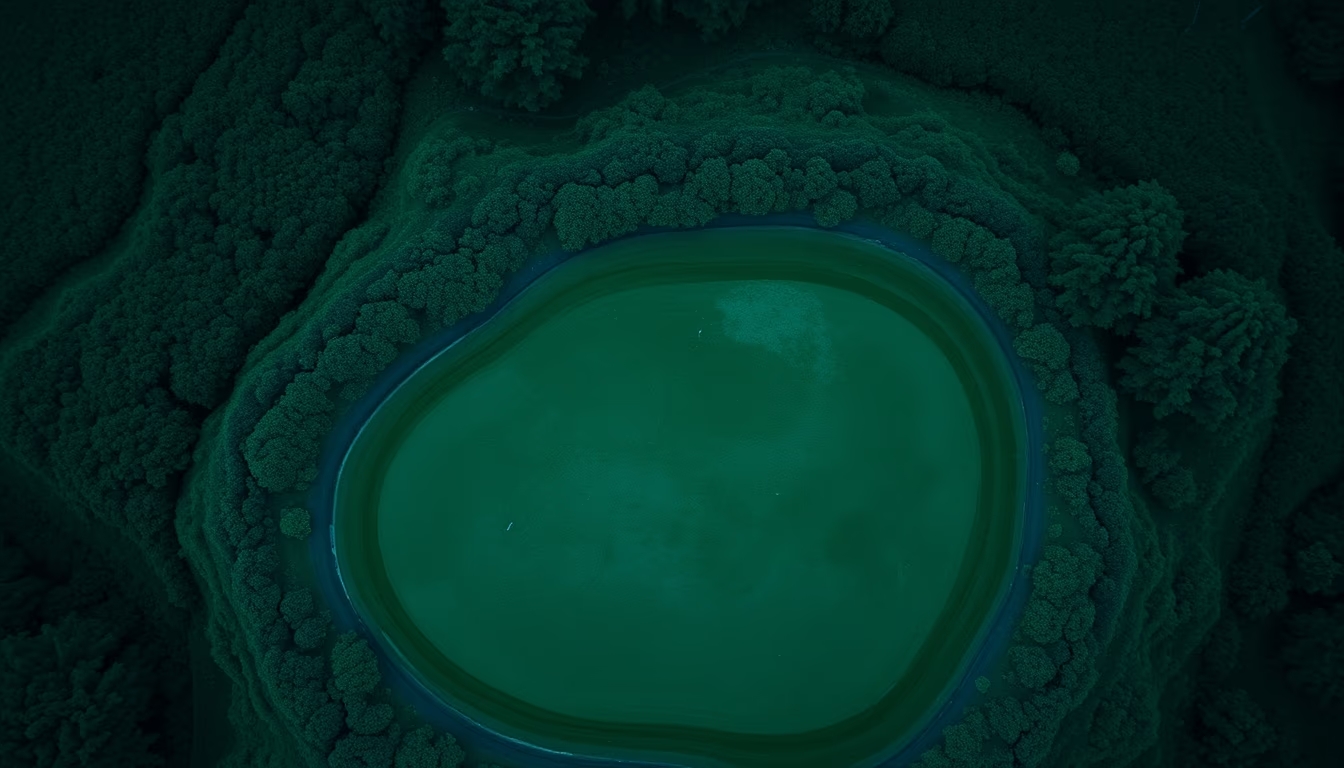
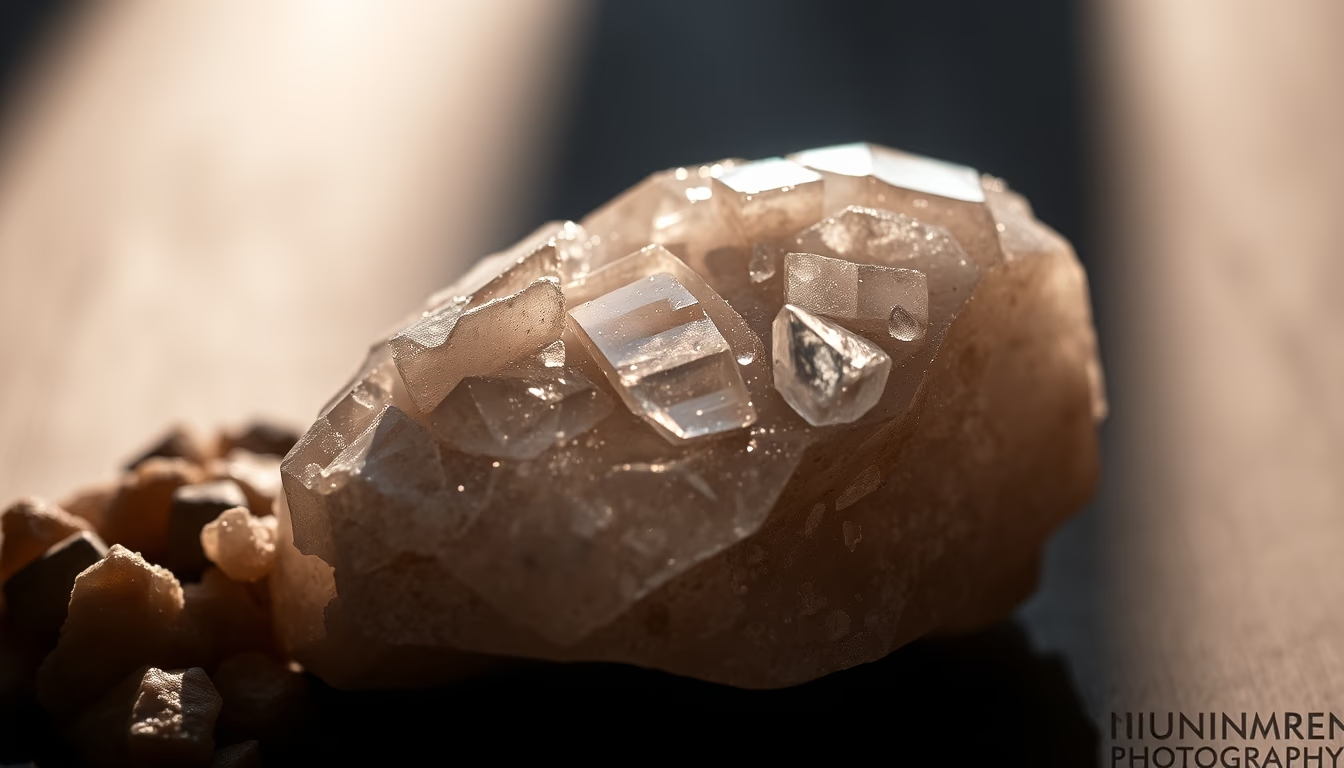
Rough green emerald: a beryl crystal prized for its intense green color and rarity.
About this subject
Emerald is a green variety of the mineral beryl, colored by trace amounts of chromium and vanadium. It belongs to the same family as aquamarine and morganite, and is one of the most valuable gemstones worldwide. Major deposits are found in Colombia, Zambia, Brazil, and Zimbabwe. Natural rough emeralds almost always contain inclusions, often called "jardin," which are accepted as part of the gem's identity.
On the Mohs scale, emerald has a hardness of 7.5 to 8, making it reasonably hard yet brittle due to common fractures. Cutting emeralds requires great skill to avoid damage. To improve clarity, most emeralds are treated with oils or resins, a practice that must be disclosed to buyers.
Historically, emeralds were mined in ancient Egypt as early as 1500 BC, but Colombian mines like Muzo and Chivor have produced the most famous stones since pre-Columbian times. The gem is the birthstone for May and symbolizes rebirth and wisdom. In Brazil, states such as Minas Gerais, Bahia, and Goiás are notable producers of rough emeralds.
Value of a rough emerald depends on color saturation, purity (fewer inclusions), carat weight, and origin. Specimens with intense green color and minimal inclusions can command higher per-carat prices than diamond. Environmental degradation and artisanal mining pose ethical challenges in emerald extraction.
Frequently Asked Questions
What is the difference between rough and cut emerald?
A rough emerald is a natural crystal as extracted from the mine, without polishing or cutting. A cut emerald has been shaped and polished to enhance its brilliance and form, and may also receive treatments to fill fractures.
Do emeralds always have inclusions?
Yes, most natural emeralds contain visible inclusions, known as "jardin." Completely flawless stones are extremely rare and, if genuine, command very high prices. Inclusions can also help identify the gem's origin.
How can you tell a real emerald?
A real emerald can be identified by its characteristic inclusions, green color (slightly bluish for Colombian, more yellowish for Zambian), and hardness. Gemological tests such as refractometry and microscopic examination are needed for confirmation. Be wary of stones that are too perfect and cheap, as they may be synthetic or imitations.
Direct URL
https://pub-c7d6a6ea828543ac903a74a341ccb2e1.r2.dev/imagens/emerald-rough-green-aerial-drone-shot-p9.avifHow to credit
Include a visible link back to UtilizAí. Copy one of the snippets below:
<a href="https://xn--utiliza-eza.com/en/midia/imagens/emerald-rough-green-aerial-drone-shot-p9">Emerald rough green</a> by <a href="https://xn--utiliza-eza.com">UtilizAí</a>, licensed under <a href="https://creativecommons.org/licenses/by/4.0/">CC BY 4.0</a>.
[Emerald rough green](https://xn--utiliza-eza.com/en/midia/imagens/emerald-rough-green-aerial-drone-shot-p9) by [UtilizAí](https://xn--utiliza-eza.com), CC BY 4.0
License: CC-BY-4.0