Easter eggs decorated
1344×768 · AVIF · CC BY 4.0
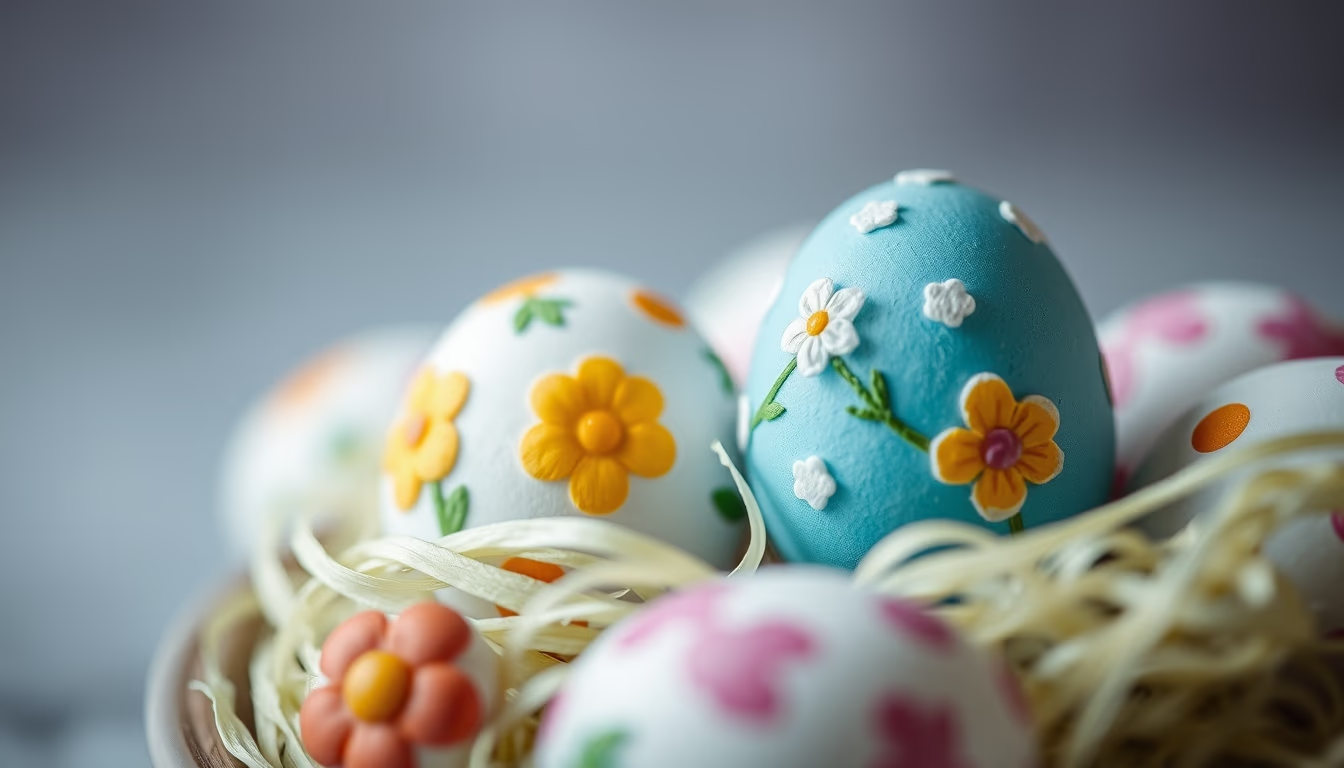
Decorated Easter eggs are a tradition that blends art, religious symbolism, and family celebration across many cultures worldwide.
About this subject
The custom of decorating Easter eggs dates back to early Christians in Mesopotamia, who dyed eggs red to symbolize the blood of Christ. Over centuries, the practice spread across Europe, developing distinct techniques: in Ukraine, eggs known as pysanky are decorated using wax resist and dyes to create intricate geometric patterns. In Germany and Austria, hollow eggs are hand-painted or wrapped in colored foil. In Brazil, the tradition blended Portuguese and indigenous influences, with natural dyes like annatto and saffron used to tint eggshells.
Modern decoration incorporates acrylic paints, glitter, stickers, and decoupage. In many countries, especially the United States and Europe, families organize egg hunts, hiding decorated eggs for children to find. This tradition stems from Germanic folklore, where the Easter hare (Osterhase) brought colored eggs. Beyond the Christian symbolism of resurrection, eggs represent fertility and spring renewal in the Northern Hemisphere.
Notably, the world's largest decorated Easter egg sculpture was created in 2011 in Ukraine, standing 14 meters tall and adorned with mosaic patterns of painted eggs. In Brazil, chocolate eggs have largely replaced natural decorated eggs, but the handmade practice persists in rural communities and artisan fairs. Every year, designers and confectioners release themed collections, turning decorated eggs into ephemeral works of art.
Frequently Asked Questions
What is the meaning of decorated Easter eggs?
Decorated eggs symbolize Christ's resurrection in Christian tradition, as well as fertility and spring renewal in pagan cultures. Colors and patterns vary by region, carrying specific meanings.
How are handmade decorated Easter eggs made?
There are several techniques: dyeing with natural colors (like beetroot or turmeric), hand-painting with fine brushes, wax resist methods (as in Ukrainian pysanky), and decoupage with decorative napkins.
What is the origin of decorating eggs at Easter?
The practice began among early Christians in Mesopotamia around the 3rd century, who dyed eggs red. It was later adopted by various European cultures, each adding their own techniques and symbolism.
Direct URL
https://pub-c7d6a6ea828543ac903a74a341ccb2e1.r2.dev/imagens/easter-eggs-decorated-macro-closeup-p5.avifHow to credit
Include a visible link back to UtilizAí. Copy one of the snippets below:
<a href="https://xn--utiliza-eza.com/en/midia/imagens/easter-eggs-decorated-macro-closeup-p5">Easter eggs decorated</a> by <a href="https://xn--utiliza-eza.com">UtilizAí</a>, licensed under <a href="https://creativecommons.org/licenses/by/4.0/">CC BY 4.0</a>.
[Easter eggs decorated](https://xn--utiliza-eza.com/en/midia/imagens/easter-eggs-decorated-macro-closeup-p5) by [UtilizAí](https://xn--utiliza-eza.com), CC BY 4.0
License: CC-BY-4.0