Dragonfly eye closeup
1344×768 · AVIF · CC BY 4.0
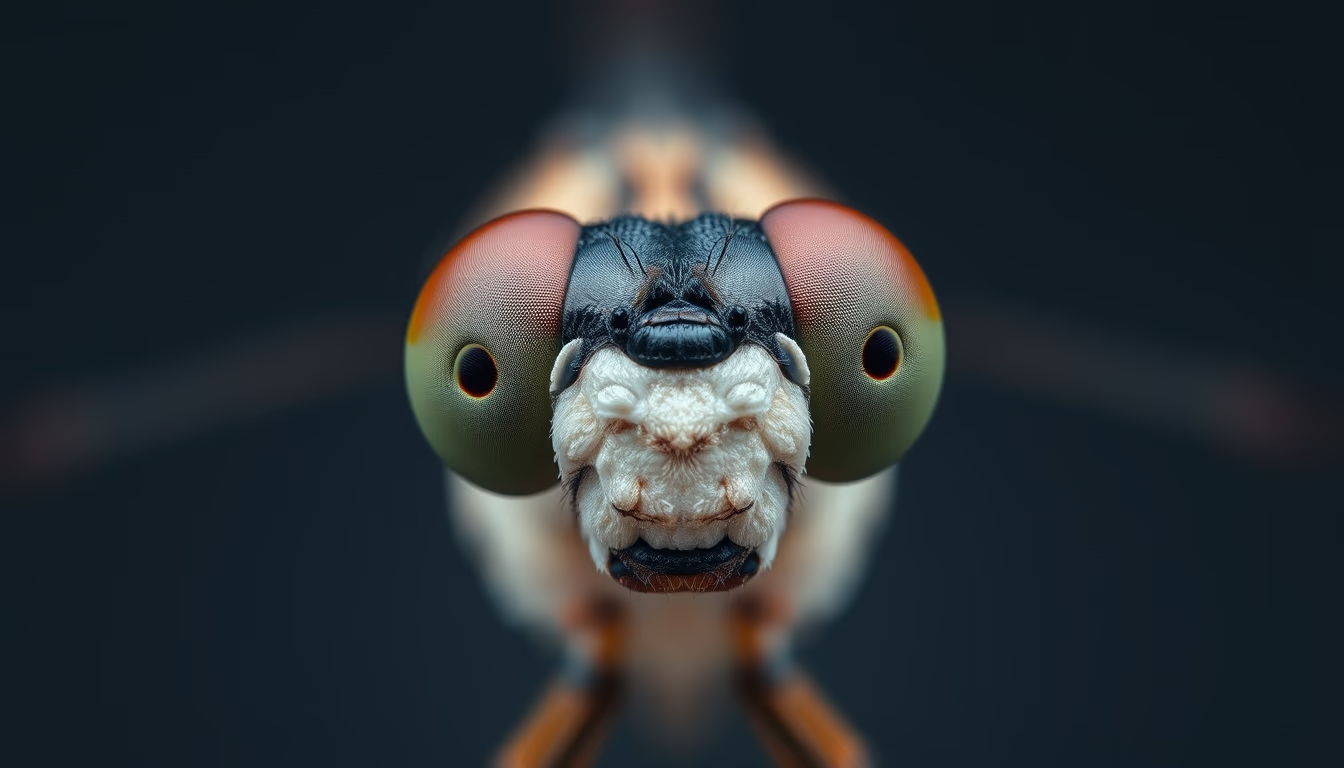
Extreme close-up of a dragonfly's compound eye, revealing thousands of ommatidia that form a primitive yet highly efficient visual system.
About this subject
The dragonfly eye is one of the most complex in the animal kingdom. Each compound eye contains 10,000 to 30,000 ommatidia, individual units that act as tiny eyes. This structure gives dragonflies nearly 360-degree vision, crucial for hunting prey in midair and spotting predators. Unlike human eyes that focus light through a single lens, ommatidia capture mosaic images optimized for detecting motion rapidly.
Dragonflies have existed for over 300 million years, predating dinosaurs. Their vision is adapted for ultraviolet and polarized light, aiding navigation and water detection. Each ommatidium contains photoreceptor cells that process color and polarization independently. Studies show dragonflies can distinguish up to 30 different colors, while humans perceive only three primary colors.
Beyond hunting, keen eyesight is vital for mating: males use ultraviolet wing reflections to court females. Eye structure varies between species; some have larger ommatidia on top to better detect predators from above. This evolutionary specialization makes dragonflies highly successful predators, with prey capture rates exceeding 95%.
Remarkably, a dragonfly's brain processes visual information in just 30 milliseconds, enabling almost instantaneous reactions. This ability has inspired robotics and high-maneuverability drones. Despite their alien appearance, compound eyes exemplify evolution through natural selection, combining mechanical simplicity with astonishing performance.
Frequently Asked Questions
How many eyes does a dragonfly have?
Dragonflies have two compound eyes, each made of thousands of ommatidia. Although only two eyes, they provide nearly 360-degree vision.
Can dragonflies see color?
Yes, they see color, including ultraviolet light. Some species can distinguish up to 30 different colors, aiding in hunting and mating.
Why are dragonfly eyes so large?
Large eyes accommodate more ommatidia, improving motion detection and peripheral vision. This is crucial for catching fast-flying insects in midair.
Direct URL
https://pub-c7d6a6ea828543ac903a74a341ccb2e1.r2.dev/imagens/dragonfly-eye-closeup-studio-editorial-portrait-p0.avifHow to credit
Include a visible link back to UtilizAí. Copy one of the snippets below:
<a href="https://xn--utiliza-eza.com/en/midia/imagens/dragonfly-eye-closeup-studio-editorial-portrait-p0">Dragonfly eye closeup</a> by <a href="https://xn--utiliza-eza.com">UtilizAí</a>, licensed under <a href="https://creativecommons.org/licenses/by/4.0/">CC BY 4.0</a>.
[Dragonfly eye closeup](https://xn--utiliza-eza.com/en/midia/imagens/dragonfly-eye-closeup-studio-editorial-portrait-p0) by [UtilizAí](https://xn--utiliza-eza.com), CC BY 4.0
License: CC-BY-4.0