Dolphin pod swimming
1344×768 · AVIF · CC BY 4.0
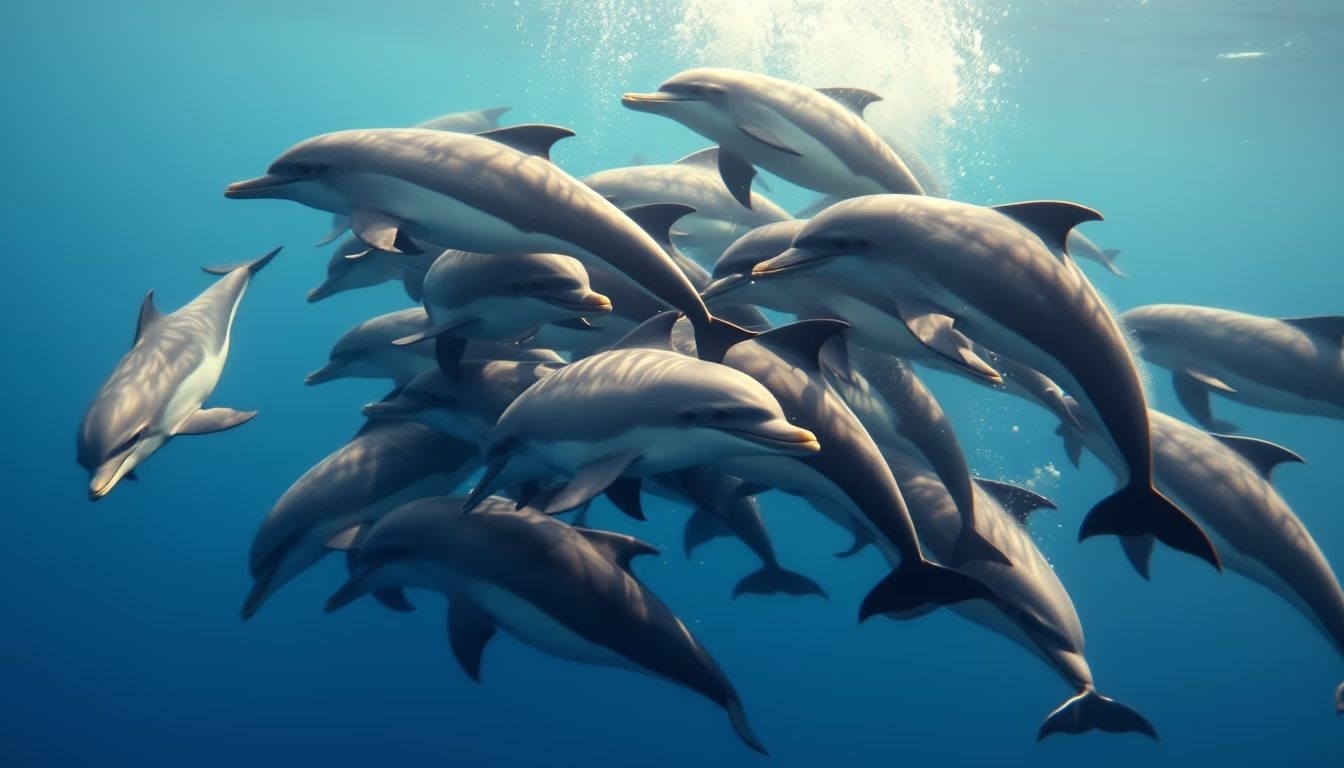
Dolphins are highly social cetaceans that live in groups called pods, communicating through sounds and leaps.
About this subject
Dolphins belong to the order Cetacea and family Delphinidae, which includes about 40 species. They are marine mammals found in all oceans, from coastal waters to the open sea. A typical pod ranges from 2 to 15 individuals, but larger aggregations of hundreds occur in food-rich areas or during migrations.
Dolphin social structure is complex and based on long-lasting bonds. They hunt cooperatively, using techniques such as encircling schools or creating waves to disorient prey. Communication is essential: besides whistles and clicks (echolocation), leaps and tail slaps convey messages. Dolphins are also known for playful behavior, like riding waves or playing with objects.
Intelligent and curious, dolphins have large brains relative to body size and demonstrate self-awareness, tool use (sponges to protect their rostrum), and cultural learning. Species like the bottlenose dolphin (Tursiops truncatus) are the most studied and famous. Unfortunately, they face threats such as pollution, bycatch in fishing nets, and habitat degradation.
Swimming in synchrony, as seen in this image, reinforces group cohesion. Coordinated swimming saves energy and facilitates predator vigilance, such as against sharks. Each pod member knows its role, and the hierarchy is fluid, based on age, sex, and family ties.
Frequently Asked Questions
Why do dolphins swim in groups?
Dolphins swim in groups, called pods, for protection against predators, more efficient hunting, and social bonding. Synchronized swimming saves energy during long travels.
How do dolphins communicate?
They use whistles for individual identification, clicks for echolocation (navigation and hunting), and burst pulses or body postures to express emotions or warn of danger.
What is the most common dolphin species?
The bottlenose dolphin (Tursiops truncatus) is the most well-known and studied species, found in temperate and tropical oceans, often seen in marine parks and in the wild.
Direct URL
https://pub-c7d6a6ea828543ac903a74a341ccb2e1.r2.dev/imagens/dolphin-pod-swimming-national-geographic-style-p2.avifHow to credit
Include a visible link back to UtilizAí. Copy one of the snippets below:
<a href="https://xn--utiliza-eza.com/en/midia/imagens/dolphin-pod-swimming-national-geographic-style-p2">Dolphin pod swimming</a> by <a href="https://xn--utiliza-eza.com">UtilizAí</a>, licensed under <a href="https://creativecommons.org/licenses/by/4.0/">CC BY 4.0</a>.
[Dolphin pod swimming](https://xn--utiliza-eza.com/en/midia/imagens/dolphin-pod-swimming-national-geographic-style-p2) by [UtilizAí](https://xn--utiliza-eza.com), CC BY 4.0
License: CC-BY-4.0