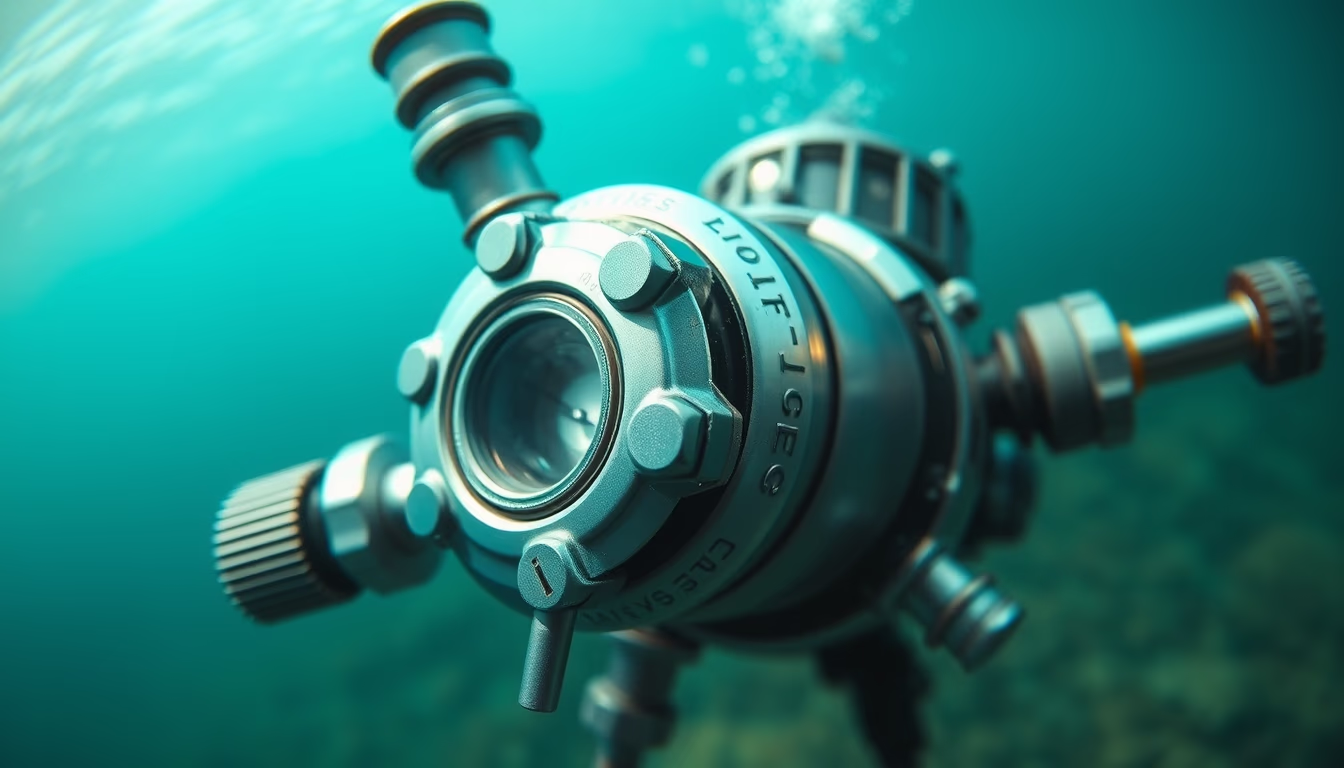
Diving regulator detail
1344×768 · AVIF · CC BY 4.0
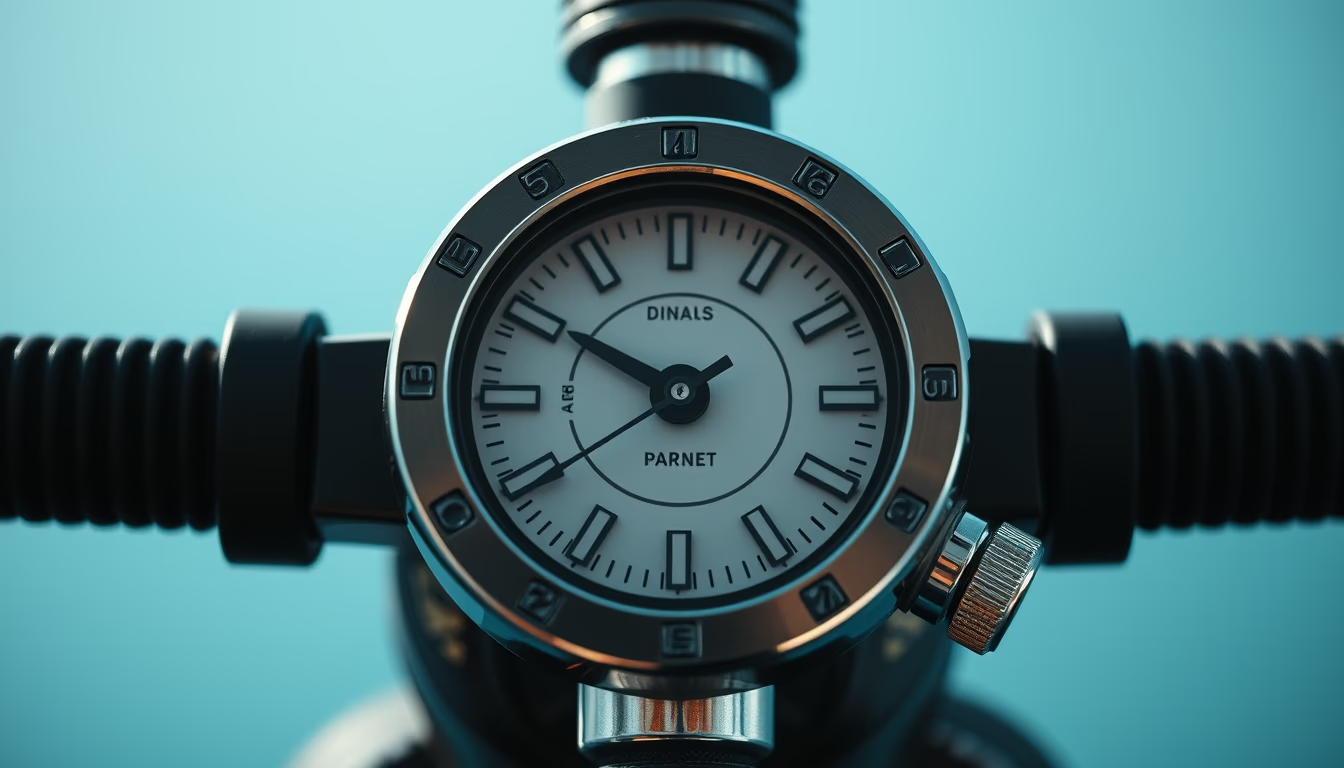
Detail of a diving regulator, an essential device that reduces the pressure of compressed air from the tank for underwater breathing.
About this subject
The diving regulator is the heart of the underwater breathing system. It converts air stored under high pressure (typically 200 to 300 bar) in the tank to ambient pressure, allowing the diver to breathe comfortably at any depth. The equipment consists of two main stages. The first stage connects directly to the tank valve and reduces the pressure to an intermediate level, usually between 8 and 10 bar above ambient pressure. The second stage, held in the diver's mouth, performs the final reduction to match the surrounding water pressure, releasing air only during inhalation.
Modern regulators incorporate technologies such as pneumatic balancing, which ensures consistent flow regardless of depth, and environmental sealing systems to prevent freezing in cold water. Materials like chrome-plated brass, stainless steel, and engineering polymers are used to resist corrosion and wear. Regular maintenance is critical, as regulator failure can lead to air starvation or mask fogging due to uncontrolled breathing.
In Brazil, diving is intensive along the coastline, especially at Fernando de Noronha and the Abrolhos Archipelago, where marine biodiversity attracts tourists. Regulators follow international standards such as EN 250 or AS/NZS 2299, ensuring safety in various conditions. Choosing a regulator depends on the dive profile, such as cold water (requiring antifreeze systems) or deep depths (demanding higher flow performance).
Interestingly, the first scuba regulator was invented in 1943 by Jacques-Yves Cousteau and Émile Gagnan, a milestone that revolutionized underwater exploration. Since then, regulators have evolved to be more compact, lightweight, and reliable, with designs like the one depicted in the image, highlighting precision engineering in a minimalist arrangement.
Frequently Asked Questions
How does a diving regulator work?
The regulator reduces the high pressure of the air in the tank (200-300 bar) to ambient pressure in two stages: the first stage reduces to an intermediate pressure, and the second stage matches the water pressure, releasing air only upon inhalation.
What is the difference between balanced and unbalanced regulators?
Balanced regulators maintain consistent airflow regardless of depth or tank pressure, while unbalanced ones may experience changes in breathing effort as the tank pressure drops.
How often should a regulator be serviced?
Regulators should be serviced annually or every 100 dives, whichever comes first, by a certified technician. This includes cleaning, O-ring replacement, and internal pressure checks.
Direct URL
https://pub-c7d6a6ea828543ac903a74a341ccb2e1.r2.dev/imagens/diving-regulator-detail-minimalist-composition-fresh6.avifHow to credit
Include a visible link back to UtilizAí. Copy one of the snippets below:
<a href="https://xn--utiliza-eza.com/en/midia/imagens/diving-regulator-detail-minimalist-composition-fresh6">Diving regulator detail</a> by <a href="https://xn--utiliza-eza.com">UtilizAí</a>, licensed under <a href="https://creativecommons.org/licenses/by/4.0/">CC BY 4.0</a>.
[Diving regulator detail](https://xn--utiliza-eza.com/en/midia/imagens/diving-regulator-detail-minimalist-composition-fresh6) by [UtilizAí](https://xn--utiliza-eza.com), CC BY 4.0
License: CC-BY-4.0