Diving regulator detail
1344×768 · AVIF · CC BY 4.0
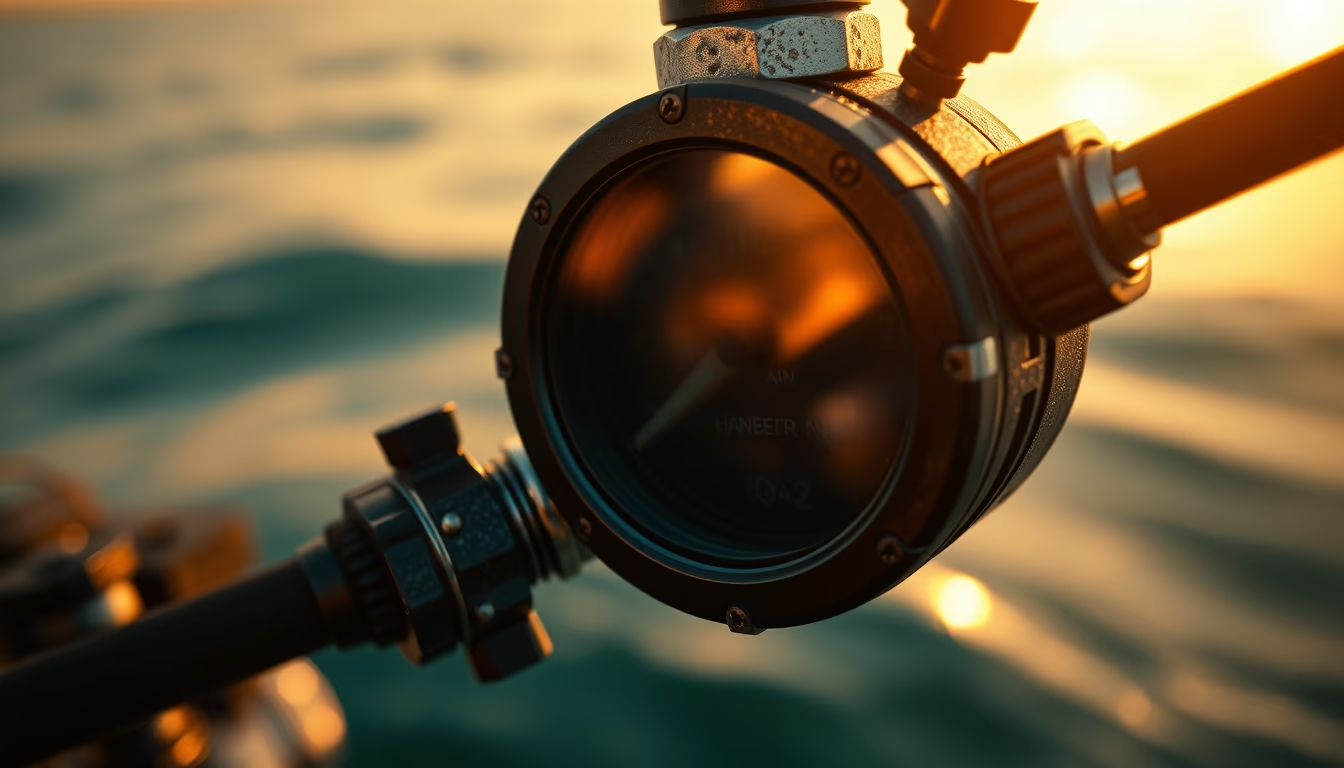
Detail of a diving regulator, an essential component that reduces cylinder air pressure for comfortable breathing underwater.
About this subject
The diving regulator is a device that converts high-pressure air from the tank (around 200 to 300 bar) into breathable air at ambient pressure, allowing the diver to inhale with ease. This equipment consists of two main stages. The first stage, attached directly to the cylinder, reduces the pressure to an intermediate level (approximately 9 to 10 bar above ambient pressure). The second stage, held in the diver's mouth, further reduces this pressure to ambient level, releasing air only during inhalation.
Modern regulators have evolved significantly since the early models developed by Jacques Cousteau and Émile Gagnan in 1943. The original “Aqua-Lung” spawned an industry that now produces regulators with advanced materials such as titanium and stainless steel, along with balanced systems that ensure constant flow even at low tank pressures. There are two primary types of first stages: piston and diaphragm. Piston models offer higher air flow and are simpler, while diaphragm models are preferred in cold water as they better resist freezing.
Regulator maintenance is critical for diver safety. Every six months or 100 dives, a full overhaul is recommended, including cleaning, seal replacement, and lubrication with specific grease. Additionally, regulators certified for nitrox diving (enriched oxygen mixtures) require special components such as hoses and O-rings resistant to oxidation. Brands like Scubapro, Aqualung, Atomic, and Mares dominate the market, with models ranging from basic to professional, such as the Scubapro MK25/A700, known for its durability and performance in harsh conditions.
A curiosity: the second stage of the regulator uses the Venturi effect to create a continuous air flow that reduces breathing effort. Some models have sensitivity adjustments to adapt breathing at different depths. In terms of technology, the latest regulators incorporate high-pressure ports to connect devices like dive computers and pressure gauges, providing the diver with real-time information about air supply.
Frequently Asked Questions
What is the difference between a piston and a diaphragm regulator?
A piston regulator uses a moving piston to open or close the air passage, offering higher flow and simpler design. A diaphragm regulator uses a flexible diaphragm that actuates a valve, providing better resistance to freezing in cold water and more consistent performance in adverse conditions.
How often should I service my diving regulator?
It is generally recommended to service the regulator every six months or every 100 dives, whichever comes first. Maintenance includes cleaning, seal replacement, and lubrication to ensure safety and durability.
What do the high-pressure ports on the first stage mean?
High-pressure ports maintain the cylinder pressure (unreduced). They are used to connect the pressure gauge (to monitor tank pressure) and, in some cases, the dive computer, which measures pressure to estimate bottom time.
Direct URL
https://pub-c7d6a6ea828543ac903a74a341ccb2e1.r2.dev/imagens/diving-regulator-detail-cinematic-wide-shot-fresh2.avifHow to credit
Include a visible link back to UtilizAí. Copy one of the snippets below:
<a href="https://xn--utiliza-eza.com/en/midia/imagens/diving-regulator-detail-cinematic-wide-shot-fresh2">Diving regulator detail</a> by <a href="https://xn--utiliza-eza.com">UtilizAí</a>, licensed under <a href="https://creativecommons.org/licenses/by/4.0/">CC BY 4.0</a>.
[Diving regulator detail](https://xn--utiliza-eza.com/en/midia/imagens/diving-regulator-detail-cinematic-wide-shot-fresh2) by [UtilizAí](https://xn--utiliza-eza.com), CC BY 4.0
License: CC-BY-4.0