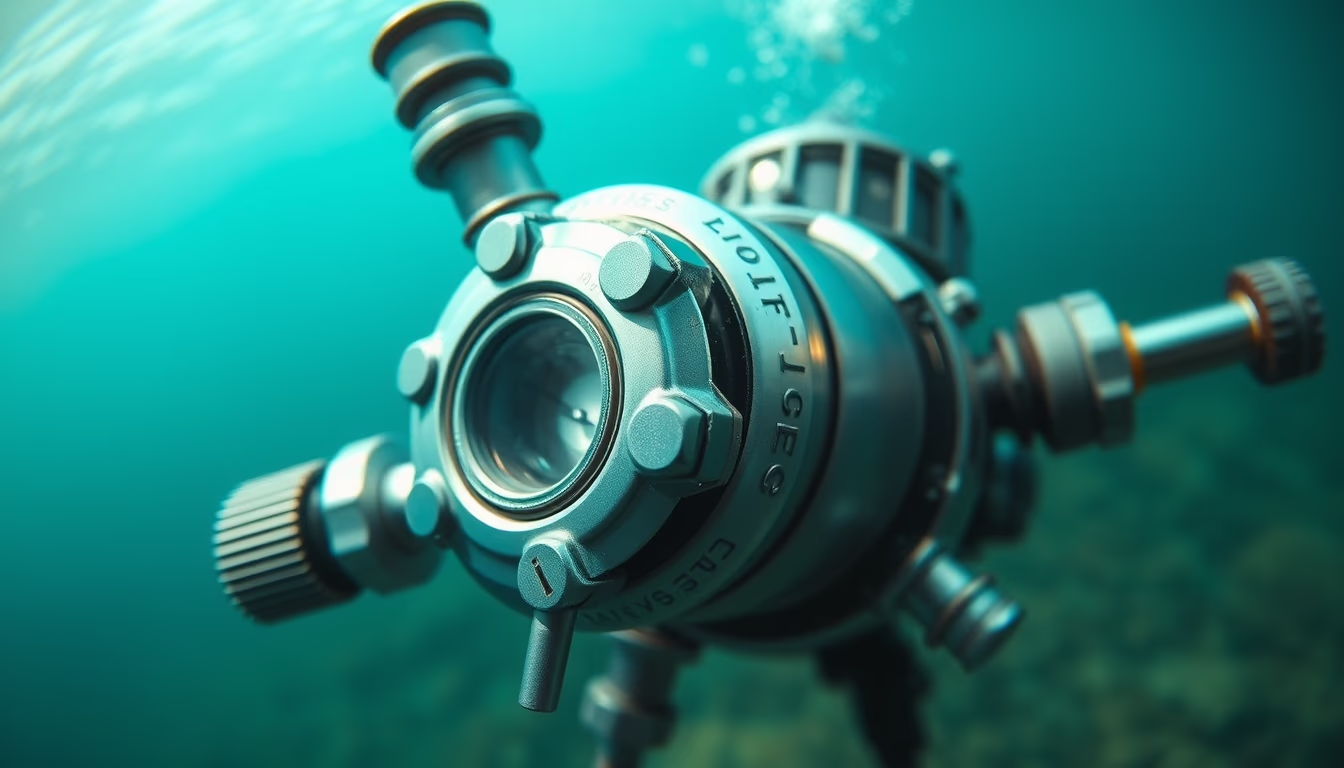
Diving regulator detail
1344×768 · AVIF · CC BY 4.0
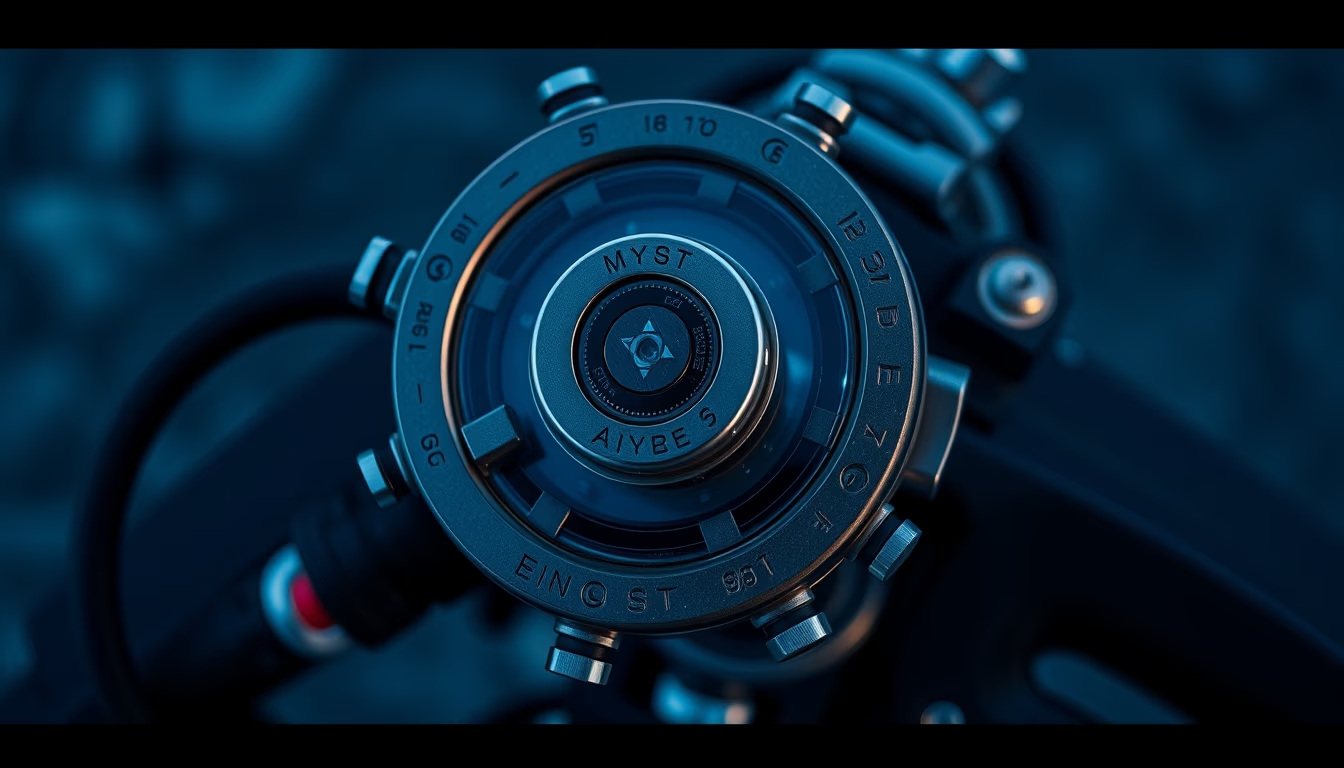
The diving regulator is the essential equipment that reduces high cylinder pressure to ambient pressure, enabling underwater breathing.
About this subject
The diving regulator is a device that reduces the pressure of compressed air stored in the cylinder (usually between 200 and 300 bar) to ambient pressure, allowing the diver to breathe comfortably at various depths. It consists of two main stages: the first stage, attached to the cylinder valve, reduces the pressure to an intermediate level (about 8 to 10 bar above ambient pressure), and the second stage, located at the diver's mouthpiece, performs the final reduction to ambient pressure, releasing air on demand.
Invented in 1943 by Émile Gagnan and Jacques-Yves Cousteau, the modern regulator revolutionized autonomous diving. Before it, divers relied on surface-supplied air systems or closed-circuit rebreathers. The original design, known as the Aqua-Lung, used a diaphragm mechanism that remained sensitive to water pressure. Since then, regulators have evolved with lighter materials such as titanium and polymers, and balanced systems that ensure constant flow even at low residual pressures.
Different types of regulators exist, such as piston and diaphragm models, each with specific advantages. Piston regulators are simpler and more robust, ideal for cold water, while diaphragm regulators offer better performance in extremely cold water and are less prone to freezing. Modern regulators also include multiple low-pressure ports for accessories like dive computers and buoyancy compensator inflators, as well as safety features like the overpressure relief valve.
Periodic maintenance is crucial for safety: the regulator should be serviced annually by a certified technician, with replacement of o-rings and cleaning of filters. Experienced divers also learn to recognize signs of wear, such as heavy breathing or free flow, which indicate the need for adjustment. Choosing the right regulator for the type of diving (warm or cold water, maximum depth) is essential to avoid failures and ensure the underwater experience.
Frequently Asked Questions
How does a diving regulator work?
The regulator reduces the high cylinder pressure (200-300 bar) to ambient pressure in two stages. The first stage decreases pressure to an intermediate level, and the second stage, triggered by the diver's inhalation, releases air at exactly ambient pressure.
What is the difference between a piston and a diaphragm regulator?
A piston regulator is simpler, more robust, and ideal for cold water, but freezes more easily. A diaphragm regulator uses a sealed chamber, offering better performance in very cold water and greater resistance to freezing, along with higher sensitivity.
How often should I service my regulator?
The general recommendation is an annual service by a certified technician, or every 100 dives, whichever comes first. This includes replacing o-rings, cleaning filters, and bench-testing performance.
Direct URL
https://pub-c7d6a6ea828543ac903a74a341ccb2e1.r2.dev/imagens/diving-regulator-detail-aerial-drone-shot-fresh4.avifHow to credit
Include a visible link back to UtilizAí. Copy one of the snippets below:
<a href="https://xn--utiliza-eza.com/en/midia/imagens/diving-regulator-detail-aerial-drone-shot-fresh4">Diving regulator detail</a> by <a href="https://xn--utiliza-eza.com">UtilizAí</a>, licensed under <a href="https://creativecommons.org/licenses/by/4.0/">CC BY 4.0</a>.
[Diving regulator detail](https://xn--utiliza-eza.com/en/midia/imagens/diving-regulator-detail-aerial-drone-shot-fresh4) by [UtilizAí](https://xn--utiliza-eza.com), CC BY 4.0
License: CC-BY-4.0