Diamond rough crystal
1344×768 · AVIF · CC BY 4.0
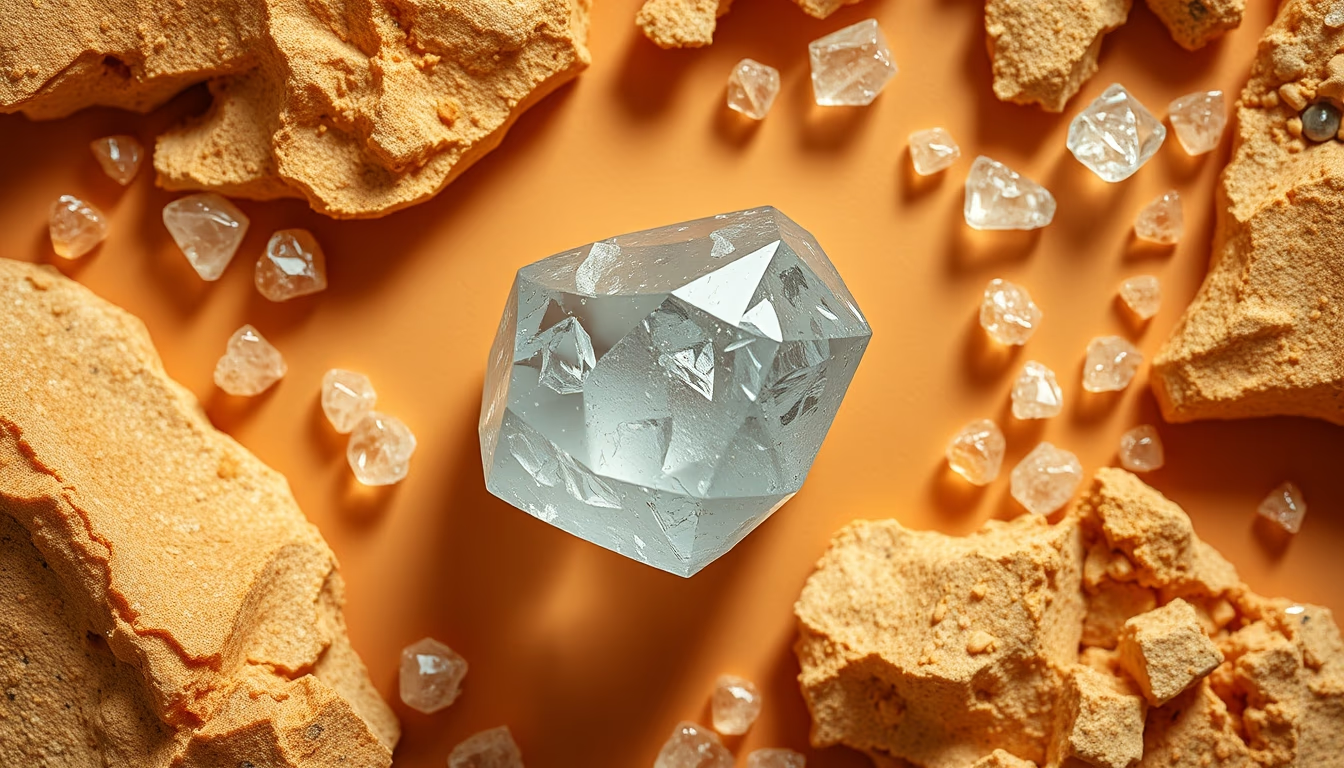
Rough diamond crystal in its original octahedral form, before any cutting. Learn about its properties, geological formation, and cultural value.
About this subject
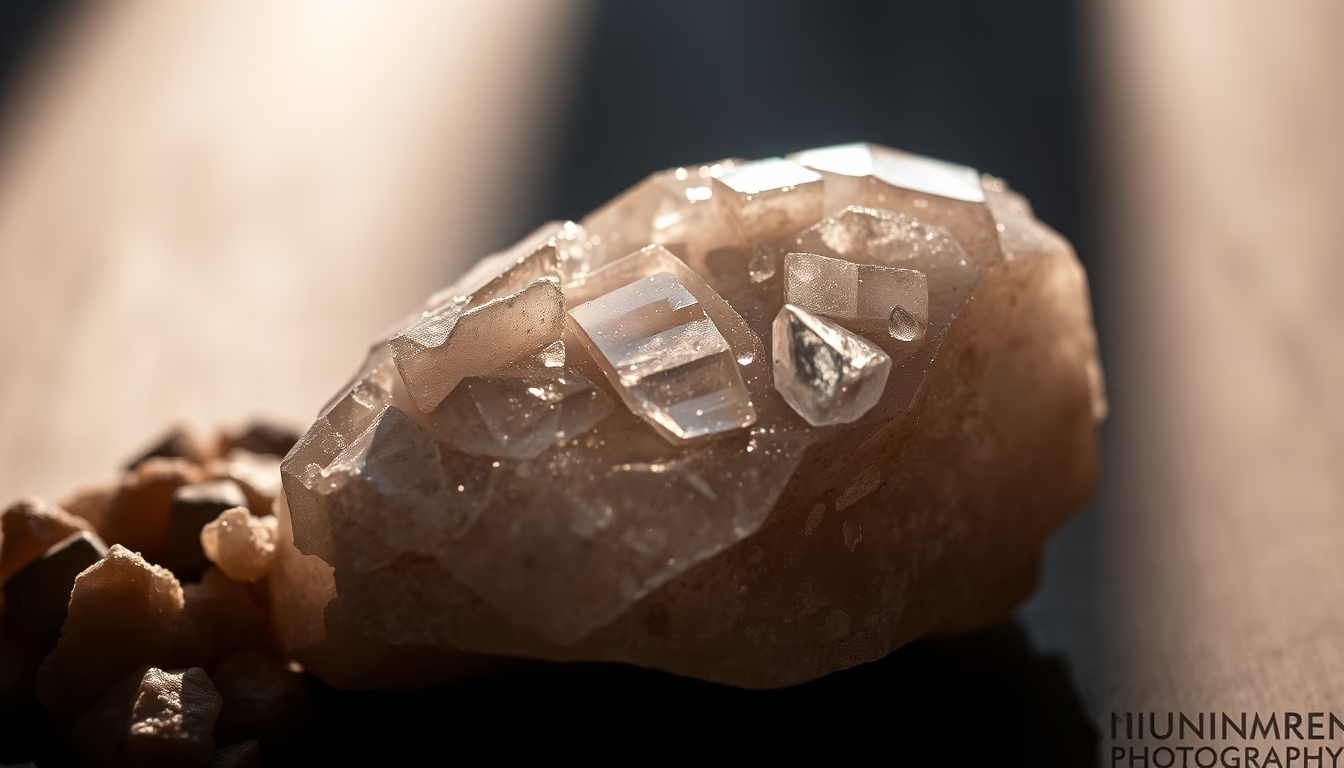
Rough diamond is the natural form of crystallized carbon, before any cutting. Its cubic crystal structure, typically octahedral, results from extreme pressures (about 725,000 psi) and high temperatures (above 1,200 °C) in the Earth's mantle, at depths between 140 and 190 kilometers. These conditions cause carbon atoms to arrange in a tetrahedral lattice, giving diamond the highest hardness on the Mohs scale (10).
Diamond formation takes place over billions of years. Most natural diamonds are between 1 and 3.5 billion years old. They are brought to the surface by kimberlite volcanic eruptions, forming kimberlite pipes. The largest commercial deposits are in Africa (Botswana, Russia, South Africa) as well as Canada and Australia. Brazil, although not a major producer today, was the first country to mine diamonds in the world, in the 18th century in Minas Gerais.
Rough diamond has remarkable optical properties, such as high refractive index and light dispersion, which are fully exploited only after cutting. Its thermal conductivity is the highest of any known material, making it useful for heat sinks in electronics. Besides gemstone use, industrial diamond is employed in cutting, drilling, and polishing tools due to its hardness.
Culturally, diamond symbolizes purity, strength, and wealth. It is traditionally used in engagement rings, popularized by De Beers campaigns in the 20th century. However, diamond mining has ethical and environmental implications, leading to the development of synthetic diamonds produced in laboratories, which are chemically and physically identical to natural ones. The rough diamond, with its dull and greasy appearance, contrasts with the brilliance of cut stones but carries in its natural form the geological history of the Earth.
Frequently Asked Questions
How to tell if a rough diamond is real?
Common tests include checking thermal conductivity (diamonds dissipate heat quickly), using a diamond tester (which measures electrical conductivity), or observing hardness by scratching glass or other materials.
What is the difference between rough and cut diamond?
Rough diamond is the natural gem as extracted, dull and without shine. Cut diamond goes through cuts and polishing that reveal its transparency and light dispersion, increasing its aesthetic and commercial value.
Where are the largest rough diamonds found in the world?
The largest rough diamonds come from African mines, such as the Cullinan mine (South Africa), where the largest diamond ever discovered, the Cullinan, weighing 3,106 carats, was found.
Direct URL
https://pub-c7d6a6ea828543ac903a74a341ccb2e1.r2.dev/imagens/diamond-rough-crystal-isometric-flat-lay-p2.avifHow to credit
Include a visible link back to UtilizAí. Copy one of the snippets below:
<a href="https://xn--utiliza-eza.com/en/midia/imagens/diamond-rough-crystal-isometric-flat-lay-p2">Diamond rough crystal</a> by <a href="https://xn--utiliza-eza.com">UtilizAí</a>, licensed under <a href="https://creativecommons.org/licenses/by/4.0/">CC BY 4.0</a>.
[Diamond rough crystal](https://xn--utiliza-eza.com/en/midia/imagens/diamond-rough-crystal-isometric-flat-lay-p2) by [UtilizAí](https://xn--utiliza-eza.com), CC BY 4.0
License: CC-BY-4.0