Diamond rough crystal
1344×768 · AVIF · CC BY 4.0
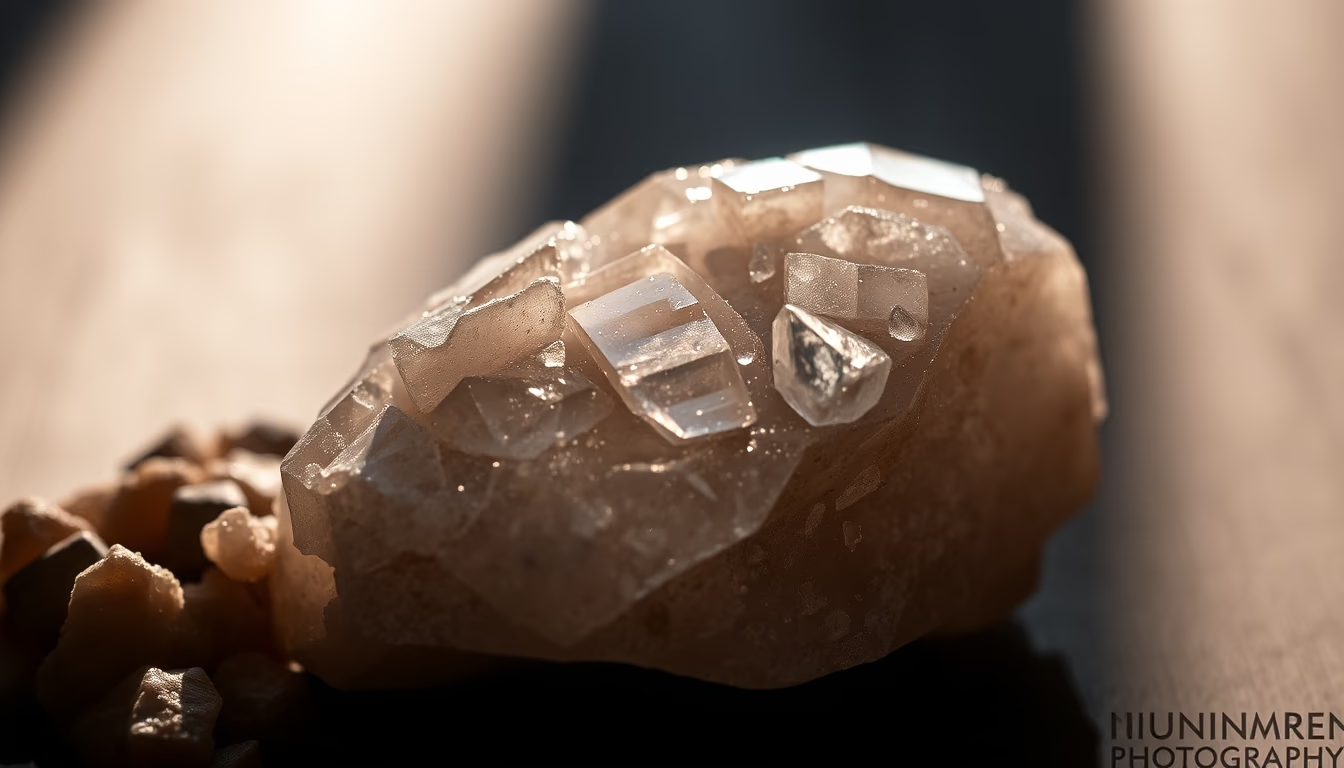
Rough diamond crystal: cubic atomic structure, maximum hardness (10 on Mohs scale), and geological rarity in kimberlites.
About this subject
Rough diamond is the natural crystalline form of carbon, formed in Earth's mantle at depths of 140 to 200 km under pressures exceeding 45 kbar and temperatures between 900 and 1300 °C. These extreme conditions allow carbon atoms to arrange in a cubic crystal structure, the densest of carbon allotropes. Diamonds are brought to the surface by explosive volcanic eruptions that create kimberlite pipes, ultrabasic igneous rock. Most natural diamonds are estimated to be between 1 and 3 billion years old.
The physical properties of rough diamond are remarkable. With a hardness of 10 on the Mohs scale, it scratches any other material. Thermal conductivity is the highest among solids, five times that of copper. Perfect cleavage in four directions parallel to octahedral faces enables precise faceting. The most common rough crystals are octahedra, dodecahedra, or irregular rounded shapes. Mineral inclusions such as olivine, garnet, or pyroxene indicate mantle origin.
Major diamond deposits are in Africa (Botswana, Russia, Canada, Angola, South Africa). Brazil has notable occurrences in Minas Gerais, especially Diamantina and Grão Mogol, and Bahia's Chapada Diamantina. Alluvial diamonds are found in riverbeds, while kimberlitic diamonds are mined in open pits or underground. Over 70% of natural diamonds are used industrially as abrasives, saws, and drill bits due to hardness and strength.
The significance of rough diamond goes beyond gem value. Synthetic diamonds, produced by high-pressure high-temperature (HPHT) or chemical vapor deposition (CVD), have revolutionized industry. They are chemically identical to natural ones and compete in jewelry and technological applications, such as cutting tools and heat sinks in electronics. The largest rough diamond ever found was the Cullinan, weighing 3106 carats, discovered in South Africa in 1905.
Frequently Asked Questions
What is the difference between rough diamond and cut diamond?
Rough diamond is the natural crystal as mined, without cutting or polishing. Cut diamond has undergone faceting and polishing to enhance brilliance, fire, and symmetry, resulting in a gem ready for jewelry.
How to identify a genuine rough diamond?
Key indicators include hardness (scratches glass and other minerals), thermal conductivity (clears breath fog quickly), natural inclusions, and cleavage. However, definitive identification requires laboratory testing with spectroscopy, refractometry, or microscopy.
Where are rough diamonds mined in Brazil?
Major producing states are Minas Gerais (regions of Diamantina, Grão Mogol, Coromandel), Bahia (Chapada Diamantina, Lençóis), Mato Grosso (Rio Paranatinga), and Rondônia (Rio Machado). Mining occurs both in kimberlite pipes and alluvial deposits.
Direct URL
https://pub-c7d6a6ea828543ac903a74a341ccb2e1.r2.dev/imagens/diamond-rough-crystal-fine-art-photography-p11.avifHow to credit
Include a visible link back to UtilizAí. Copy one of the snippets below:
<a href="https://xn--utiliza-eza.com/en/midia/imagens/diamond-rough-crystal-fine-art-photography-p11">Diamond rough crystal</a> by <a href="https://xn--utiliza-eza.com">UtilizAí</a>, licensed under <a href="https://creativecommons.org/licenses/by/4.0/">CC BY 4.0</a>.
[Diamond rough crystal](https://xn--utiliza-eza.com/en/midia/imagens/diamond-rough-crystal-fine-art-photography-p11) by [UtilizAí](https://xn--utiliza-eza.com), CC BY 4.0
License: CC-BY-4.0