Dia de los muertos altar
1344×768 · AVIF · CC BY 4.0
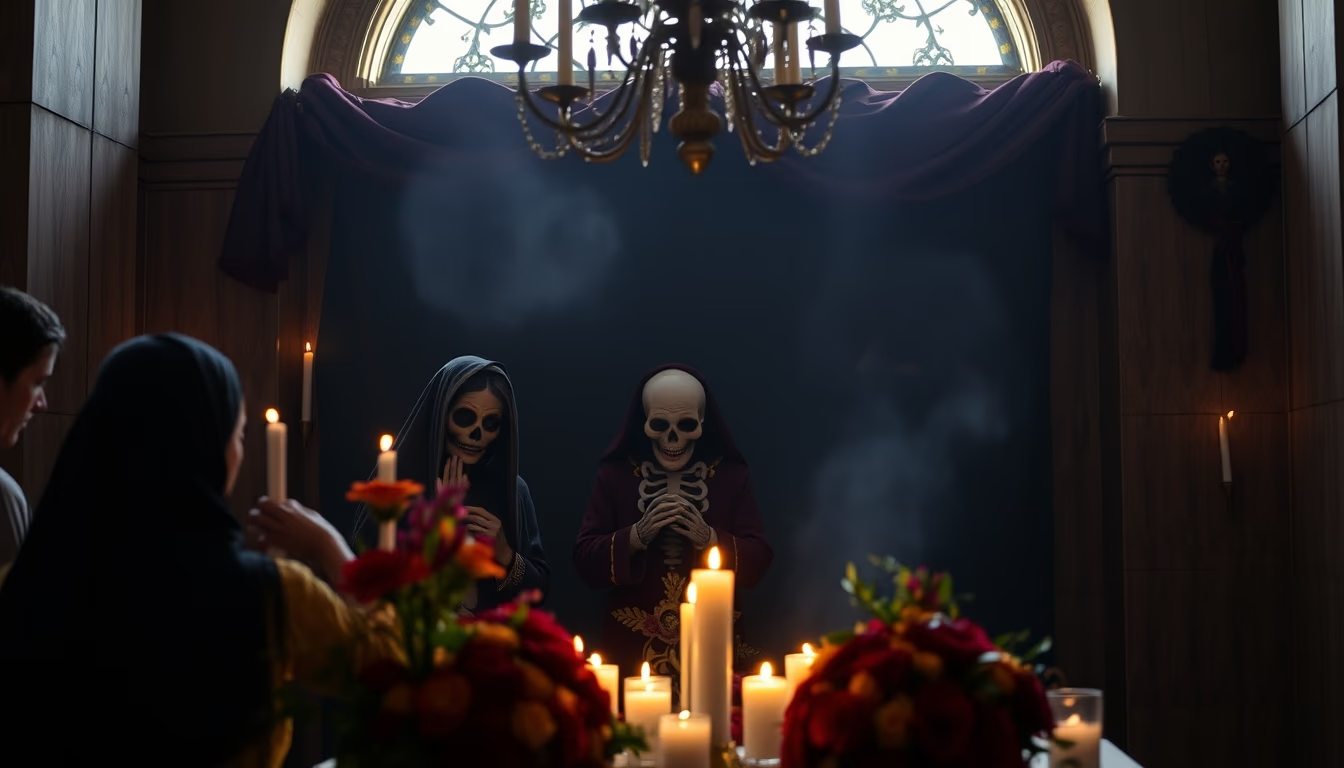
The Day of the Dead altar is a Mexican tradition honoring the deceased with offerings, photographs, and symbolic elements.
About this subject
The Day of the Dead altar, known as ofrenda, is a ritualistic assembly typical of Mexico, held from November 1st to 2nd. This tradition blends pre-Hispanic elements from cultures like the Aztecs with Catholicism brought by Spanish colonizers. Altars are set up in homes, cemeteries, and public spaces, often with multiple levels representing the celestial, earthly, and underworld realms.
Each item on the ofrenda carries deep meaning. Candles guide souls back to the world of the living. Copal, an aromatic resin, purifies the environment. Bright orange marigold flowers (cempasúchil) create paths for the spirits. Papel picado, cut-paper banners, symbolize wind and the fragility of life. Photographs and personal belongings of the deceased are placed to evoke their stories. Foods like pan de muerto, tamales, and fruits are offered as sustenance for the souls.
UNESCO recognized the Day of the Dead as Intangible Cultural Heritage of Humanity in 2008. Altars vary by region: in Oaxaca, clay figures and sawdust carpets stand out; in Michoacán, offerings are more elaborate with floral arches. Indigenous communities may include items like the izcuintli, a clay dog that helps souls cross the river of death. The practice strengthens family and community bonds, celebrating death not with sorrow but with joy and remembrance.
Interestingly, public altars may honor famous figures like Frida Kahlo and Diego Rivera, or victims of recent tragedies. It is believed that souls visit their altars during the festival, so items are fresh and food is prepared the same day. Altars are dismantled after the celebration, but their significance endures in Mexican culture and among Latin communities worldwide.
Frequently Asked Questions
What does each level of the Day of the Dead altar mean?
Traditionally, altars have three or seven levels. Three levels represent heaven, earth, and underworld; seven levels symbolize the steps to reach eternal rest. Each level holds specific offerings such as candles, photos, and food.
What is the origin of the marigold flower on the altar?
The bright orange marigold, known as cempasúchil, is native to Mexico. In pre-Hispanic times, it was used in funeral rituals. Its scent and color are believed to guide the souls of the dead back to the world of the living.
Is the Day of the Dead altar only a Mexican tradition?
Although strongest in Mexico, altars are also built in Latin communities in the United States and other countries. In 2008, UNESCO declared the festivity Intangible Cultural Heritage, recognizing its global significance.
Direct URL
https://pub-c7d6a6ea828543ac903a74a341ccb2e1.r2.dev/imagens/dia-de-los-muertos-altar-documentary-photography-fresh10.avifHow to credit
Include a visible link back to UtilizAí. Copy one of the snippets below:
<a href="https://xn--utiliza-eza.com/en/midia/imagens/dia-de-los-muertos-altar-documentary-photography-fresh10">Dia de los muertos altar</a> by <a href="https://xn--utiliza-eza.com">UtilizAí</a>, licensed under <a href="https://creativecommons.org/licenses/by/4.0/">CC BY 4.0</a>.
[Dia de los muertos altar](https://xn--utiliza-eza.com/en/midia/imagens/dia-de-los-muertos-altar-documentary-photography-fresh10) by [UtilizAí](https://xn--utiliza-eza.com), CC BY 4.0
License: CC-BY-4.0