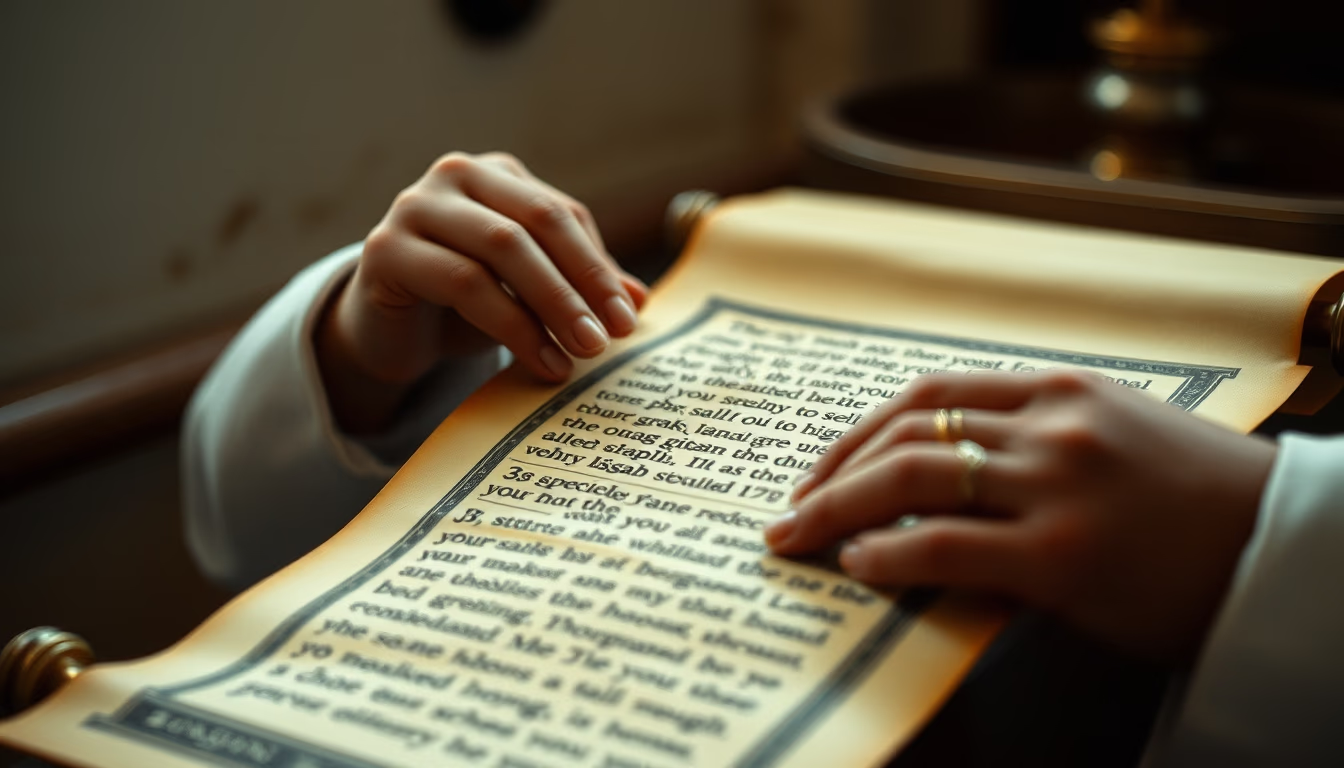
Dead sea scrolls fragment
1344×768 · AVIF · CC BY 4.0
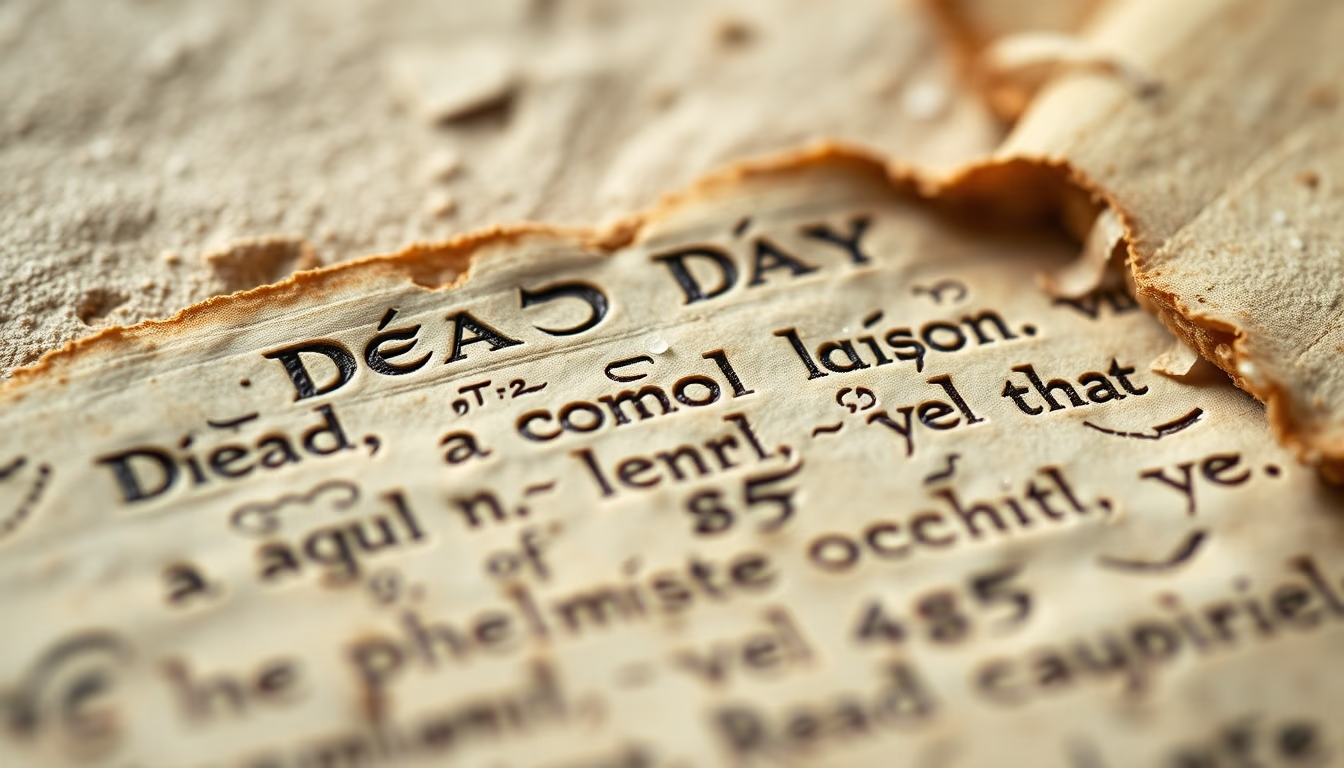
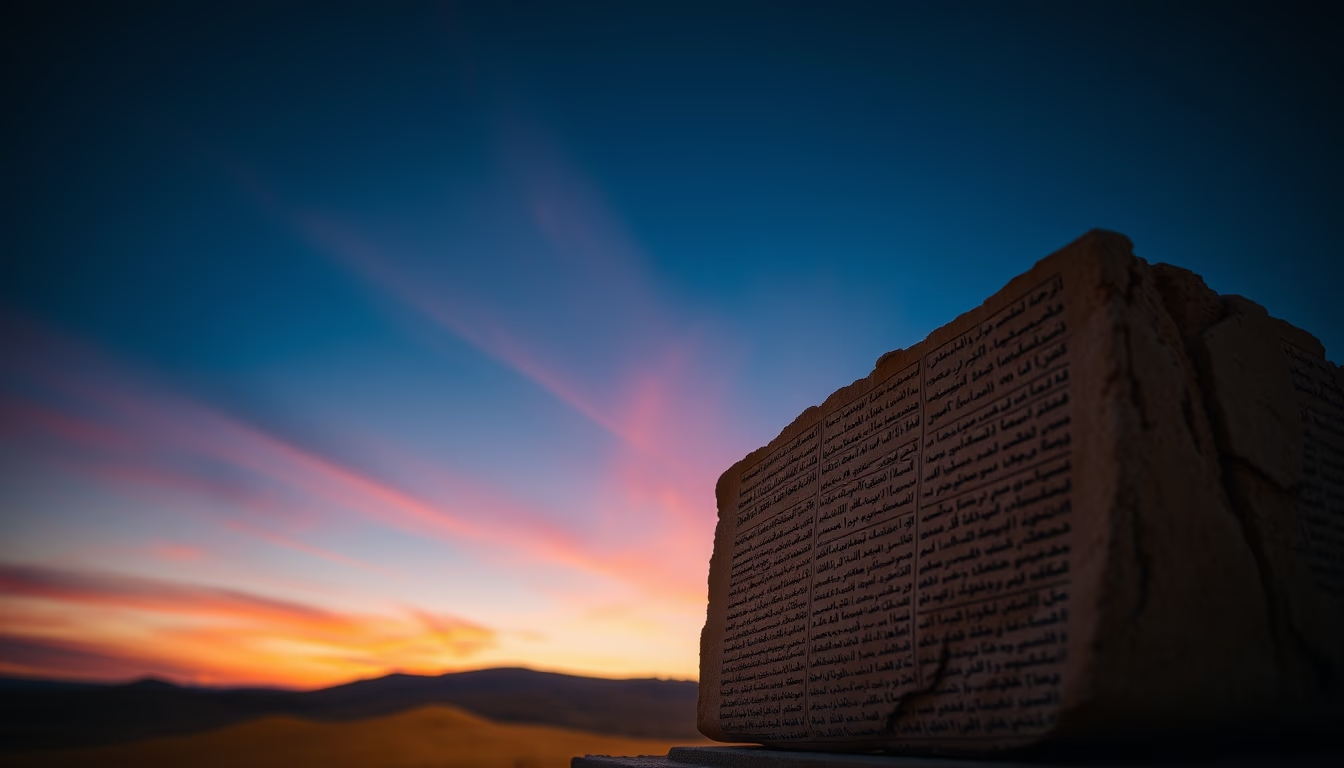
Fragment of the Dead Sea Scrolls, discovered between 1947 and 1956 in the Qumran caves, West Bank.
About this subject
The Dead Sea Scrolls represent one of the most significant archaeological discoveries of the 20th century. They were found between 1947 and 1956 in 11 caves near the site of Qumran, on the northwest shore of the Dead Sea. The collection includes around 900 manuscripts, mostly on parchment and papyrus, dated from the 3rd century BCE to the 1st century CE. They contain copies of books of the Hebrew Bible, as well as apocryphal and sectarian texts, such as the Community Rule and the Damascus Document. One of the most famous fragments is the Isaiah Scroll, which shows textual variations from the Masoretic Text, offering insights into biblical transmission.
The texts were written primarily in Hebrew and Aramaic, with some in Greek. The Essene community of Qumran is believed to be responsible for the production and preservation of these documents. The Copper Scroll, the only one written on metal, lists locations of hidden treasures, sparking legends of lost riches. The scrolls revolutionized the critical study of the Bible, confirming the accuracy of later copies and revealing the diversity of Second Temple Judaism.
Preservation of the fragments is due to the dry climate of the caves. Today, most are in Israel at the Shrine of the Book in Jerusalem. In 2020, the Israel Antiquities Authority digitized many fragments, making them available online. Recent studies using multispectral imaging techniques allow reading of previously illegible texts. Despite controversies over the authenticity of some fragments sold on the antiquities market, genuine scrolls continue to be invaluable sources for religious and cultural history.
Frequently Asked Questions
What are the Dead Sea Scrolls?
They are hundreds of ancient manuscripts, mostly in Hebrew and Aramaic, discovered in caves near the Dead Sea. They include biblical copies and sectarian texts from the Second Temple period.
Where and when were they found?
They were found between 1947 and 1956 in 11 caves at Qumran, West Bank, by Bedouin shepherds and archaeologists.
Why are they important?
Because they contain the oldest copies of biblical books, helping to understand the transmission of the biblical text and the history of Judaism and Christianity.
Direct URL
https://pub-c7d6a6ea828543ac903a74a341ccb2e1.r2.dev/imagens/dead-sea-scrolls-fragment-tilt-shift-miniature-fresh1.avifHow to credit
Include a visible link back to UtilizAí. Copy one of the snippets below:
<a href="https://xn--utiliza-eza.com/en/midia/imagens/dead-sea-scrolls-fragment-tilt-shift-miniature-fresh1">Dead sea scrolls fragment</a> by <a href="https://xn--utiliza-eza.com">UtilizAí</a>, licensed under <a href="https://creativecommons.org/licenses/by/4.0/">CC BY 4.0</a>.
[Dead sea scrolls fragment](https://xn--utiliza-eza.com/en/midia/imagens/dead-sea-scrolls-fragment-tilt-shift-miniature-fresh1) by [UtilizAí](https://xn--utiliza-eza.com), CC BY 4.0
License: CC-BY-4.0