Dead sea scrolls fragment
1344×768 · AVIF · CC BY 4.0
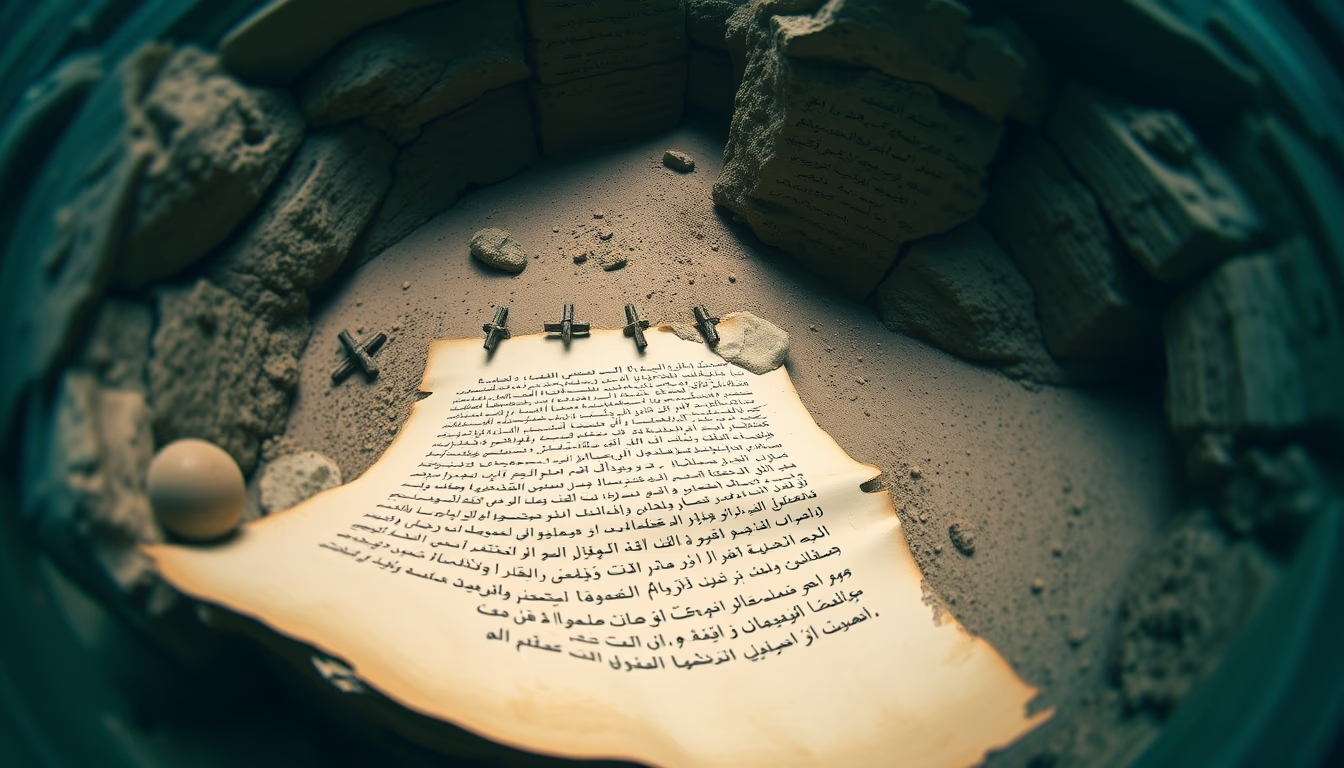
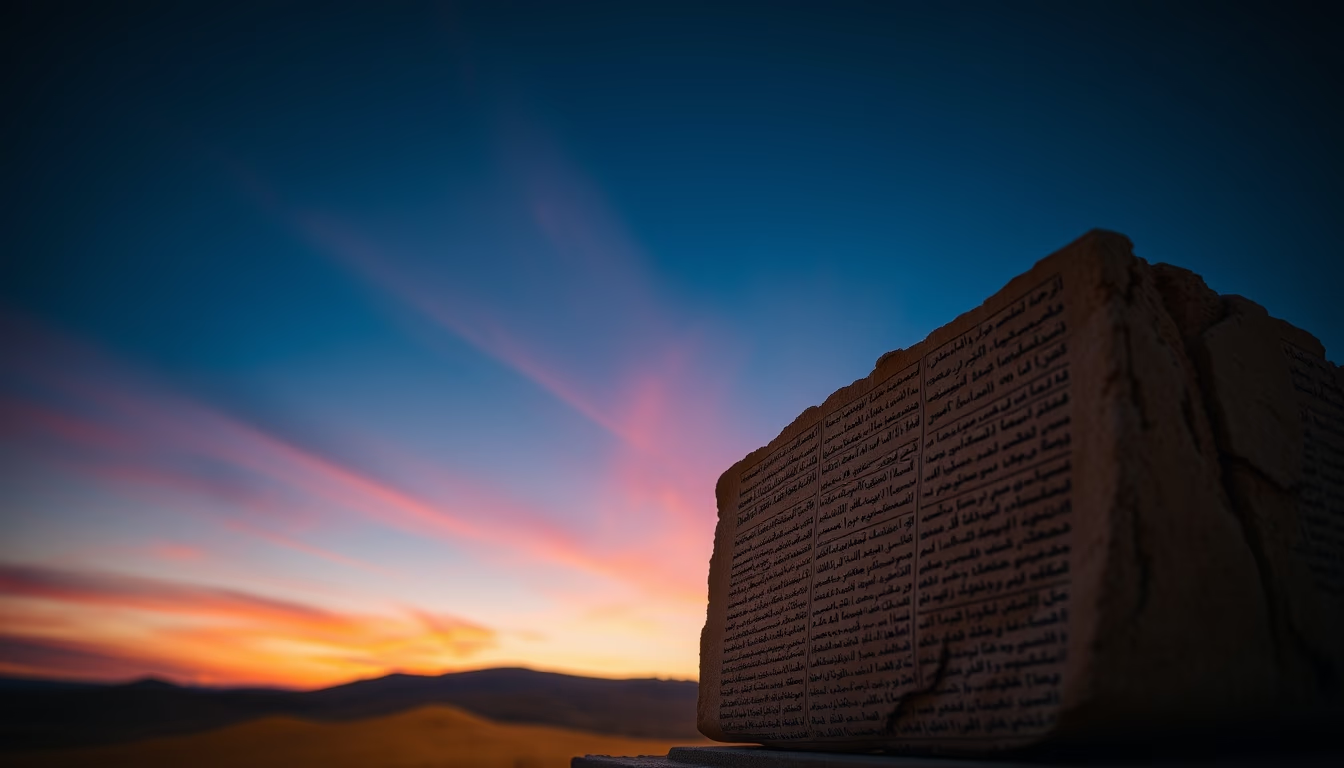
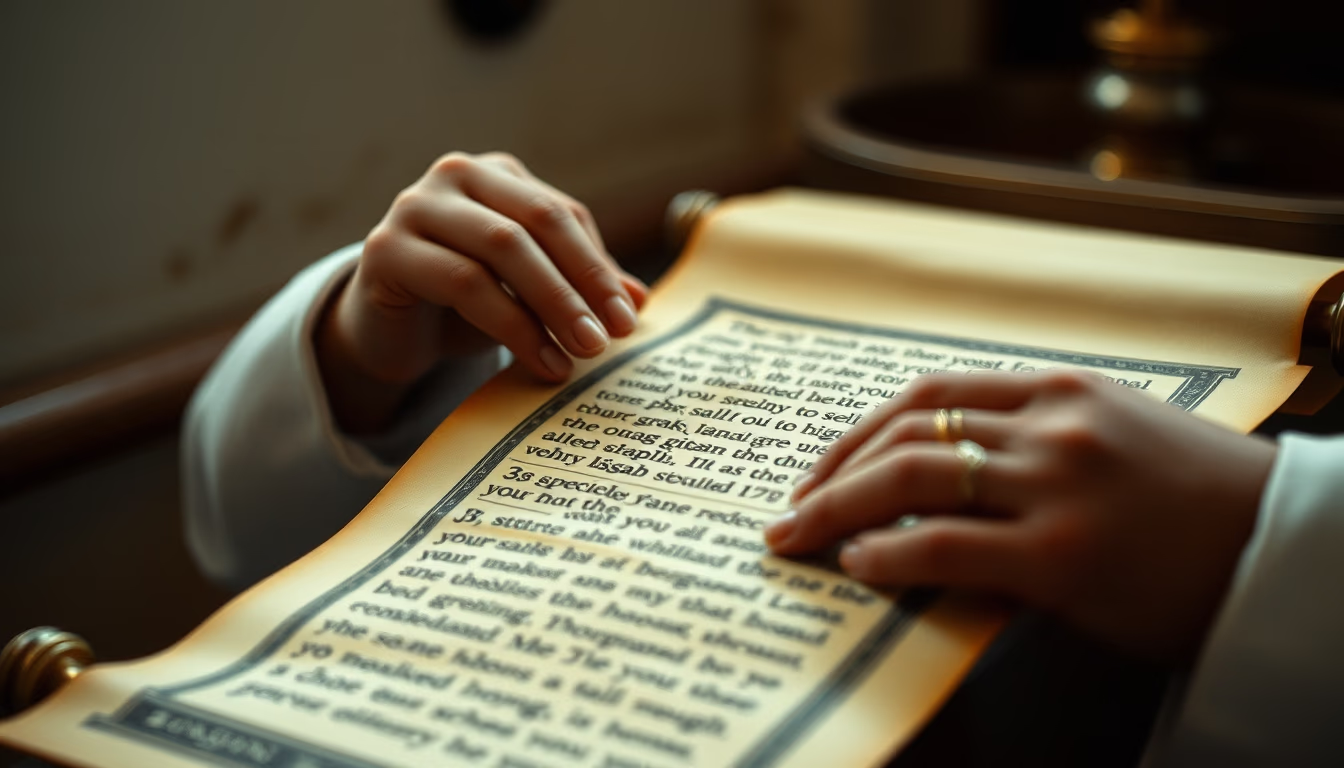
A fragment of the Dead Sea Scrolls, discovered between 1947 and 1956 in the caves of Qumran, West Bank.
About this subject
The Dead Sea Scrolls represent one of the most significant archaeological discoveries of the 20th century. Found by Bedouin shepherds in 1947 in the caves of Qumran, near the Dead Sea, these parchments and papyri date from approximately 250 BCE to 70 CE. They include copies of Old Testament books such as Isaiah and Psalms, as well as sectarian texts from the Essene community that lived there. The fragments were preserved by the region's arid climate.
The scrolls' importance lies in their antiquity: they are roughly a thousand years older than previously known Hebrew manuscripts. They provide crucial textual evidence for biblical criticism and the study of Second Temple Judaism. Among the texts are the "Temple Scroll" and the "Community Rule," detailing religious and eschatological practices. Many fragments are displayed at the Shrine of the Book in Jerusalem.
Today, about 100,000 fragments make up the collection, held by institutions such as the Israel Museum and the Israel Antiquities Authority. Preservation is challenging due to material fragility. In 2020, researchers used artificial intelligence to decipher texts invisible to the naked eye. The Scrolls continue to fuel debates on authorship, dating, and theological interpretation.
Frequently Asked Questions
Where were the Dead Sea Scrolls found?
They were found in caves at Qumran, in the West Bank, near the Dead Sea. The first discovery was made in 1947 by Bedouin shepherds.
Why are the Dead Sea Scrolls important for biblical studies?
They are about a thousand years older than previously known Hebrew manuscripts, allowing scholars to verify the accuracy of later Bible copies and understand the textual development of the Old Testament.
How many fragments exist and where are they kept?
There are approximately 100,000 fragments. Most are housed at the Shrine of the Book in Jerusalem and other Israeli institutions, such as the Israel Antiquities Authority.
Direct URL
https://pub-c7d6a6ea828543ac903a74a341ccb2e1.r2.dev/imagens/dead-sea-scrolls-fragment-fish-eye-wide-angle-fresh0.avifHow to credit
Include a visible link back to UtilizAí. Copy one of the snippets below:
<a href="https://xn--utiliza-eza.com/en/midia/imagens/dead-sea-scrolls-fragment-fish-eye-wide-angle-fresh0">Dead sea scrolls fragment</a> by <a href="https://xn--utiliza-eza.com">UtilizAí</a>, licensed under <a href="https://creativecommons.org/licenses/by/4.0/">CC BY 4.0</a>.
[Dead sea scrolls fragment](https://xn--utiliza-eza.com/en/midia/imagens/dead-sea-scrolls-fragment-fish-eye-wide-angle-fresh0) by [UtilizAí](https://xn--utiliza-eza.com), CC BY 4.0
License: CC-BY-4.0