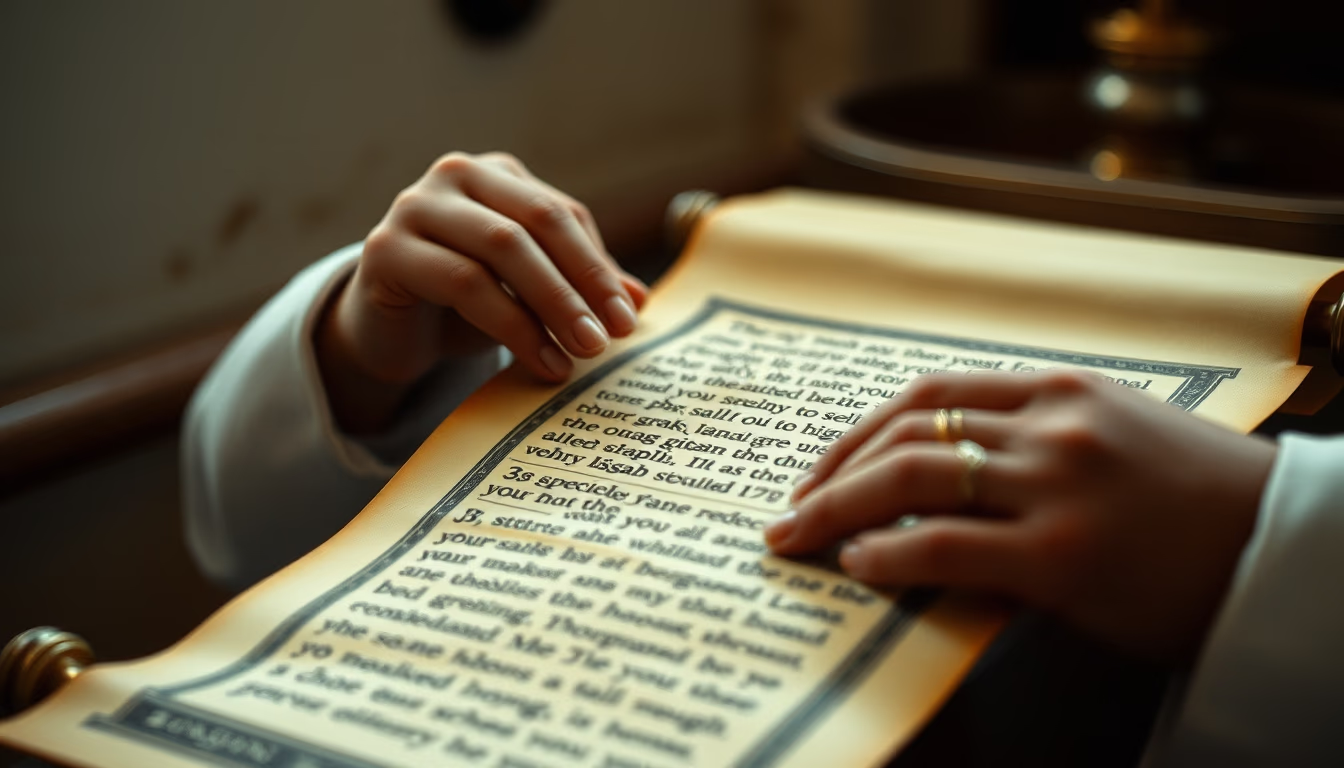
Dead sea scrolls fragment
1344×768 · AVIF · CC BY 4.0
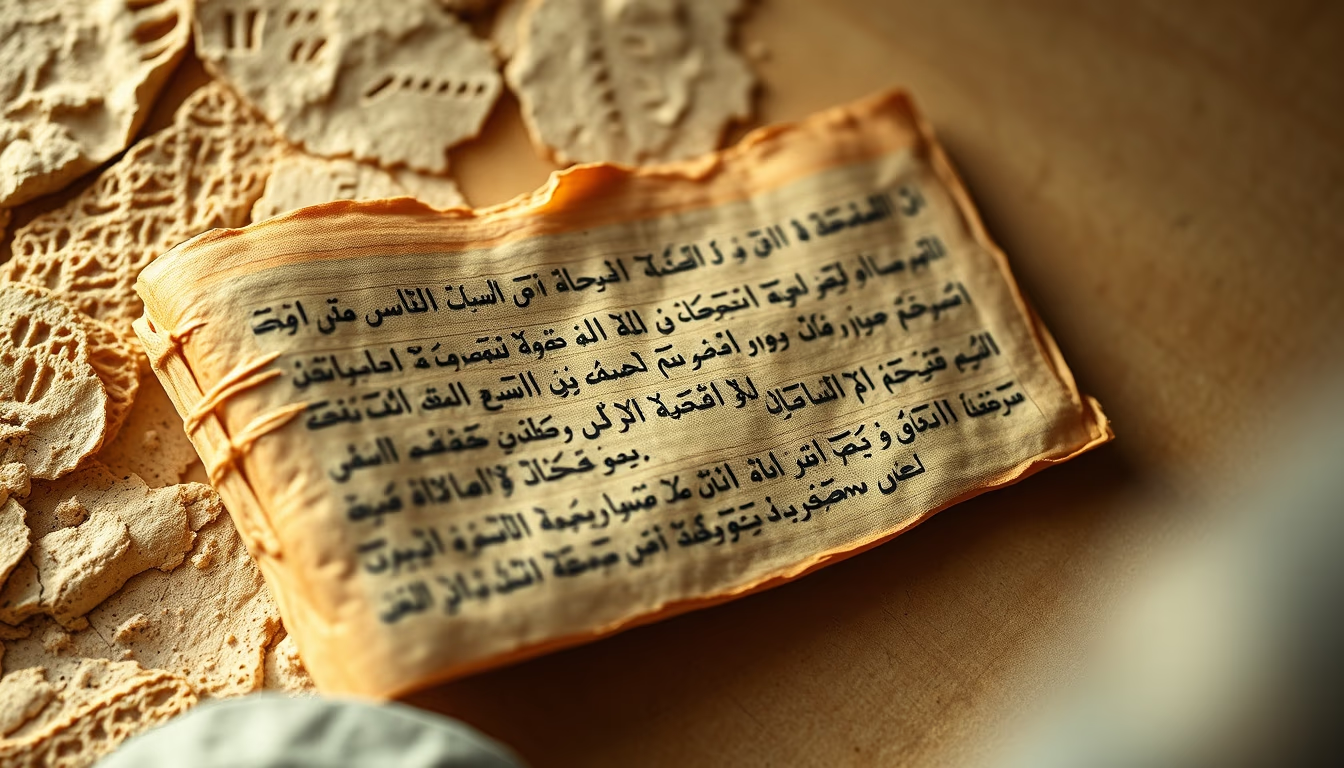
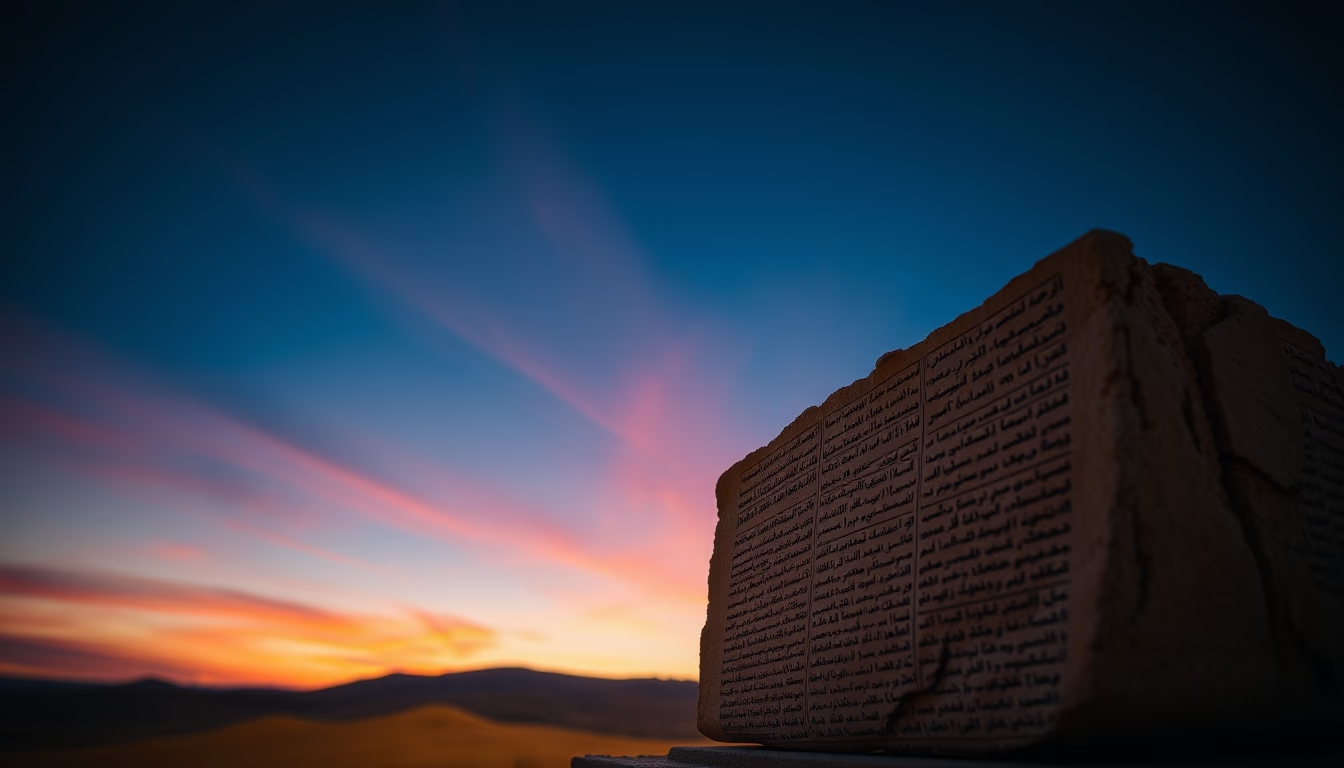
Fragments of the Dead Sea Scrolls are among the most important archaeological discoveries of the 20th century, revealing ancient biblical and sectarian texts.
About this subject
The Dead Sea Scrolls were discovered between 1946 and 1956 in eleven caves near the site of Qumran in the West Bank. Composed mainly of parchment and papyrus, the fragments date from the 3rd century BCE to the 1st century CE and include copies of Old Testament books, such as the Great Isaiah Scroll, as well as apocryphal texts and documents from the Essene community that lived in the area. Their exceptional preservation is due to the arid climate of the Judean Desert.
The content of the manuscripts falls into three categories: biblical (copies of texts that form the Hebrew canon), sectarian (rules and hymns of the Qumran community), and parabiblical (works like the Book of Enoch and Jubilees). Approximately 900 manuscripts have been identified, mostly in Hebrew but also in Aramaic and Greek. They are fundamental for biblical textual criticism, as they predate previously known medieval Hebrew manuscripts by more than a thousand years.
One of the most intriguing aspects is the connection to the Essenes, an ascetic Jewish group that may have hidden the scrolls during the Jewish Revolt against Rome (66, 73 CE). Paleographic analysis and carbon-14 dating help determine the fragments' age, but debates persist about the exact origin of some texts. Conservation is challenging: many fragments are tiny and require advanced restoration techniques, such as multispectral imaging, to decipher worn inscriptions.
Frequently Asked Questions
What are the Dead Sea Scrolls?
They are a collection of about 900 ancient manuscripts, mostly in Hebrew, Aramaic, and Greek, discovered in the Qumran caves in the West Bank. They include biblical, sectarian, and apocryphal texts dating from the 3rd century BCE to the 1st century CE.
Why are these fragments so important?
They are the earliest extant evidence of Hebrew biblical texts, predating medieval versions by over a thousand years. They allow comparison of the textual transmission of the Bible and provide insights into Jewish groups of the Second Temple period, such as the Essenes.
How are the fragments preserved and studied?
Fragments are kept in controlled temperature and humidity environments. Techniques like multispectral photography and infrared imaging help read faded inscriptions. Many remain unpublished, and their study continues with new technologies.
Direct URL
https://pub-c7d6a6ea828543ac903a74a341ccb2e1.r2.dev/imagens/dead-sea-scrolls-fragment-documentary-photography-fresh3.avifHow to credit
Include a visible link back to UtilizAí. Copy one of the snippets below:
<a href="https://xn--utiliza-eza.com/en/midia/imagens/dead-sea-scrolls-fragment-documentary-photography-fresh3">Dead sea scrolls fragment</a> by <a href="https://xn--utiliza-eza.com">UtilizAí</a>, licensed under <a href="https://creativecommons.org/licenses/by/4.0/">CC BY 4.0</a>.
[Dead sea scrolls fragment](https://xn--utiliza-eza.com/en/midia/imagens/dead-sea-scrolls-fragment-documentary-photography-fresh3) by [UtilizAí](https://xn--utiliza-eza.com), CC BY 4.0
License: CC-BY-4.0