Cuneiform tablet sumerian
1344×768 · AVIF · CC BY 4.0
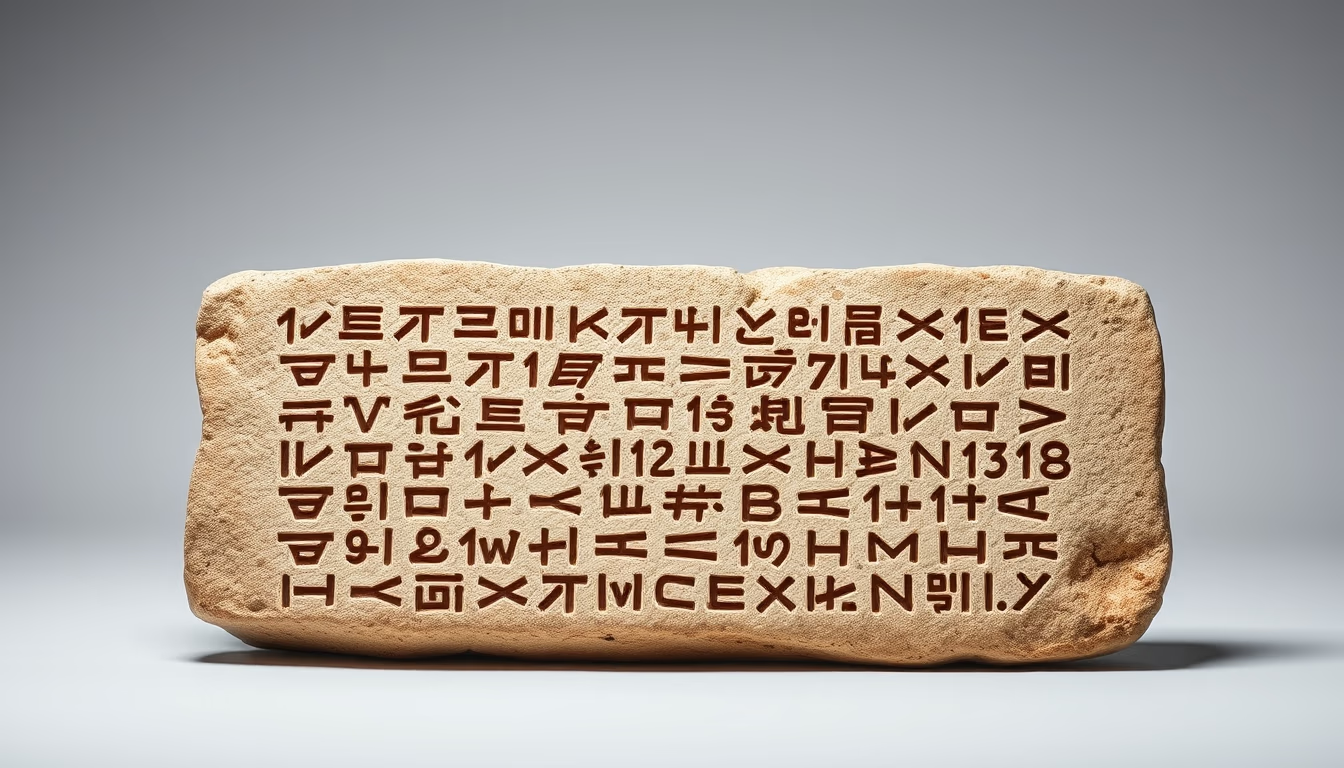
Clay tablets with Sumerian cuneiform script are essential records from the first civilization of Mesopotamia, dating back over 5,000 years.
About this subject
Cuneiform writing was developed by the Sumerians around 3400 BCE in Mesopotamia, modern-day Iraq. Initially pictographic, it evolved into a wedge-shaped script impressed with a stylus on moist clay tablets. These tablets were then sun-dried or fired to preserve the text. Sumerians used cuneiform for administrative records, commercial contracts, laws, and literary works, such as the Epic of Gilgamesh, one of the oldest known epic narratives.
Most surviving cuneiform tablets are bureaucratic: tax lists, temple inventories, agricultural transactions, and legal documents. They provide a detailed snapshot of daily life, economy, and social structure in Sumer. Each city-state, like Ur, Uruk, and Lagash, maintained its own archives. School exercise tablets have also been found, revealing how scribes learned the complex system of hundreds of signs.
Cuneiform was later adopted by Akkadians, Babylonians, and Assyrians, who adapted it to their Semitic languages. Modern decipherment began in the 19th century with the Behistun Inscription and the work of scholars like Henry Rawlinson. Today, thousands of tablets reside in museums worldwide, many still untranslated. They are recognized as UNESCO World Heritage and continue to be studied by archaeologists and linguists, offering invaluable insights into the cradle of civilization.
Frequently Asked Questions
What is a Sumerian cuneiform tablet?
It is a clay plaque inscribed with cuneiform script, the writing system of the Sumerians, used from around 3400 BCE. These tablets recorded everything from trade transactions to epic poems.
How were cuneiform tablets made?
Scribes shaped moist clay into a tablet and impressed wedge-shaped marks using a stylus with a triangular tip. They then let the tablet dry in the sun or fired it to harden.
What do cuneiform tablets tell us about the Sumerians?
They reveal details of daily life, economy, religion, laws, and literature. Examples include barley receipts and the Epic of Gilgamesh, showing a complex and organized society.
Direct URL
https://pub-c7d6a6ea828543ac903a74a341ccb2e1.r2.dev/imagens/cuneiform-tablet-sumerian-studio-still-life-p7.avifHow to credit
Include a visible link back to UtilizAí. Copy one of the snippets below:
<a href="https://xn--utiliza-eza.com/en/midia/imagens/cuneiform-tablet-sumerian-studio-still-life-p7">Cuneiform tablet sumerian</a> by <a href="https://xn--utiliza-eza.com">UtilizAí</a>, licensed under <a href="https://creativecommons.org/licenses/by/4.0/">CC BY 4.0</a>.
[Cuneiform tablet sumerian](https://xn--utiliza-eza.com/en/midia/imagens/cuneiform-tablet-sumerian-studio-still-life-p7) by [UtilizAí](https://xn--utiliza-eza.com), CC BY 4.0
License: CC-BY-4.0