Cuneiform tablet sumerian
1344×768 · AVIF · CC BY 4.0
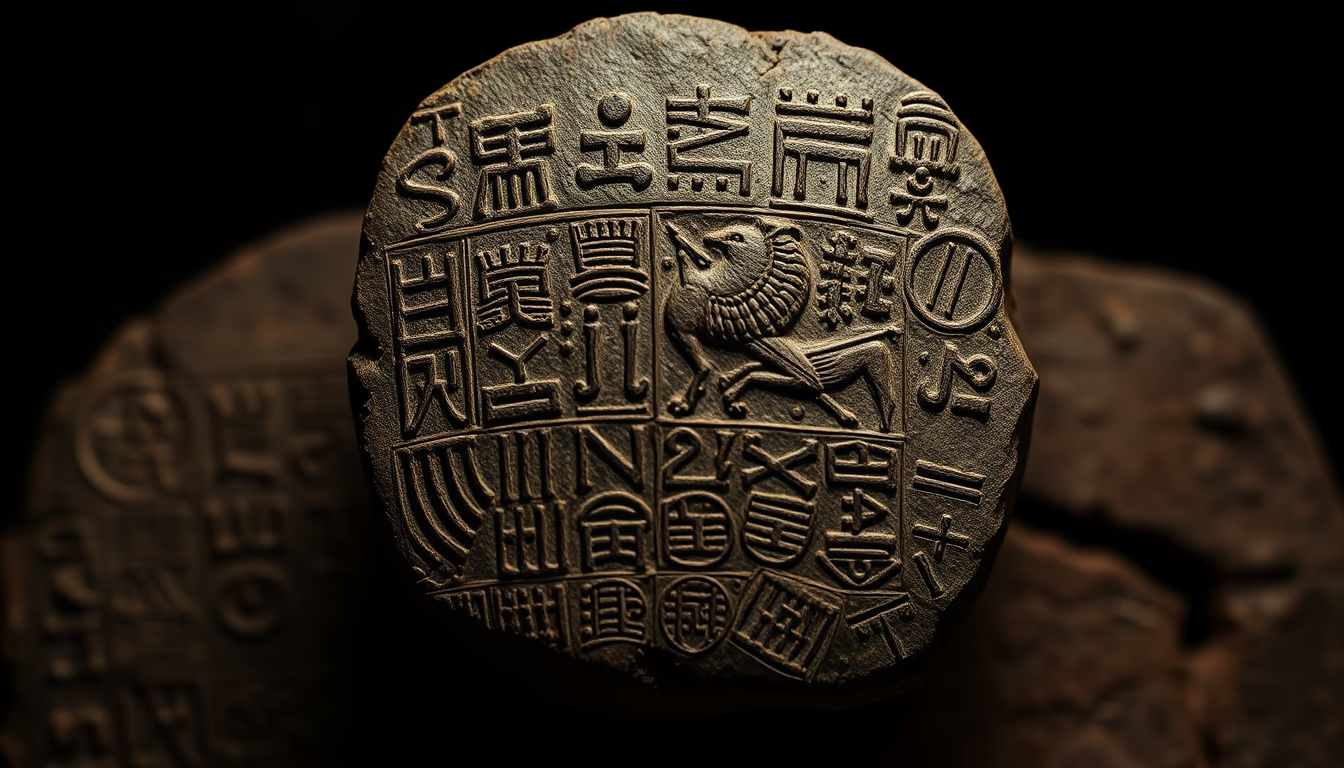
Clay tablet with Sumerian cuneiform script, one of humanity's earliest writing systems, dating to around 3000 BCE.
About this subject
Cuneiform writing was developed by the Sumerians in Mesopotamia, now southern Iraq, around 3200 BCE. Initially, it was used to record commercial and administrative transactions, such as accounting for grain and livestock. The clay tablets were inscribed with a reed stylus, forming wedge-shaped marks, hence the name "cuneiform" (from Latin cuneus, "wedge"). This writing system lasted for over three millennia, adapting to languages such as Akkadian, Elamite, and Hittite.
The Sumerians, who inhabited the region between the Tigris and Euphrates rivers, are credited as the first civilization to develop city-states like Ur, Uruk, and Lagash. Cuneiform enabled the recording of laws, literature, and scientific knowledge. The Epic of Gilgamesh, for example, was preserved on cuneiform tablets. The technique of producing tablets involved molding moist clay and incising characters before drying in the sun or baking.
Today, thousands of cuneiform tablets survive in museums and collections worldwide, crucial for studying ancient history. Tablets were often enclosed in clay envelopes to guarantee authenticity. The decipherment of cuneiform was a milestone in archaeology, with significant advances in the 19th century by scholars like Henry Rawlinson. In Brazil, the Museum of Archaeology and Ethnology at USP holds some examples, though most are in the Middle East and Europe.
Frequently Asked Questions
How do archaeologists date cuneiform clay tablets?
Dating is done by stratigraphic context, stylistic analysis of the script, and when possible, radiocarbon dating of associated organic materials or thermoluminescence of the clay itself.
What was the typical content of these Sumerian tablets?
Most recorded economic transactions like sales, loans, and inventories. There are also literary, legal, administrative texts, and letters between rulers.
How many cuneiform tablets exist today?
It is estimated that over 500,000 tablets and fragments have been excavated, most unpublished. Major collections are in the British Museum, the Louvre, and the Iraq Museum.
Direct URL
https://pub-c7d6a6ea828543ac903a74a341ccb2e1.r2.dev/imagens/cuneiform-tablet-sumerian-high-fashion-editorial-p3.avifHow to credit
Include a visible link back to UtilizAí. Copy one of the snippets below:
<a href="https://xn--utiliza-eza.com/en/midia/imagens/cuneiform-tablet-sumerian-high-fashion-editorial-p3">Cuneiform tablet sumerian</a> by <a href="https://xn--utiliza-eza.com">UtilizAí</a>, licensed under <a href="https://creativecommons.org/licenses/by/4.0/">CC BY 4.0</a>.
[Cuneiform tablet sumerian](https://xn--utiliza-eza.com/en/midia/imagens/cuneiform-tablet-sumerian-high-fashion-editorial-p3) by [UtilizAí](https://xn--utiliza-eza.com), CC BY 4.0
License: CC-BY-4.0